Esta página solo está disponible en inglés. Ir a la portada en español

×

Questa pagina è disponibile solo in inglese. Home page in italiano

×

Diese Seite ist nur auf Englisch verfügbar. Zur deutschen Startseite

×

Cette page est disponible uniquement en anglais. Aller à la page d'accueil en français

×

Bannister Transport adopts Sunswap’s zero-emission technology

Bannister Transport adopts Sunswap’s zero-emission technology

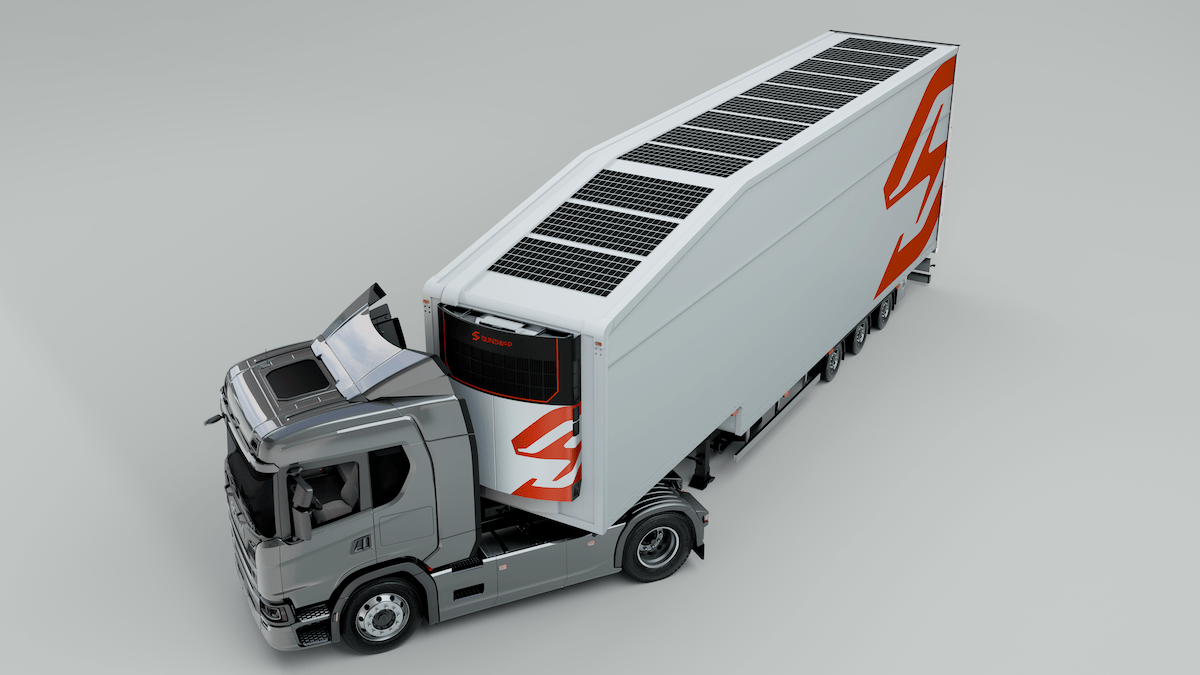
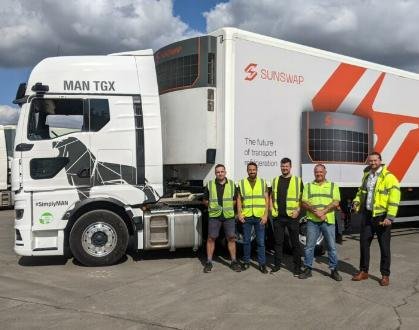
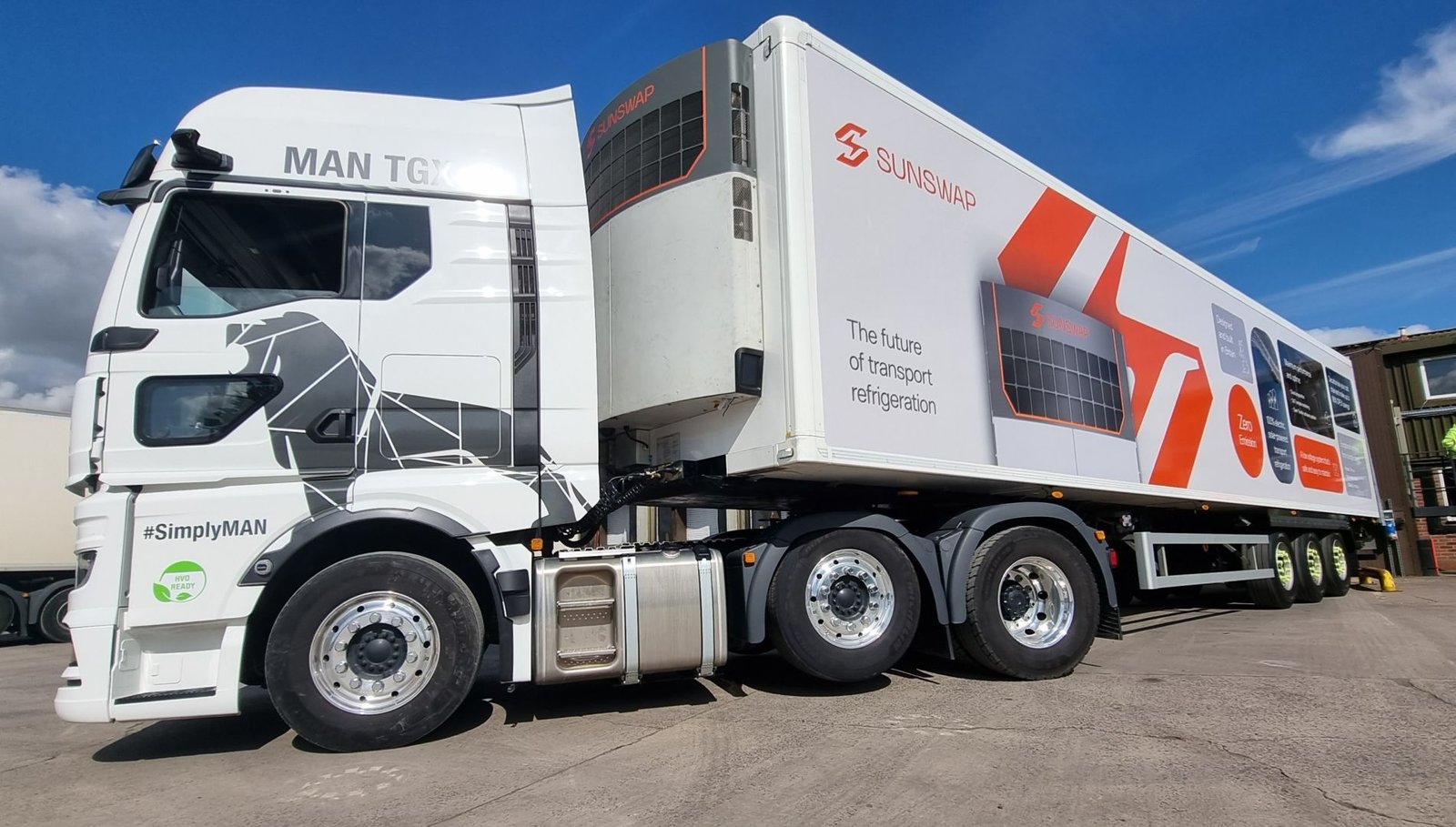
Sunswap is delighted to announce an exciting new partnership with Bannister Transport. Sunswap will supply the logistics innovator with the world’s first 100% electric zero-tailpipe-emission refrigerated trailer fleet of its scale. 

Over the next two years, the Worcestershire-based firm will transition the entirety of its 40 trailer fleet to Sunswap’s Endurance transport refrigeration units (TRUs) mounted on Chereau trailers, a move which shows a firm commitment to sustainability, alongside confidence in Sunswap’s technology. 

Following a successful trial in September, Bannister Transport saw first-hand how Sunswap’s battery and solar-powered refrigeration system could seamlessly integrate into their chilled delivery operations. Endurance matched their longest routes and harsh conditions without compromising performance or uptime. 

The 2-week trial alone effectively removed 87kg of direct carbon dioxide (CO2) and 900g of nitrogen oxides (NOx) emissions, while also highlighting the potential that the Bannister Transport fleet will be able to run 80-85% of the time from solar energy. In addition to reducing emissions, this transition will improve operational efficiency and reduce running costs. 

The long-term environmental impact of adopting Sunswap is significant, with 10-year projections indicating that 40 Sunswap TRUs will remove 2.4 kilotons of tailpipe carbon dioxide (CO2) and 23 tonnes of nitrogen oxides (NOx) that would otherwise be emitted by diesel-powered fridges. The scope 3 (overall) carbon emission reduction is equivalent to taking 98 typical cars off the road each year, with the NOx saving equating to 123 modern diesel cars’ usage per year. 

Impressed by Endurance’s reliability and efficiency, Bannister Transport moved to sign a multi-year deal with Sunswap, eager to lead the charge in sustainable cold chain logistics. The initial Endurance units will be installed on Bannister Transport’s trailers in summer 2024. The entire diesel-powered trailer fleet is then planned to be replaced by September 2025. 
Get the daily refrigeration briefing

One email a day. Trusted by 3,000+ RACHP professionals.

More on Cold Chain

All on Cold Chain →

Insights

Secop's Solar Direct Drive (SDD) System Earns WHO PQS Approval – The Team Behind It
Article

Secop’s Solar Direct Drive (SDD) System Earns WHO PQS Approval – The Team Behind It

Partner's material In March 2026, Secop’s Solar Direct Drive Power Management Module was granted WHO PQS prequalification and officially listed in the WHO Catalogue of Prequalified Immunization Devices. The WHO IMD-PQS (Immunization Devices Performance, Quality and Safety programme) is the global benchmark for cold chain equipment used in immunisation. Being listed in its catalogue is

22 Jun 2026
Case Study - Effect of Louvers or diffusers on air flow distribution and cooling time on a meat log during Chill cycle
Tech Guide

Case Study – Effect of Louvers or diffusers on air flow distribution and cooling time on a meat log during Chill cycle

By Kushal Aurangabadkar An experimental analysis was conducted on a cooler space measuring 3.66 m × 6.096 m (12.0 ft × 20.0 ft), equipped with an ammonia refrigeration coil, five 30 cm (12 in.) fans, and five diffusers. The study measured airflow patterns, cooling rates, and heat transfer efficiency in meat storage by testing two configurations:

Kushal Aurangabadkar · 21 Jan 2026
Total Cost of Ownership (TCO) for Modular Refrigeration Systems in Life Sciences Distribution Centers
Tech Guide

Total Cost of Ownership (TCO) for Modular Refrigeration Systems in Life Sciences Distribution Centers

by Ramez Naguib, P.E. Introduction Life sciences distribution centers are under immense pressure to deliver consistent temperature control, comply with increasingly stringent regulations, and optimize operational efficiency. Traditional built-up refrigeration systems often prove cumbersome, costly, and slow to implement. In contrast, modular, factory-assembled refrigeration systems have emerged as a compelling alternative. Drawing on lessons from

14 Jan 2026
Everything on Cold Chain: 2,041 articles, 1 case study, 23 insights

Most read this month

All news →