Esta página solo está disponible en inglés. Ir a la portada en español

×

Questa pagina è disponibile solo in inglese. Home page in italiano

×

Diese Seite ist nur auf Englisch verfügbar. Zur deutschen Startseite

×

Cette page est disponible uniquement en anglais. Aller à la page d'accueil en français

×

Biocoop Accelerates Energy Transition of its Trucks with Carrier Transicold

Biocoop Accelerates Energy Transition of its Trucks with Carrier Transicold

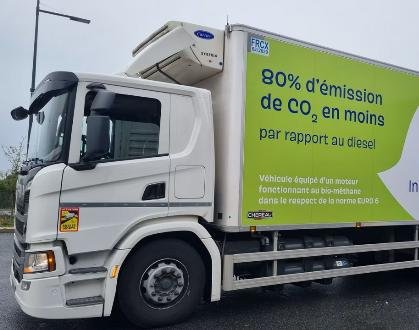
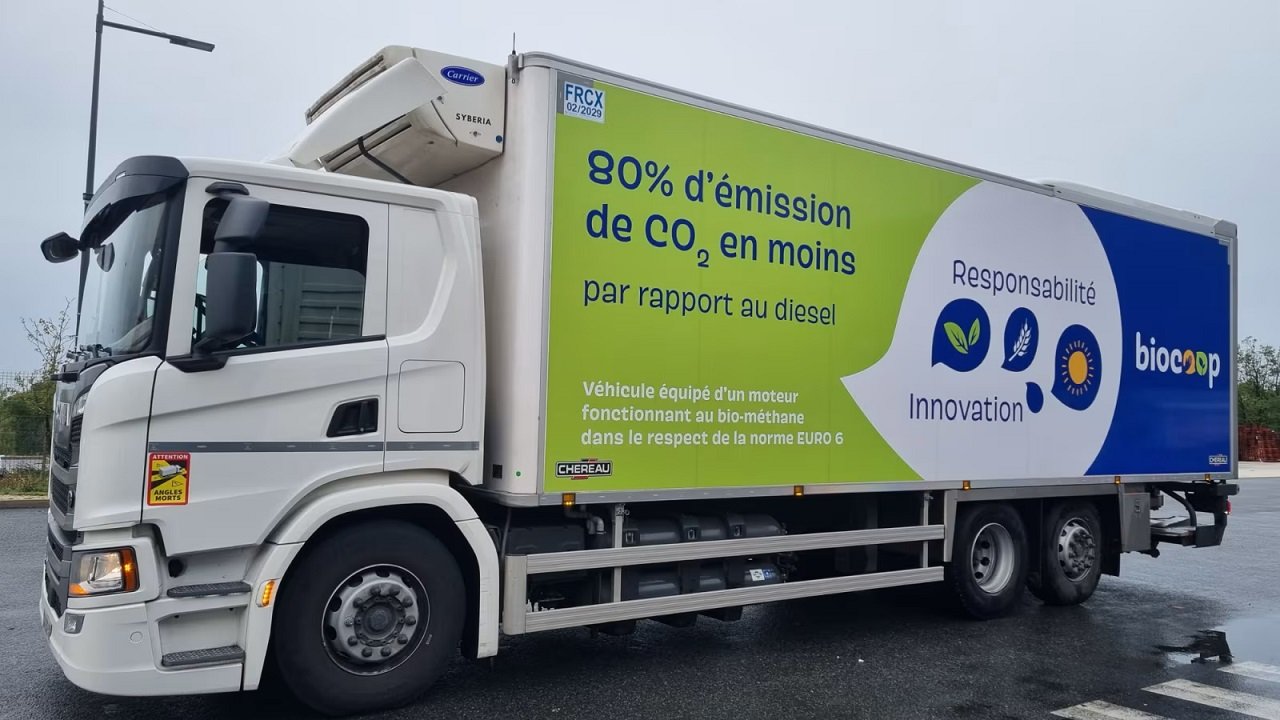
La Société des Transports Biocoop (Biocoop Transport Company), the transportation division for the Biocoop network of organic food stores throughout France, has chosen engineless Eco-Drive technology and Syberia 11 transport refrigeration units from Carrier Transicold to reduce the environmental impact of its deliveries.

Biocoop is continuing the energy transition of its vehicle fleet, converting 65% of its fleet of vehicles to biogas in fewer than 5 years. The company now has more than 70% of its vehicles running on biogas with a target of 100%.

“In 2014, we conducted an in-depth study of eco-responsible fuel offers as an alternative to diesel,” said Ouadie Benaissa, Director of La Société des Transports Biocoop. “As a result, we decided to convert our fleet of 110 vehicles to biogas. This natural fuel, produced by fermenting organic materials, was the most developed energy source on the market at the time. This strategic choice reflects our desire to reduce the ecological impact of our deliveries.”

Biocoop has selected Carrier’s Eco-Drive module for the trucks’ refrigeration units, which ensure a constant temperature of 3 degrees C inside a truck’s body.

Using a hydraulic pump connected to the truck’s power take-off, Carrier’s Eco-Drive module recovers the kinetic energy produced by the engine, which is decarbonized thanks to biogas, and converts it into electricity to power the equipment manufacturer’s Syberia 11 refrigeration unit. The combination of Eco-Drive hydroelectric technology and the Syberia 11 refrigeration unit eliminates the need for an internal combustion engine. This significantly reduces pollutant emissions, maintenance costs and noise levels. As a result, by 2022, Biocoop reduced its carbon dioxide (CO2) emissions by 4.3% per kilometer driven. A further reduction of 4.5% is forecast by the end of 2023.

“The solution offered by Carrier Transicold, who is the main supplier of our fleet, is a perfect match for our ambitions to reduce CO2 emissions. Carrier is at the forefront of environmental issues and is constantly coming up with new innovative refrigeration solutions. Moreover, these technologies are very reliable in the field. Carrier is a real partner we can trust,” said Benaissa.

Get the daily refrigeration briefing

One email a day. Trusted by 3,000+ RACHP professionals.

Related news

Most read this month

All news →

Related insights

Secop's Solar Direct Drive (SDD) System Earns WHO PQS Approval – The Team Behind It
Article

Secop’s Solar Direct Drive (SDD) System Earns WHO PQS Approval – The Team Behind It

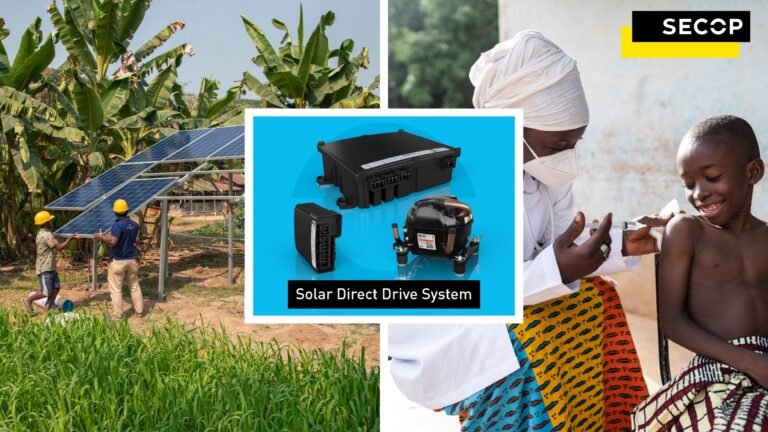
Partner's material In March 2026, Secop’s Solar Direct Drive Power Management Module was granted WHO PQS prequalification and officially listed in the WHO Catalogue of Prequalified Immunization Devices. The WHO IMD-PQS (Immunization Devices Performance, Quality and Safety programme) is the global benchmark for cold chain equipment used in immunisation. Being listed in its catalogue is

22 Jun 2026
Case Study - Effect of Louvers or diffusers on air flow distribution and cooling time on a meat log during Chill cycle
Tech Guide

Case Study – Effect of Louvers or diffusers on air flow distribution and cooling time on a meat log during Chill cycle

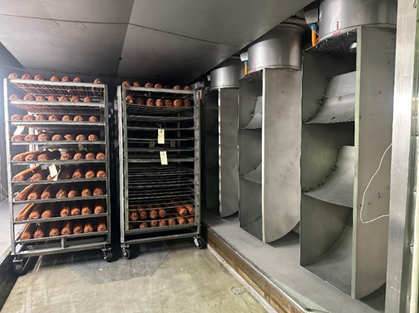
By Kushal Aurangabadkar An experimental analysis was conducted on a cooler space measuring 3.66 m × 6.096 m (12.0 ft × 20.0 ft), equipped with an ammonia refrigeration coil, five 30 cm (12 in.) fans, and five diffusers. The study measured airflow patterns, cooling rates, and heat transfer efficiency in meat storage by testing two configurations:

Kushal Aurangabadkar · 21 Jan 2026
Total Cost of Ownership (TCO) for Modular Refrigeration Systems in Life Sciences Distribution Centers
Tech Guide

Total Cost of Ownership (TCO) for Modular Refrigeration Systems in Life Sciences Distribution Centers

by Ramez Naguib, P.E. Introduction Life sciences distribution centers are under immense pressure to deliver consistent temperature control, comply with increasingly stringent regulations, and optimize operational efficiency. Traditional built-up refrigeration systems often prove cumbersome, costly, and slow to implement. In contrast, modular, factory-assembled refrigeration systems have emerged as a compelling alternative. Drawing on lessons from

14 Jan 2026