Technical brief outlines the refrigeration sector’s impact on food, health, energy, and climate.
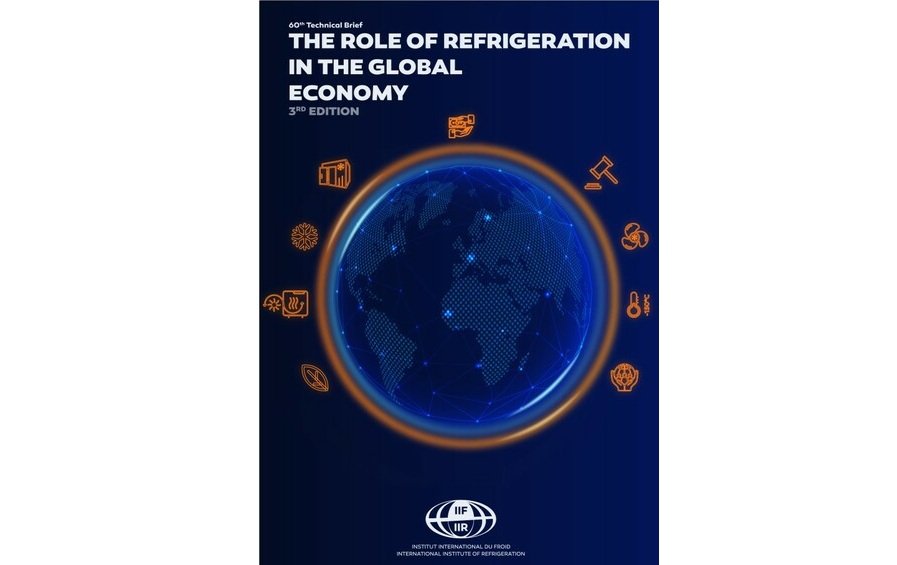
The International Institute of Refrigeration (IIR) has published the third edition of its technical brief The Role of Refrigeration in the Global Economy, providing updated insights into how refrigeration systems contribute to addressing key global challenges. The 2025 edition emphasizes the sector’s vital role in food security, public health, energy consumption, and climate change mitigation.
According to the report, there are approximately 5.4 billion refrigeration systems currently in operation worldwide. The global refrigeration equipment market exceeds USD 300 billion annually, with developing and emerging economies showing the fastest growth. The brief identifies both the environmental impact and the sustainability potential of the sector.
Refrigeration is responsible for 12% of global food losses due to insufficient cold chains. The IIR estimates that expanding food cold chain infrastructure could save 475 million tonnes of food per year—enough to feed 950 million people. In healthcare, refrigeration is critical for storing temperature-sensitive vaccines, including those for COVID-19 and polio. The healthcare cold chain market is projected to reach USD 17.8 billion by 2033, with a 9% annual growth rate.
The report also addresses the sector’s energy footprint. Refrigeration accounts for 20% of global electricity use and 7.5% of CO₂ emissions. However, technologies such as heat pumps and district cooling offer significant opportunities to improve energy efficiency and reduce emissions.
A major concern highlighted is the global shortage of skilled refrigeration technicians and installers. While the industry employs 12 million people, the lack of qualified personnel, especially in Europe and North America, poses a barrier to scaling sustainable solutions.
Dr. Yosr Allouche, General Director of the IIR, emphasizes the urgency and relevance of this report, particularly given that 2024 was the hottest year on record. Dr. Allouche highlights the paradoxical nature of refrigeration as both an essential solution for climate-driven crises and a significant contributor to environmental challenges. She underscores the critical need for global collaboration in transitioning to low-global-warming-potential (GWP) refrigerants and energy-efficient technologies, stating refrigeration is “the invisible backbone of civilization,” essential for preserving life, enhancing health, and driving economic growth.
The full report and a summary for policymakers are available open access through the IIR’s FRIDOC database.