Esta página solo está disponible en inglés. Ir a la portada en español

×

Questa pagina è disponibile solo in inglese. Home page in italiano

×

Diese Seite ist nur auf Englisch verfügbar. Zur deutschen Startseite

×

Cette page est disponible uniquement en anglais. Aller à la page d'accueil en français

×

Lineage to Acquire Tyson Cold Storage Sites

Lineage to Acquire Tyson Cold Storage Sites

Expansion includes four acquisitions and two greenfield developments with full automation.

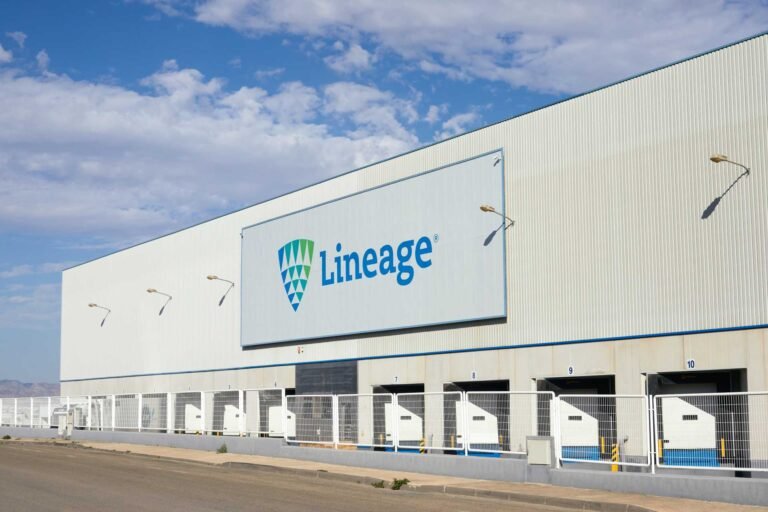
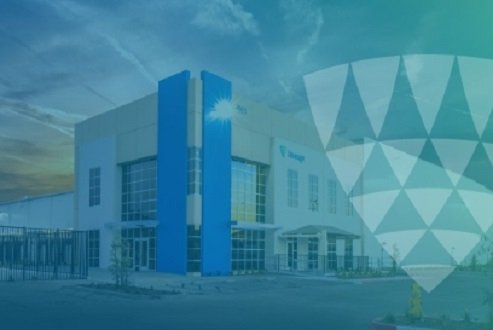
Lineage, Inc. has entered a definitive agreement to acquire four cold storage warehouses from Tyson Foods, Inc. as part of a broader $1 billion investment to expand its U.S. cold-chain footprint. The deal also includes plans to develop two fully automated warehouses in major distribution markets, reinforcing the long-standing relationship between the two companies.

The acquired facilities, located in Pottsville (PA), Olathe (KS), Rochelle (IL), and Tolleson (AZ), total approximately 49 million cubic feet with 160,000 pallet positions. The transaction is valued at $247 million and is expected to close in Q2 2025, pending customary conditions. Lineage also plans to retain over 1,000 Tyson Foods employees from the sites.

In parallel, Lineage will invest over $740 million in greenfield developments for two next-generation, fully automated warehouses. These facilities will add more than 80 million cubic feet and nearly 260,000 pallet positions to Lineage’s U.S. network. Tyson Foods will serve as the anchor tenant in both facilities under a new long-term agreement. Additionally, Tyson will begin storing product at Lineage’s recently developed automated warehouse in Hazelton, Pennsylvania, which features Lineage’s proprietary LinOS warehouse execution system.

“This transaction is the result of a longstanding relationship rooted in shared values,” said Greg Lehmkuhl, President and Chief Executive Officer of Lineage. “We’re proud to partner with our valued customer on these landmark agreements, leveraging our global footprint, data-driven approach, LinOS, and automation technology.”

Lehmkuhl added, “We’re creating more than cold storage infrastructure—we’re setting the foundation for agile, intelligent supply chains built for resilience and precision.”

As the greenfield sites become operational, Lineage plans to transition the acquired facilities into public cold storage assets as part of its global network strategy.

Get the daily refrigeration briefing

One email a day. Trusted by 3,000+ RACHP professionals.

Related news

Most read this month

All news →

Related insights

Secop's Solar Direct Drive (SDD) System Earns WHO PQS Approval – The Team Behind It
Article

Secop’s Solar Direct Drive (SDD) System Earns WHO PQS Approval – The Team Behind It

Partner's material In March 2026, Secop’s Solar Direct Drive Power Management Module was granted WHO PQS prequalification and officially listed in the WHO Catalogue of Prequalified Immunization Devices. The WHO IMD-PQS (Immunization Devices Performance, Quality and Safety programme) is the global benchmark for cold chain equipment used in immunisation. Being listed in its catalogue is

22 Jun 2026
Case Study - Effect of Louvers or diffusers on air flow distribution and cooling time on a meat log during Chill cycle
Tech Guide

Case Study – Effect of Louvers or diffusers on air flow distribution and cooling time on a meat log during Chill cycle

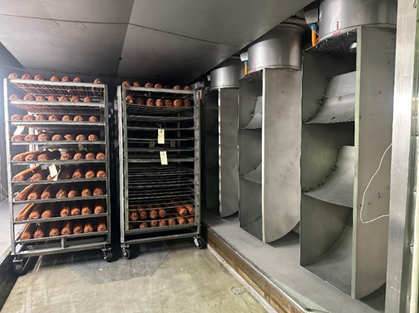
By Kushal Aurangabadkar An experimental analysis was conducted on a cooler space measuring 3.66 m × 6.096 m (12.0 ft × 20.0 ft), equipped with an ammonia refrigeration coil, five 30 cm (12 in.) fans, and five diffusers. The study measured airflow patterns, cooling rates, and heat transfer efficiency in meat storage by testing two configurations:

Kushal Aurangabadkar · 21 Jan 2026
Total Cost of Ownership (TCO) for Modular Refrigeration Systems in Life Sciences Distribution Centers
Tech Guide

Total Cost of Ownership (TCO) for Modular Refrigeration Systems in Life Sciences Distribution Centers

by Ramez Naguib, P.E. Introduction Life sciences distribution centers are under immense pressure to deliver consistent temperature control, comply with increasingly stringent regulations, and optimize operational efficiency. Traditional built-up refrigeration systems often prove cumbersome, costly, and slow to implement. In contrast, modular, factory-assembled refrigeration systems have emerged as a compelling alternative. Drawing on lessons from

14 Jan 2026