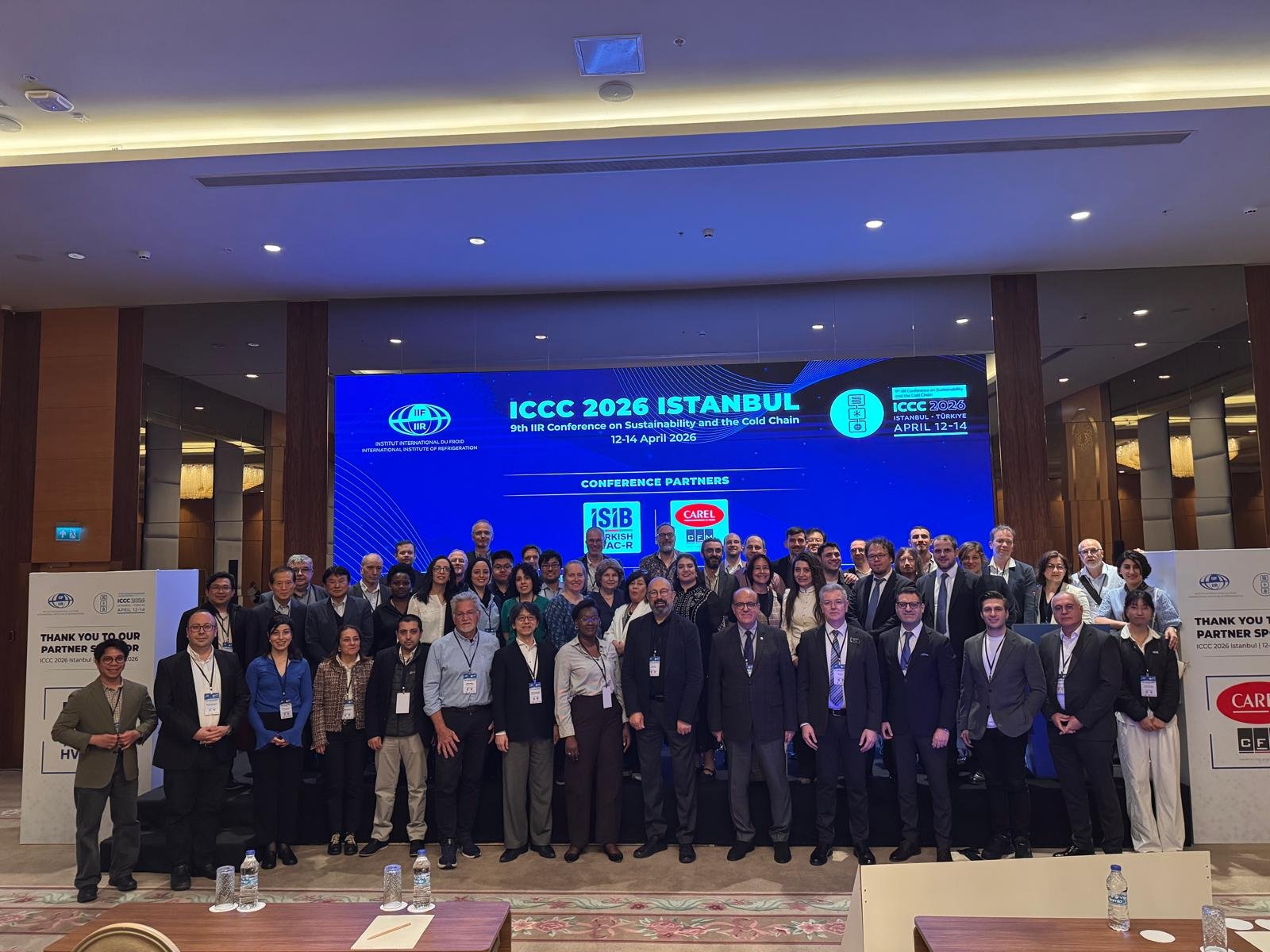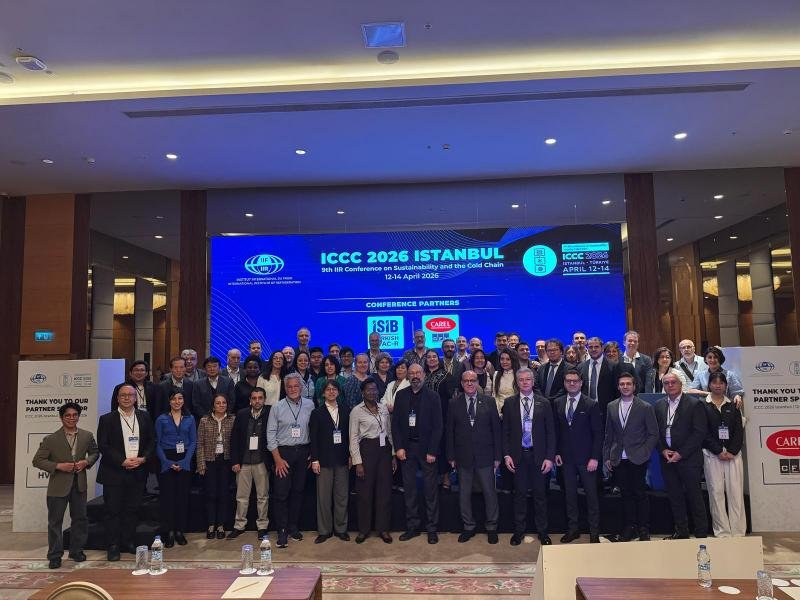
The 9th IIR Conference on Sustainability and the Cold Chain (ICCC 2026) took place in Istanbul, Türkiye, on April 13-14, 2026, bringing together more than 130 participants from research and industry. Organised under the theme “Sustaining Cold Chain and Food for the Future,” the event focused on sustainable cold chain development, food loss and waste reduction, and greenhouse gas emissions.
According to the organisers, the programme covered cold chain innovations in equipment design, transport and logistics, sustainability solutions including renewable energy and low-GWP refrigerants, and the challenges of developing cold chains in emerging markets. Additional topics included storage and logistics, modelling and digitalisation, food quality and safety, retail refrigeration, circular economy, life cycle analysis, and energy efficiency in refrigeration systems. All presentations were delivered orally, and papers were peer-reviewed for publication in the IIR Fridoc database.
The opening ceremony included remarks from Zeki Poyraz, Vice Chairman of the Board of ISIB, and Yosr Allouche, Director General of the IIR. Keynote speakers were Prof Judith Evans of London South Bank University, Prof Armin Hafner of the Norwegian University of Science and Technology, and Prof Soojin Jun of the University of Hawaiʻi at Manoa. The two-day programme also included parallel sessions on advanced refrigeration systems, low-GWP refrigerants, carbon-neutral technologies, food quality and safety, sustainability, and digitalisation, as well as commission meetings and a special session on implementing cold chains in developing countries.
One featured session, “Sustaining the Cold Chain – From Türkiye to the World,” examined decarbonisation, food loss measurement, and financing for cold chain upgrades in emerging markets. Moderated by Souhir Al-Hammami of the IIR, the panel brought together representatives from Carel Industries, the IIR, ISIB, UNDP Türkiye, and Türkiye’s Ministry of Environment, Urbanisation and Climate Change. According to the conference summary, the discussion highlighted the role of the cold chain in reducing food waste and protecting public health while also addressing emissions linked to energy use and refrigerant leakage.
The IIR also announced that the next International Conference on Sustainability and Cold Chain will be held in France in 2028, organised jointly by the Association Française du Froid and INRAE. The organisers said the next edition will continue discussions on refrigerant transitions, climate finance, food loss, and the future of sustainable cold chain systems.