U.S.-based Pascal has secured approximately $9.3 million in additional funding to support the first commercial deployments of its solid refrigerant cooling technology. The financing includes $8.5 million in venture funding co-led by Sazze Partners and LB Investment, with participation from KDB Silicon Valley, and $839,000 in grants. The latest funding brings the company’s total capital raised to $17.3 million.
The grant funding includes $500,000 from the U.S. Department of Energy’s ARPA-E program and $339,000 from two Massachusetts Clean Energy Center programs. Pascal plans to use the new capital to deploy its cooling technology with a multinational beverage manufacturer and advance development toward industrial-scale applications.
Pascal has completed a working prototype of its pilot refrigerator and is preparing for its first customer deployment. The company expects the project to validate energy-efficiency and cost improvements, with the next phase planned for early 2027. Its current commercial activities focus on beverage cooling, while potential larger-scale applications include buildings and data centers.
The company’s technology uses solid refrigerants designed to operate within the same pressure range as conventional gas refrigerants. According to Pascal, these materials are non-flammable, PFAS-free and capable of achieving cost parity with conventional cooling systems. The company also reports that its solid refrigerant systems have demonstrated efficiency comparable to conventional vapor-compression systems performing the same cooling task.
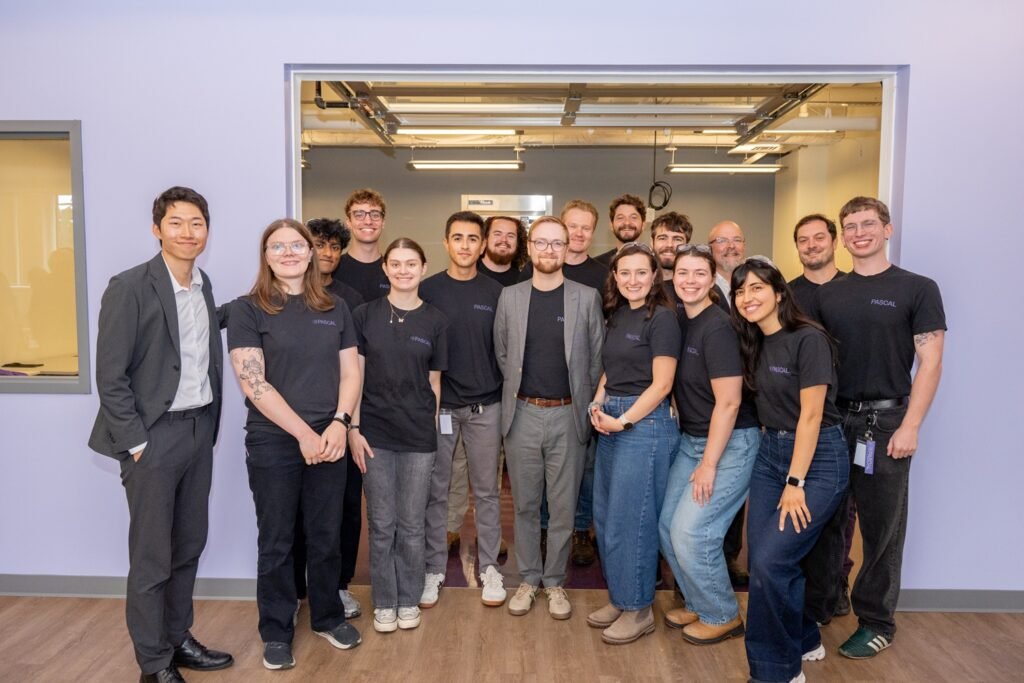
Pascal has also opened a new 21,000-square-foot (approximately 1,951 m²) headquarters in Watertown, Massachusetts, to expand its engineering, prototyping and testing capabilities. The company is recruiting additional employees and seeking commercial pilot partners with significant refrigeration or cooling requirements.
“We’ve now proved that solid refrigerant systems are just as efficient as a conventional vapor-compression system doing the same job and are expecting further improvements in the near future,” said Adam Slavney, co-founder and CEO of Pascal.