Today, Amazon Web Services, Inc. (AWS), an Amazon.com company, and Carrier Global Corporation, a leading global provider of healthy, safe and sustainable building and cold chain solutions, announced a multi-year agreement to co-develop Carrier’s new Lynx digital platform. This suite of tools will provide Carrier customers around the world with enhanced visibility, increased connectivity, and actionable intelligence across their cold chain operations to improve outcomes for temperature-sensitive cargo, including food, medicine, and vaccines. The collaboration builds on Carrier’s selection of AWS as its preferred cloud services provider in February 2020.
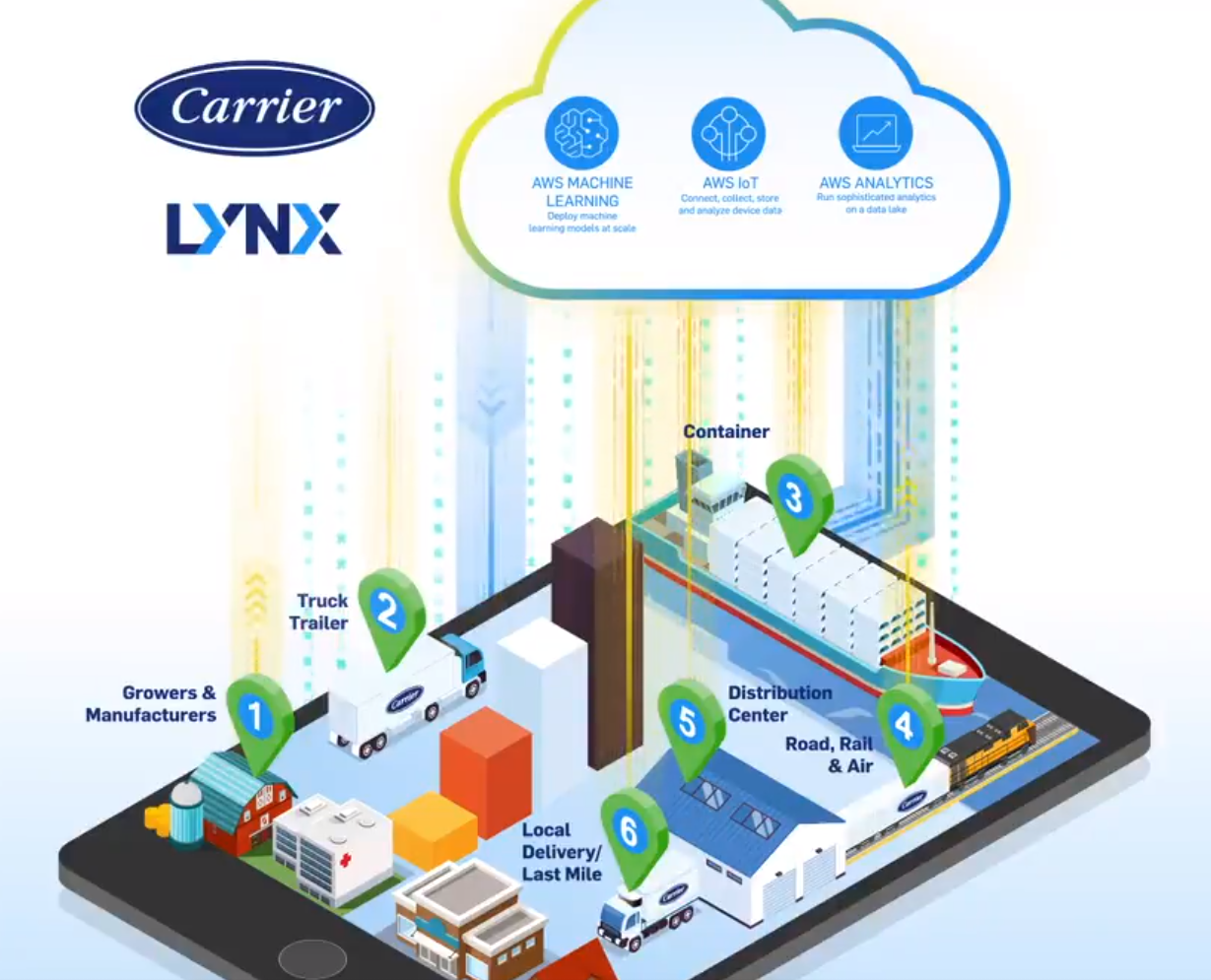
The Lynx platform will combine AWS’s IoT, analytics, and machine learning services with Carrier’s refrigeration and monitoring solutions, extending Carrier’s current digital offerings for managing the temperature-controlled transport and storage of perishables. Customers using the Lynx platform will benefit from end-to-end tracking, real-time alerts, automated processes, and predictive analytics to help them deliver temperature-controlled cargo more efficiently, in turn decreasing the cost of cold chain operations by optimizing resource utilization, cargo loss, and spoilage.
Leveraging AWS IoT services to collect, integrate, organize, and analyze data from Carrier’s large installed base of refrigeration equipment and monitoring solutions, along with sources such as traffic and weather reports, the Lynx platform will provide a comprehensive view of cargo location, temperature conditions, and external events that could impact cold chain operations. This information will feed into a data lake built on Amazon Simple Storage Service (Amazon S3) where Carrier can use AWS machine learning services to identify potential issues that could impact cargo, as well as run sophisticated analytics to develop recommendations for improving outcomes. For example, by analyzing historic and real-time performance data from Carrier’s cloud-connected equipment, the Lynx platform could suggest proactive maintenance to maximize a specific piece of equipment’s availability. Looking ahead, Carrier and AWS plan to introduce a capability for the Lynx platform to provide recommendations related to cargo routing and improved fleet utilization, adding greater resilience into the cold chain that will help Carrier’s customers to manage costs, schedules, and resources.
“Carrier is committed to delivering a healthier, safer, and more sustainable cold chain. Through this collaboration with AWS, we are developing a uniquely powerful ecosystem to give our customers greater flexibility, visibility, and intelligence across the cold chain,” said David Appel, President, Carrier Refrigeration. “The Lynx platform will help our customers make faster, data-driven decisions to improve the effectiveness, efficiency, and sustainability of their supply chains. This digital solution will enhance connectivity across the cold chain, decreasing delays for cargo that is critical to global health and well-being, while reducing cargo damage, loss, and unanticipated costs.”
“Carrier and AWS are tackling the complexity and fragmentation of the cold chain to give supply chain customers the transparency, flexibility, and insights they require to reduce risk and deliver food, medicine, and vaccines when and where they’re needed,” said Sarah Cooper, General Manager, IoT Solutions at Amazon Web Services, Inc. “This project, which combines Carrier’s cold chain expertise with AWS’s digital experience and unparalleled portfolio of services, highlights how entire industries stand to benefit from digital transformation through increased efficiency, reduced costs, and greater dependability.”