Esta página solo está disponible en inglés. Ir a la portada en español

×

Questa pagina è disponibile solo in inglese. Home page in italiano

×

Diese Seite ist nur auf Englisch verfügbar. Zur deutschen Startseite

×

Cette page est disponible uniquement en anglais. Aller à la page d'accueil en français

×

Carrier Offers Solutions to Meet Increased COVID-19 Vaccine Distribution Demand

Carrier Offers Solutions to Meet Increased COVID-19 Vaccine Distribution Demand

With hundreds of millions of doses of the COVID-19 vaccine on order by the U.S. government, Carrier Global Corporation, the leading global provider of innovative healthy, safe and sustainable building and cold chain solutions, has solutions to support the increase in supply chain demands for states as they look to make doses available to every American adult by the end of May.

Carrier, which has an industry-leading installed base of transport refrigeration equipment that can be used to safely move vaccines, also offers innovative mobile cold storage, temperature monitoring and supply chain visibility solutions that can be integrated with its Lynx digital platform, which is being co-developed with Amazon Web Services, to assist with growing vaccine distribution efforts.

“The goal of having every adult American eligible for vaccination by the end of May will lead to a large influx of doses that need to be managed through the cold chain, tracked and stored,” said David Appel, President, Refrigeration at Carrier. “Our technology and equipment provide the needed capabilities and scale to help safely move vaccines and maintain their efficacy.”

Carrier is working closely with pharmaceutical companies, healthcare providers, distribution centers, retailers and vaccine administrators across the country to move, monitor and store vaccines. Carrier is positioned to provide needed support for mass vaccination sites and safely storing and monitoring large quantities of vaccines.

Carrier Pods monitored by Sensitech help address the unique challenges of COVID-19 vaccine distribution during the pandemic. The units combine leading refrigeration technology and cargo monitoring capabilities to expand cold storage capacity along with added cargo visibility to help ensure the life of vaccines. Their mobility allows for easy relocation to address shifting capacity demands or temporary vaccine administration locations.

For added cargo visibility, Sensitech recently announced that it expanded its suite of IoT devices to include air-carrier approved and non-lithium battery models for real-time tracking of shipments when cargo is traveling by plane. The platform’s analytics engine provides real-time evidence and dashboard reporting to assess compliance and the trip’s performance.
Get the daily refrigeration briefing

One email a day. Trusted by 3,000+ RACHP professionals.

More on Cold Chain

All on Cold Chain →

Insights

Secop's Solar Direct Drive (SDD) System Earns WHO PQS Approval – The Team Behind It
Article

Secop’s Solar Direct Drive (SDD) System Earns WHO PQS Approval – The Team Behind It

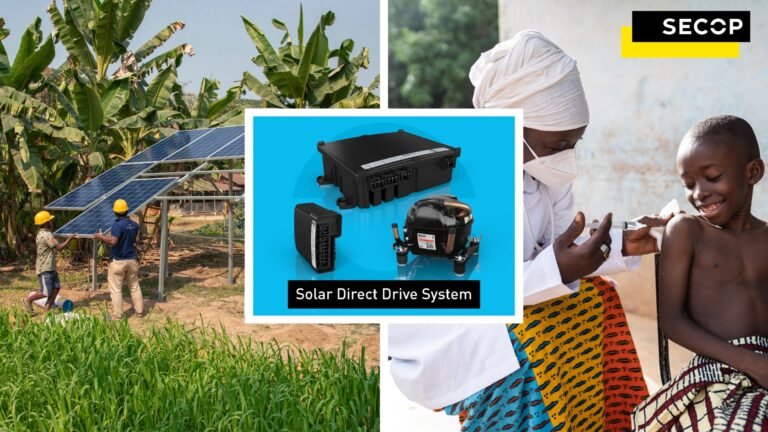
Partner's material In March 2026, Secop’s Solar Direct Drive Power Management Module was granted WHO PQS prequalification and officially listed in the WHO Catalogue of Prequalified Immunization Devices. The WHO IMD-PQS (Immunization Devices Performance, Quality and Safety programme) is the global benchmark for cold chain equipment used in immunisation. Being listed in its catalogue is

22 Jun 2026
Case Study - Effect of Louvers or diffusers on air flow distribution and cooling time on a meat log during Chill cycle
Tech Guide

Case Study – Effect of Louvers or diffusers on air flow distribution and cooling time on a meat log during Chill cycle

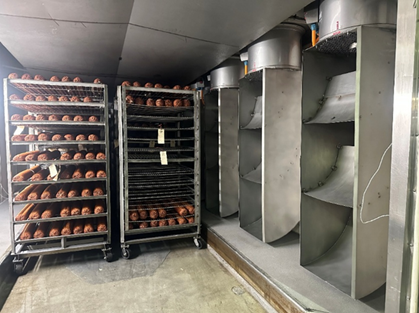
By Kushal Aurangabadkar An experimental analysis was conducted on a cooler space measuring 3.66 m × 6.096 m (12.0 ft × 20.0 ft), equipped with an ammonia refrigeration coil, five 30 cm (12 in.) fans, and five diffusers. The study measured airflow patterns, cooling rates, and heat transfer efficiency in meat storage by testing two configurations:

Kushal Aurangabadkar · 21 Jan 2026
Total Cost of Ownership (TCO) for Modular Refrigeration Systems in Life Sciences Distribution Centers
Tech Guide

Total Cost of Ownership (TCO) for Modular Refrigeration Systems in Life Sciences Distribution Centers

by Ramez Naguib, P.E. Introduction Life sciences distribution centers are under immense pressure to deliver consistent temperature control, comply with increasingly stringent regulations, and optimize operational efficiency. Traditional built-up refrigeration systems often prove cumbersome, costly, and slow to implement. In contrast, modular, factory-assembled refrigeration systems have emerged as a compelling alternative. Drawing on lessons from

14 Jan 2026
Everything on Cold Chain: 2,046 articles, 2 case studies, 23 insights

Most read this month

All news →