Esta página solo está disponible en inglés. Ir a la portada en español

×

Questa pagina è disponibile solo in inglese. Home page in italiano

×

Diese Seite ist nur auf Englisch verfügbar. Zur deutschen Startseite

×

Cette page est disponible uniquement en anglais. Aller à la page d'accueil en français

×

Carrier Transicold Enhances EverFRESH Active Controlled Atmosphere System

Carrier Transicold Enhances EverFRESH Active Controlled Atmosphere System

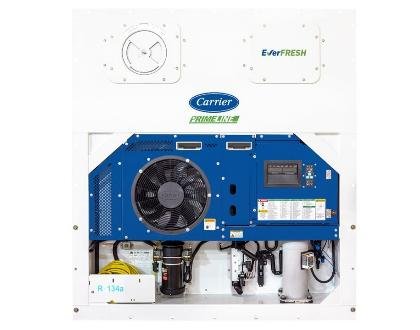
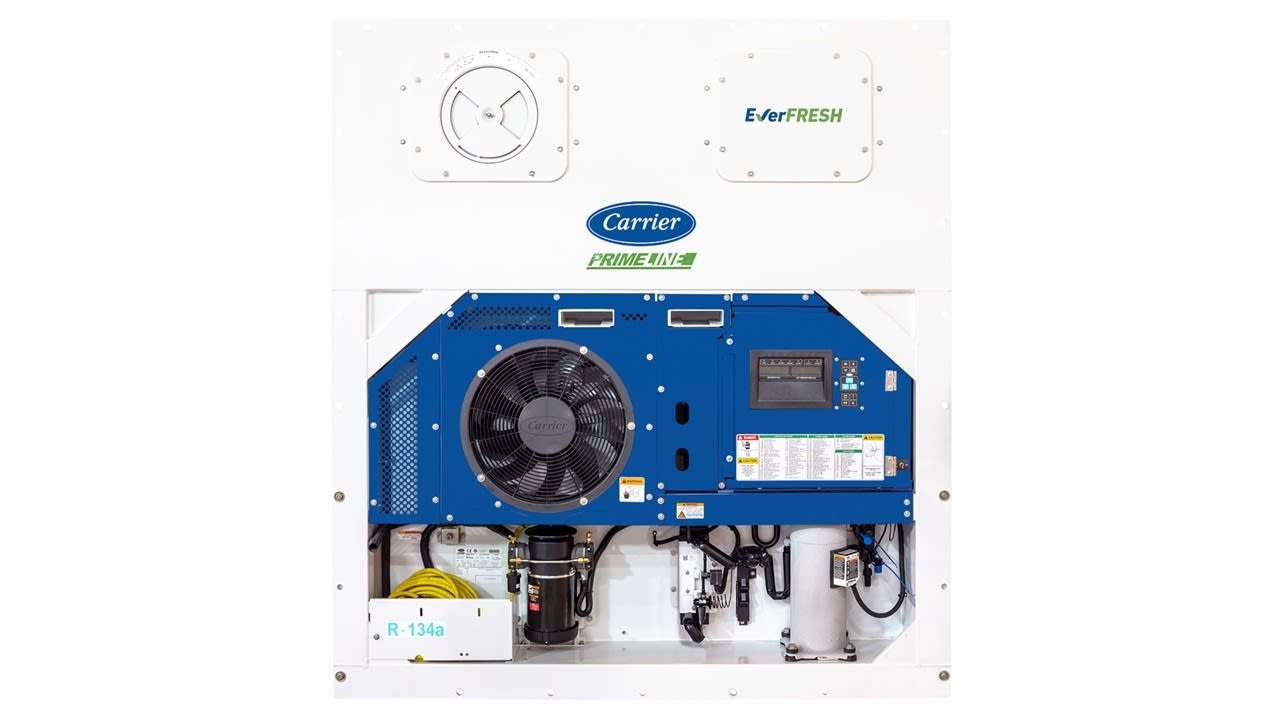
Carrier Transicold’s EverFRESH active controlled atmosphere (CA) system for refrigerated containers now offers an expanded range of oxygen (O2) setpoints for all EverFRESH options. The latest EverFRESH software release can help shippers transport a wider range of perishable goods, including high-value produce such as kiwis and plums, to farther and new locations.

The EverFRESH system reduces respiration and slows natural ripening of commodities by optimizing O2 and carbon dioxide (CO2). EverFRESH can now transport perishables at O2 setpoints of 1% to 17%, an improvement from the previous setpoints of 2% to 17%. Also, the system now features as low as 0.2% setpoint increments to provide customers greater control over their perishables.

“Customers can now benefit from the tighter setpoint control of Carrier’s EverFRESH system, which allows for more precise settings and increments,” said Dr. Rob Veltman, Postharvest Global Commercial Lead, Global Container Refrigeration, Carrier Transicold. “These updates can improve shipping outcomes of commodities, such as apples, pears, lettuce, nectarines, onions, garlic and other perishables, that are sensitive to changes in O2 and CO. This innovative technology helps to maintain ideal conditions during transport while extending the shelf life of perishable commodities.”

Using active CA technology, the EverFRESH system:

  • Allows shippers to independently set O2 and CO2 levels without these setpoints being affected by respiration and leakage rates – giving them greater control over their cargo.
  • Generates nitrogen via a high flow rate generator to more quickly and responsively displace O2, rather than relying on cargo respiration alone to gradually reduce O2
  • Maintains positive air pressure within the container, making it far less sensitive to box leakage than other types of systems.

“Ocean freight is a more cost-effective mode of shipment and has a smaller environmental impact than air freight,” said Ling Tok Kiang, Associate Director, Product Management, Global Container Refrigeration, Carrier Transicold. “The EverFRESH system benefits companies that sell sensitive perishables and are looking to expand their reach more economically and with a smaller environmental footprint.”

Get the daily refrigeration briefing

One email a day. Trusted by 3,000+ RACHP professionals.

More on Cold Chain

All on Cold Chain →

Insights

Secop's Solar Direct Drive (SDD) System Earns WHO PQS Approval – The Team Behind It
Article

Secop’s Solar Direct Drive (SDD) System Earns WHO PQS Approval – The Team Behind It

Partner's material In March 2026, Secop’s Solar Direct Drive Power Management Module was granted WHO PQS prequalification and officially listed in the WHO Catalogue of Prequalified Immunization Devices. The WHO IMD-PQS (Immunization Devices Performance, Quality and Safety programme) is the global benchmark for cold chain equipment used in immunisation. Being listed in its catalogue is

22 Jun 2026
Case Study - Effect of Louvers or diffusers on air flow distribution and cooling time on a meat log during Chill cycle
Tech Guide

Case Study – Effect of Louvers or diffusers on air flow distribution and cooling time on a meat log during Chill cycle

By Kushal Aurangabadkar An experimental analysis was conducted on a cooler space measuring 3.66 m × 6.096 m (12.0 ft × 20.0 ft), equipped with an ammonia refrigeration coil, five 30 cm (12 in.) fans, and five diffusers. The study measured airflow patterns, cooling rates, and heat transfer efficiency in meat storage by testing two configurations:

Kushal Aurangabadkar · 21 Jan 2026
Total Cost of Ownership (TCO) for Modular Refrigeration Systems in Life Sciences Distribution Centers
Tech Guide

Total Cost of Ownership (TCO) for Modular Refrigeration Systems in Life Sciences Distribution Centers

by Ramez Naguib, P.E. Introduction Life sciences distribution centers are under immense pressure to deliver consistent temperature control, comply with increasingly stringent regulations, and optimize operational efficiency. Traditional built-up refrigeration systems often prove cumbersome, costly, and slow to implement. In contrast, modular, factory-assembled refrigeration systems have emerged as a compelling alternative. Drawing on lessons from

14 Jan 2026
Everything on Cold Chain: 2,041 articles, 1 case study, 23 insights

Most read this month

All news →