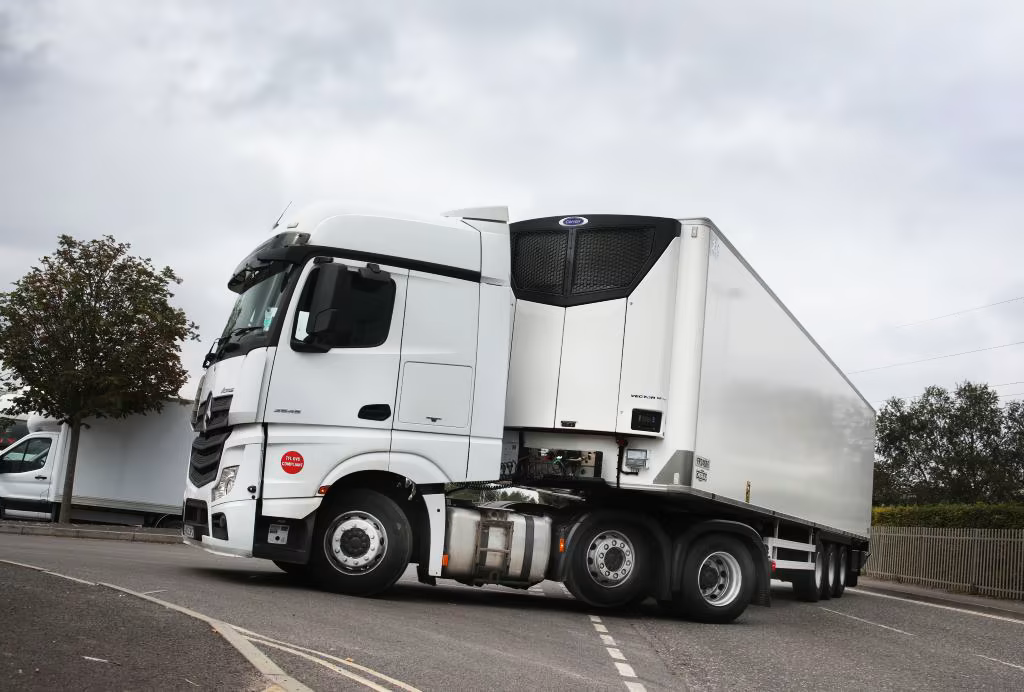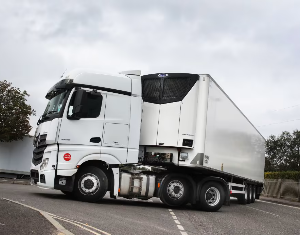
A major Carrier Transicold customer in the UK has shared the results of a multi-year refrigerant performance evaluation on its range of truck and trailer refrigeration systems, demonstrating that a combination of R-452A refrigerant and Carrier’s all-electric E-Drive technology delivered close to a 50% reduction in carbon emissions from its units.
The evaluation was based on refrigerant use and leakage across the customer’s fleet of more than 2,000 Carrier Transicold Vector trailer refrigeration units and engineless Iceland and Syberia units. Over four years, approximately 1,118 metric tonnes of carbon dioxide (CO2) emissions were saved, equivalent to the carbon removed by more than 18,486 trees over a 10-year period.
“Carrier Transicold develops its refrigeration systems to improve performance, reduce maintenance and support sustainability,” said Victor Calvo, President, International Truck Trailer, Carrier Transicold. “Protecting both the cold chain and the environment is a major priority for us, and this evaluation shows using R-452A refrigerant, alongside E-Drive technology delivers fantastic, ongoing benefits.”
Introduced more than 20 years ago, the E-Drive system removes mechanical transmissions found in belt-driven truck and trailer refrigeration systems to transform engine power into electricity via generator, thus reducing risks of leaks and emissions. The technology significantly cuts fuel consumption, resulting in both a lower carbon footprint and quieter operation compared to diesel engine sound output.
E-Drive allowed for the development of a fully hermetic scroll compressor and economiser in the Vector units, creating a closed loop refrigeration system capable of operating ultra-efficiently on both diesel and electric power. E-Drive’s all-electric technology has allowed Carrier Transicold to deliver industry-changing technology to help fleets significantly reduce their environmental impact, aligning with Carrier’s 2030 ESG goals to reduce its customers’ carbon footprint by more than one gigaton.
The system was subsequently embedded into the company’s ECO-DRIVE power module, which converts power from the truck’s own engine into electricity to drive its range of engineless refrigeration systems.