Subscribe to the daily news Sign in
En
Challenges for post-pandemic food cold chain
08 September 2020

Challenges for post-pandemic food cold chain

The COVID-19 pandemic has revealed several shortcomings in the global food cold chain. In the aftermath of the pandemic, investment in the cold chain is necessary to maximise access to food and reduce waste. Emphasis should be placed on enhanced flexibility as well as a more digital, data-driven supply chain.

Challenges for the food cold chain during the pandemic

During the government-mandated lockdown in Europe, demand for refrigerated storage exploded. Indeed, the closing of restaurants and other food service providers forced vegetables and meat suppliers to store unsold products while seeking new buyers. By June 2020, over 90% of cold storage facilities in Europe were full.

Furthermore, consumers have shifted away from restaurants and catering to food retailing. In France, sales of frozen savoury products increased by 60% from mid-March to the end of March, compared to the previous year. In the United States, online grocery shopping doubled in March 2020. A survey from the US census bureau indicates that 46% of consumers intend to continue shopping online (including perishables) after the pandemic.

Consumer shift from food service to retail has revealed the urgent need for flexibility in the cold chain. So far, the cold chain is fragmented with little to no compatibility between different providers and platforms. Farmers are linked to grocery stores by one cold chain and to food service providers by another.

Cold chain to reduce food losses

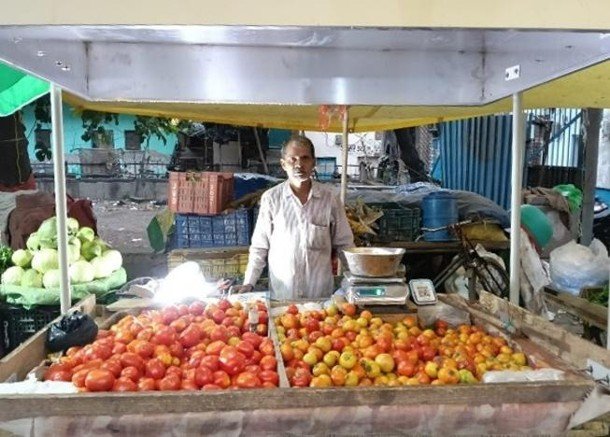
In an informatory note, the IIR estimated that a more efficient cold chain could potentially feed 950 million people per year. For now, 13% of all food produced globally is lost due to lack of refrigeration, mostly in developing countries.


Read more on IIR
 

Related tags: refrigeration, cold chain
Share
Subscribe to the Refindustry Daily Newsletter
Trusted by 3,000+ refrigeration professionals worldwide
or sign up with
Google
LinkedIn
Facebook
No spam. Only industry-relevant news.
Unsubscribe anytime.

Related news

HAVI Group adds first electric Vector eCool trailers in Portugal
HAVI Group has deployed its first two Carrier Transicold Vector eCool refrigeration systems in Portugal, following a successful pilot project. The move marks a significant step in the comp...
27 Jan 2026
CubeCold acquires Ferroice to expand cold storage capacity in Spain
CubeCold has expanded its presence in Spain through the acquisition of Ferrocold 2025 S.L., Ferrolaboratorios Albacete S.L. and Ferroice S.L., collectively referred to as Ferroice. The transaction ...
12 Mar 2026
Schmitz Cargobull delivers 1,000th refrigerated trailer to Germany’...
In January 2026, Schmitz Cargobull delivered its 1,000th S.KO COOL refrigerated trailer to NORDFROST GmbH & Co. KG. The milestone handover took place at NORDFROST’s Schneiderkrug site, marking ...
21 Jan 2026
Copeland launches ZF/ZFI 10–20HP scroll compressors for Asia cold c...
Copeland has introduced its ZF/ZFI 10–20HP scroll compressors and related solutions for low-temperature cold chain applications in Asia. The company said the product line is designed to support coo...
05 Mar 2026
GCCA explores cold chain development in West Africa
In October and November, teams from the Global Cold Chain Foundation (GCCF) visited Senegal, Ghana, and Côte d’Ivoire to assess cold chain development opportunities. Led by Amanda Brondy, Vice ...
07 Jan 2026
NewCold expands UK cold storage capacity with Wakefield III investment
NewCold has announced a major expansion of its automated cold storage facility in Wakefield, United Kingdom. The new phase, known as Wakefield III, is designed to increase national frozen storage c...
09 Jan 2026