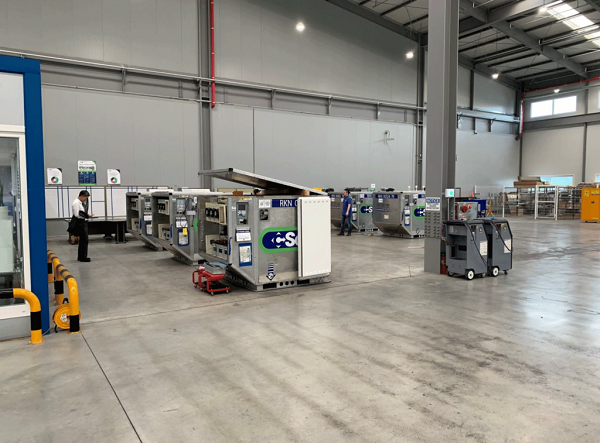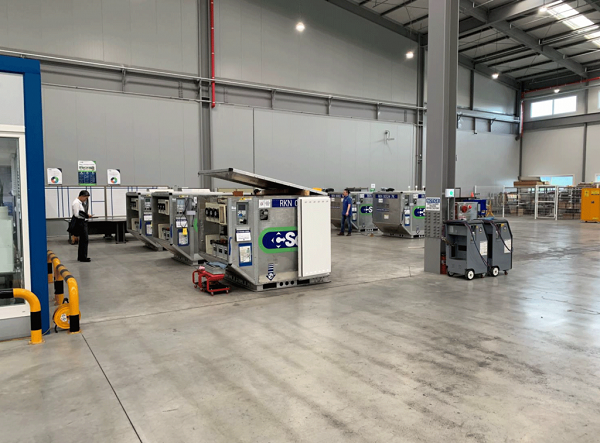
CSafe Global announces the opening of a newly-expanded service center in Incheon. The company-owned facility will allow CSafe to enhance support and service for customers transporting temperature-sensitive products to and from South Korea, while additionally serving as an important gateway hub for the greater APAC region.
CSafe Global, the innovation leader in active temperature-controlled container solutions for the transport of life-enhancing pharmaceuticals, widens its operational footprint with the opening of an enlarged and expanded service center facility at Incheon International Airport (ICN). The new service center was strategically implemented to accommodate the growing demand for CSafe’s specialized air cargo containers in South Korea, and throughout the broader Asia Pacific region.
CSafe’s ICN station is one of the latest of numerous locations around the world established to broaden CSafe’s global service reach and increase the impact on customers who have entrusted CSafe containers to thermally protect vital life-enhancing pharmaceuticals as they are shipped to patients in need.
“We’re excited about our best-in-class service center in Incheon. This new facility will ensure that our active containers are operating at top system performance, keeping temperatures precisely where they need to be for transports of crucial medications. Our service team has been trained and is well prepared to address the significant volume demand for CSafe RKN and CSafe RAP containers from the Incheon station,” said Tom Weir, VP of Global Operations at CSafe Global.
“With the expanded warehouse space and increased repair service throughput, not only can we easily accommodate the increasing product demand from South Korea, but we also strengthen our ability to flex as needed for repositioning large numbers of our temperature-controlled containers to other CSafe hubs within Asia Pacific to meet unexpected or immediate surge demand from our customers and partners across the region.”
To verify that CSafe RKN and CSafe RAP systems are of highest quality and in peak condition, all containers entering CSafe service centers are put through an industry-unique Preventative Maintenance Rebuild (PMR) program to certify optimal operational performance. This protocol goes a long way in providing peace of mind to CSafe customers, while delivering on the CSafe promise to protect what matters most to pharmaceutical companies, so patients can receive what matters most to them.