Esta página solo está disponible en inglés. Ir a la portada en español

×

Questa pagina è disponibile solo in inglese. Home page in italiano

×

Diese Seite ist nur auf Englisch verfügbar. Zur deutschen Startseite

×

Cette page est disponible uniquement en anglais. Aller à la page d'accueil en français

×

Thermo King manufacturing production line in Galway was awarded the ISO 14064-1 (Carbon Neutrality) certification

Thermo King manufacturing production line in Galway was awarded the ISO 14064-1 (Carbon Neutrality) certification

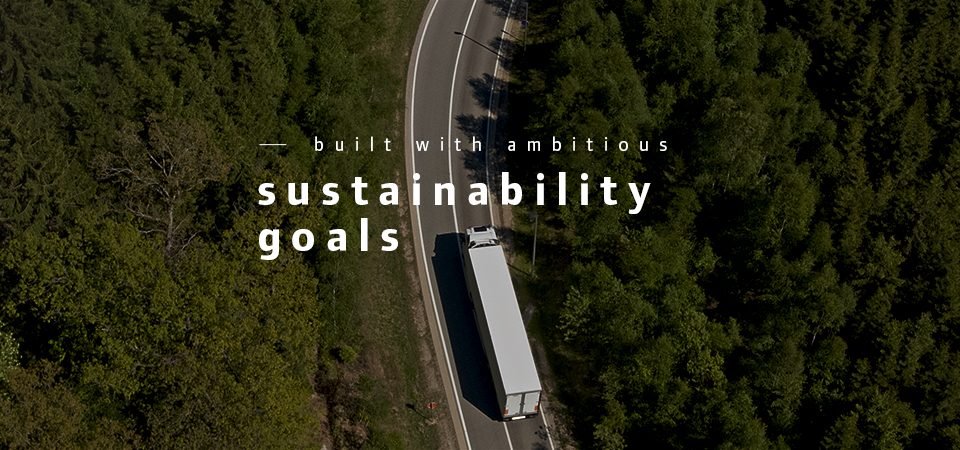
Thermo King announced that its state-of-the-art Thermo King manufacturing production line in Galway, Ireland, was awarded the ISO 14064-1 (Carbon Neutrality) certification from the National Standards Authority of Ireland (NSAI), the first in the country and one of the first in Europe. The recognition demonstrates the company’s path towards their 2030 Sustainability Commitments, which includes leading by example in achieving net-zero carbon emissions, zero waste-to-landfill, net positive water use in its own operations, and its Gigaton challenge to reduce customer emissions by 1 billion metric tons.

The Advancer A-Series trailer line, which was introduced last year, reduced energy used in its production processes by 60 percent over previous models. The refrigeration units are also 30% more fuel-efficient than the market average.The manufacturing line achieves carbon neutrality through a combination of efficiency measures and external carbon emission reduction initiatives. The award is based on greenhouse gas (GHG) emissions data across the entire manufacturing process including welding, e-coating, assembly and unit testing.

“The Advancer and the zero-waste-to-landfill plant in Galway reflect Trane Technologies’ commitment to a sustainable, carbon-free society,” said Francesco Incalza, President Thermo King EMEA for Trane Technologies. “We are proud to receive this certification and continue to prioritize carbon neutral operations and producing energy efficient, clean technologies for heating and cooling buildings and transporting food, medicines, vaccines, and other critical goods. We challenge what’s possible today to accelerate progress towards a sustainable tomorrow.”

The company’s overall carbon emissions targets have been validated by the Science Based Targets Initiative (SBTi); it is one of only 47 companies whose targets have been validated twice. Trane Technologies’ plans include reducing product emissions by 50% in support of the Paris Agreement goal to limit global warming to 1.5 degrees Celsius, requiring net-zero global carbon emissions by 2050.
Get the daily refrigeration briefing

One email a day. Trusted by 3,000+ RACHP professionals.

Related news

Most read this month

All news →

Related insights

Article

Secop’s Solar Direct Drive (SDD) System Earns WHO PQS Approval – The Team Behind It

Partner's material In March 2026, Secop’s Solar Direct Drive Power Management Module was granted WHO PQS prequalification and officially listed in the WHO Catalogue of Prequalified Immunization Devices. The WHO IMD-PQS (Immunization Devices Performance, Quality and Safety programme) is the global benchmark for cold chain equipment used in immunisation. Being listed in its catalogue is

22 Jun 2026
Tech Guide

Case Study – Effect of Louvers or diffusers on air flow distribution and cooling time on a meat log during Chill cycle

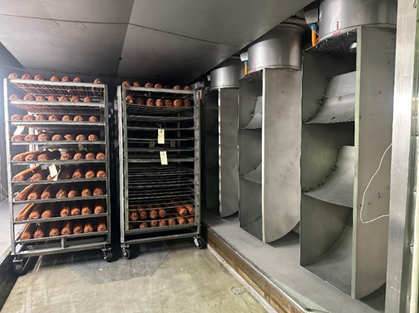
By Kushal Aurangabadkar An experimental analysis was conducted on a cooler space measuring 3.66 m × 6.096 m (12.0 ft × 20.0 ft), equipped with an ammonia refrigeration coil, five 30 cm (12 in.) fans, and five diffusers. The study measured airflow patterns, cooling rates, and heat transfer efficiency in meat storage by testing two configurations:

Kushal Aurangabadkar · 21 Jan 2026
Tech Guide

Total Cost of Ownership (TCO) for Modular Refrigeration Systems in Life Sciences Distribution Centers

by Ramez Naguib, P.E. Introduction Life sciences distribution centers are under immense pressure to deliver consistent temperature control, comply with increasingly stringent regulations, and optimize operational efficiency. Traditional built-up refrigeration systems often prove cumbersome, costly, and slow to implement. In contrast, modular, factory-assembled refrigeration systems have emerged as a compelling alternative. Drawing on lessons from

14 Jan 2026