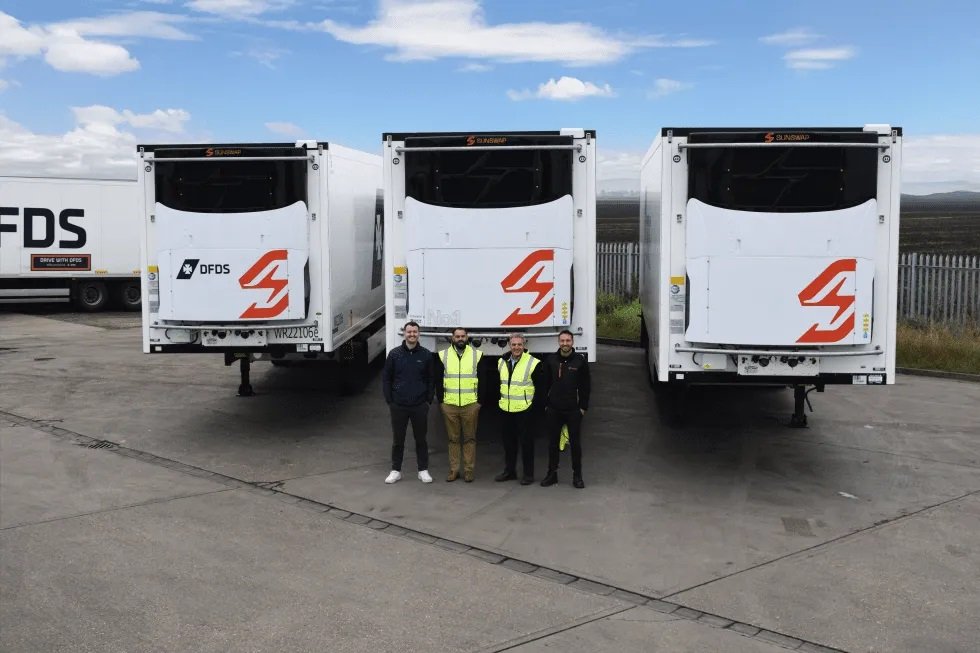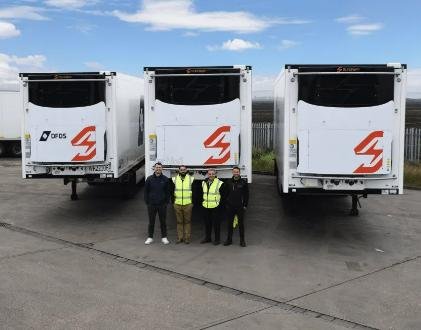
Sunswap, a UK-based clean-tech startup focused on decarbonising cold-chain logistics, has officially launched its zero-emission transport refrigeration units (TRUs) with the delivery of its first 10 ‘Endurance’ units to DFDS, a leader in transportation services. This order marks a major step towards sustainable logistics as DFDS incorporates Sunswap’s innovative technology, moving cold-chain logistics away from traditional diesel-powered units to battery and solar-powered solutions.
The Sunswap Endurance units, manufactured in Surrey, UK, use a combination of batteries and solar panels mounted on refrigerated trailers, allowing them to maintain temperature control for sensitive goods – such as food and pharmaceuticals – without emitting carbon. The recent order follows successful 2022 trials, where 10 units enabled DFDS to potentially cut CO₂ emissions by 895 tonnes and save approximately 500,000 litres of diesel over a ten-year period.
Key Findings and Benefits:
- CO₂ Reduction and Fuel Savings: DFDS’s switch to Sunswap Endurance units could cut operating costs by 71% and achieve a 13% reduction in total cost of ownership, with a significant decrease in reliance on diesel.
- Extended Cooling Duration: Trial data showed that the units could provide up to 22 hours of cooling from a full battery charge, requiring only 80 minutes to recharge.
- Solar Efficiency: The trailer-mounted solar panels can provide between 65% and 100% of the energy needed to operate the TRUs, substantially lowering the need for grid charging.
With mounting regulatory demands and consumer expectations for sustainable logistics, this partnership positions DFDS as a frontrunner in low-carbon cold-chain logistics. DFDS aims to reduce CO₂ emissions intensity by 75% by 2030 and achieve net-zero emissions by 2050, with Sunswap’s technology serving as a key component in this sustainability roadmap.
Industry Reactions:
-
Matt O’Dell, Managing Director of Cold Chain, UK & Ireland at DFDS, emphasized the significance of introducing Sunswap’s sustainable trailers into DFDS’s operations as a vital move toward reaching ambitious carbon reduction targets.
-
Michael Lowe, CEO of Sunswap, celebrated the delivery as a milestone for Sunswap and the broader industry, marking the start of scalable diesel-free cold-chain logistics. He highlighted the company’s commitment to further supporting European retailers and logistics operators in their sustainability goals.
With further units set to roll off Sunswap’s production line in Leatherhead, the collaboration promises to set a new industry standard, paving the way for an environmentally responsible future in cold-chain logistics.