Esta página solo está disponible en inglés. Ir a la portada en español

×

Questa pagina è disponibile solo in inglese. Home page in italiano

×

Diese Seite ist nur auf Englisch verfügbar. Zur deutschen Startseite

×

Cette page est disponible uniquement en anglais. Aller à la page d'accueil en français

×

Emergent Cold LatAm Expands Operations in Colombia with New Food Warehouses

Emergent Cold LatAm Expands Operations in Colombia with New Food Warehouses

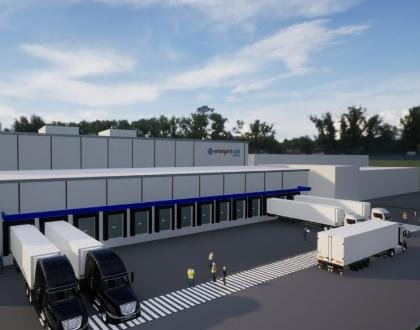
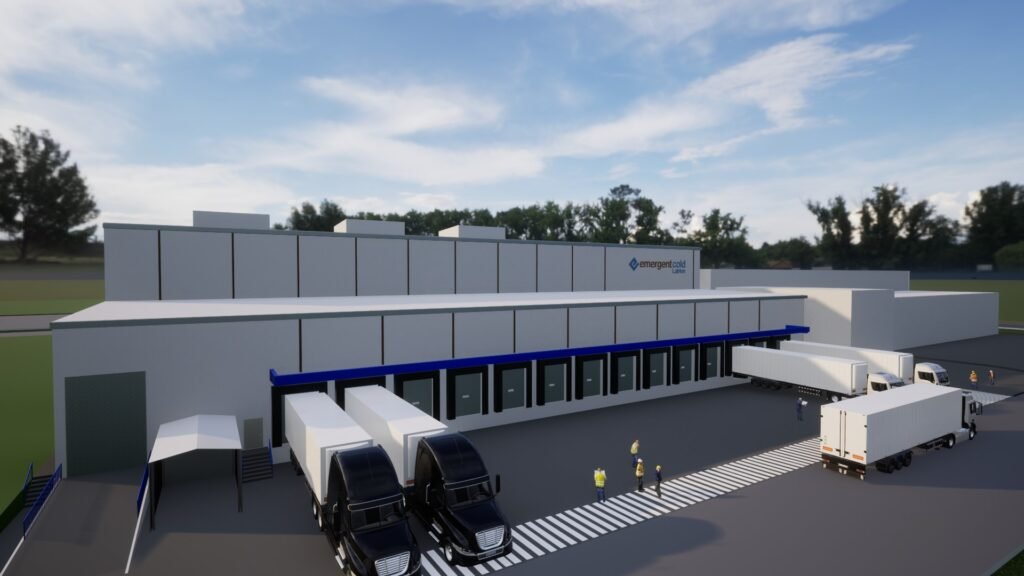
Emergent Cold Latin America (Emergent Cold LatAm), the leading provider of temperature-controlled food storage and logistics solutions in Latin America, has announced the expansion of its storage infrastructure in Colombia through two major projects. These initiatives will add 22,000 new pallet positions to the company’s capacity in the country.

The company is set to build an additional warehouse in Cartagena, which will feature a capacity of 9,000 pallets for chilled or frozen foods. This new facility will be located in the Parque Central Free Trade Zone. Additionally, a recently acquired facility in Funza, within the Bogotá metropolitan area, will be expanded to add 13,000 new pallet positions.

“Bogotá and Cartagena are two strategic regions for our growth in Colombia. The capital, being a major metropolitan area, and the coastal city for having one of the largest ports in Latin America. This is an important step in our expansion in the country, representing the significance of the Colombian market and our commitment to economic development and logistical infrastructure,” said Alain Eichmann, Managing Director for the Caribbean region at Emergent Cold LatAm.

Emergent Cold LatAm began its operations in Colombia in 2022 with the acquisition of Frigorífico Metropolitano (Frigometro), a national network of temperature-controlled storage facilities located in four strategic regions of the country. Later that year, the company also expanded a warehouse in Girón. By 2024, Emergent Cold LatAm completed the acquisition of Red Polar, adding another warehouse to its operations. Currently, the company operates five warehouses across Bogotá, Bucaramanga, Buga, and Cartagena.

These expansions signify Emergent Cold LatAm’s ongoing commitment to enhancing Colombia’s logistical infrastructure and supporting its economic development.

Get the daily refrigeration briefing

One email a day. Trusted by 3,000+ RACHP professionals.

Related news

Most read this month

All news →

Related insights

Secop's Solar Direct Drive (SDD) System Earns WHO PQS Approval – The Team Behind It
Article

Secop’s Solar Direct Drive (SDD) System Earns WHO PQS Approval – The Team Behind It

Partner's material In March 2026, Secop’s Solar Direct Drive Power Management Module was granted WHO PQS prequalification and officially listed in the WHO Catalogue of Prequalified Immunization Devices. The WHO IMD-PQS (Immunization Devices Performance, Quality and Safety programme) is the global benchmark for cold chain equipment used in immunisation. Being listed in its catalogue is

22 Jun 2026
Case Study - Effect of Louvers or diffusers on air flow distribution and cooling time on a meat log during Chill cycle
Tech Guide

Case Study – Effect of Louvers or diffusers on air flow distribution and cooling time on a meat log during Chill cycle

By Kushal Aurangabadkar An experimental analysis was conducted on a cooler space measuring 3.66 m × 6.096 m (12.0 ft × 20.0 ft), equipped with an ammonia refrigeration coil, five 30 cm (12 in.) fans, and five diffusers. The study measured airflow patterns, cooling rates, and heat transfer efficiency in meat storage by testing two configurations:

Kushal Aurangabadkar · 21 Jan 2026
Total Cost of Ownership (TCO) for Modular Refrigeration Systems in Life Sciences Distribution Centers
Tech Guide

Total Cost of Ownership (TCO) for Modular Refrigeration Systems in Life Sciences Distribution Centers

by Ramez Naguib, P.E. Introduction Life sciences distribution centers are under immense pressure to deliver consistent temperature control, comply with increasingly stringent regulations, and optimize operational efficiency. Traditional built-up refrigeration systems often prove cumbersome, costly, and slow to implement. In contrast, modular, factory-assembled refrigeration systems have emerged as a compelling alternative. Drawing on lessons from

14 Jan 2026