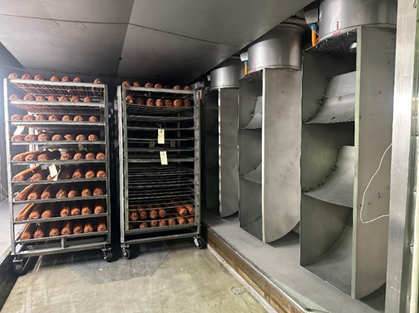
The Global Cold Chain Alliance has published its 2026 Global Top 25 List of temperature-controlled warehousing and logistics companies, reporting continued capacity growth among its largest member operators. The companies now operate 7.76 billion cubic feet (219.7 million cubic meters) of temperature-controlled space, up 6.3% from 2025.
The annual list is based on the total reported capacity of temperature-controlled space operated by GCCA members. The 2026 growth rate is lower than the 8.3% expansion recorded in 2025, with GCCA citing higher interest rates and tightening market conditions as factors making operators more selective about new development.
Regional data showed different growth patterns. The North America Top 25 increased capacity by 260 million cubic feet to 5.26 billion cubic feet (148.9 million cubic meters). The European Top 10 added 172 million cubic feet and now operates 1.6 billion cubic feet (45.3 million cubic meters). The Latin America Top 10 increased by 56.2 million cubic feet to 634.2 million cubic feet (18 million cubic meters), with GCCA noting that growth was driven largely by M&A activity.
GCCA President and CEO Sara Stickler presented the findings at GCCA Convention 2026, held April 27-29 in Scottsdale, Arizona. “The world’s top cold storage companies have continued expanding their capacity over the past year, continuing a decade-long trend driven by growing demand,” Stickler said.
“Cold chain services are essential for keeping food and many other temperature sensitive goods safe. Demand keeps rising as populations grow, consumer preferences evolve, and complex global supply chains navigate disruptions and challenges. By investing in capacity, technology, and workforce skills, third-party cold chain operators are well-positioned to meet future needs despite challenging market conditions.”
GCCA said its membership includes more than 1,500 temperature-controlled facilities and members in over 92 countries. Warehouse members provide logistics services including storage, transportation, processing, blast freezing and exports.
GCCA Top Lists for 2026
- Global Top 25 List – The 2026 list of the top 25 largest refrigerated warehousing and logistics companies in the world.
- North American Top 25 List – The 2026 list of the top 25 largest refrigerated warehousing and logistics companies in Canada and the United States.
- Latin American Top 10 List – The 2026 list of the top 10 largest refrigerated warehousing and logistics companies in Latin America.
- European Top 10 List – The 2026 list of the top 10 largest refrigerated warehousing and logistics companies in Europe.