Esta página solo está disponible en inglés. Ir a la portada en español

×

Questa pagina è disponibile solo in inglese. Home page in italiano

×

Diese Seite ist nur auf Englisch verfügbar. Zur deutschen Startseite

×

Cette page est disponible uniquement en anglais. Aller à la page d'accueil en français

×

Interko Adds AI and Data Analytics to RipePilot Ripening System

The platform links sensor data and algorithms to improve batch visibility, automate quality monitoring and support predictive control.

Interko Adds AI and Data Analytics to RipePilot Ripening System

Interko, a Dutch manufacturer of fresh fruit ripening rooms, announced an expansion of its RipePilot control system with advanced data processing capabilities and is developing artificial intelligence functionality for its next-generation ripening solutions.

A new digital data network enables RipePilot to collect and process larger and more complex datasets across ripening operations. The system interprets readings from multiple sensors measuring temperature, CO2, ethylene, and humidity, giving operators data-driven control of the ripening process and a more accurate view of how each batch progresses. RipePilot now functions as a digital intelligence platform that connects sensors, algorithms, and performance data.

The platform supports fruit-specific programmes for bananas, avocados, and mangoes, allowing operators to apply different ripeness profiles depending on whether the end market is fresh, processed, or frozen. The Interko ripening room range, including the Ultimo, Optimo, Axesso, and Mobilo systems, can also handle papayas, pears, apricots, peaches, kiwifruit, and tomatoes, as well as citrus de-greening and pre-cooling. RipePilot enables automated quality monitoring, performance tracking, and exportable reports, intended to ensure every batch reaches the desired ripeness even when starting conditions vary significantly.

Interko is developing intelligent algorithms to support decisions such as ethylene injection timing, predict condition changes, and optimise ripening cycles in real time. By analysing datasets from large numbers of rooms, the algorithms aim to move operators from reactive control toward predictive, real-time decision-making, supporting more proactive and predictable management of fruit quality. A next-generation ripening room cooler is scheduled for launch soon, designed to lay the foundation for further AI-driven functionality and digital process control.

“Ripening has become a data-driven, digitally-managed process rather than a traditional experience-based craft. Through digitalisation, our customers can optimise fruit quality, achieve specific ripeness levels, reduce energy costs, and gain the crucial insights needed to operate more precisely and proactively,” said Chris Maat, Managing Director and Partner at Interko.
Get the daily refrigeration briefing

One email a day. Trusted by 3,000+ RACHP professionals.

More on Cold Chain

All on Cold Chain →

Insights

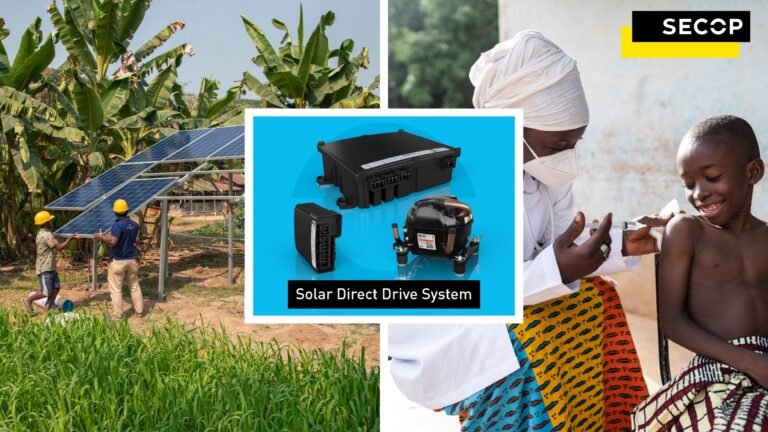
Secop's Solar Direct Drive (SDD) System Earns WHO PQS Approval – The Team Behind It
Article

Secop’s Solar Direct Drive (SDD) System Earns WHO PQS Approval – The Team Behind It

Partner's material In March 2026, Secop’s Solar Direct Drive Power Management Module was granted WHO PQS prequalification and officially listed in the WHO Catalogue of Prequalified Immunization Devices. The WHO IMD-PQS (Immunization Devices Performance, Quality and Safety programme) is the global benchmark for cold chain equipment used in immunisation. Being listed in its catalogue is

22 Jun 2026
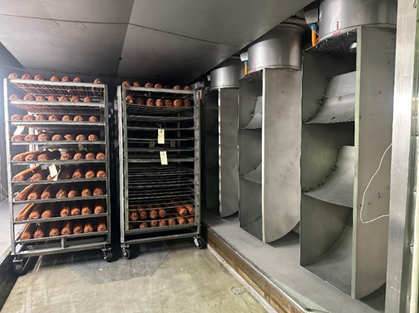
Case Study - Effect of Louvers or diffusers on air flow distribution and cooling time on a meat log during Chill cycle
Tech Guide

Case Study – Effect of Louvers or diffusers on air flow distribution and cooling time on a meat log during Chill cycle

By Kushal Aurangabadkar An experimental analysis was conducted on a cooler space measuring 3.66 m × 6.096 m (12.0 ft × 20.0 ft), equipped with an ammonia refrigeration coil, five 30 cm (12 in.) fans, and five diffusers. The study measured airflow patterns, cooling rates, and heat transfer efficiency in meat storage by testing two configurations:

Kushal Aurangabadkar · 21 Jan 2026
Total Cost of Ownership (TCO) for Modular Refrigeration Systems in Life Sciences Distribution Centers
Tech Guide

Total Cost of Ownership (TCO) for Modular Refrigeration Systems in Life Sciences Distribution Centers

by Ramez Naguib, P.E. Introduction Life sciences distribution centers are under immense pressure to deliver consistent temperature control, comply with increasingly stringent regulations, and optimize operational efficiency. Traditional built-up refrigeration systems often prove cumbersome, costly, and slow to implement. In contrast, modular, factory-assembled refrigeration systems have emerged as a compelling alternative. Drawing on lessons from

14 Jan 2026
Everything on Cold Chain: 2,039 articles, 1 case study, 23 insights

Most read this month

All news →