Esta página solo está disponible en inglés. Ir a la portada en español

×

Questa pagina è disponibile solo in inglese. Home page in italiano

×

Diese Seite ist nur auf Englisch verfügbar. Zur deutschen Startseite

×

Cette page est disponible uniquement en anglais. Aller à la page d'accueil en français

×

Maersk expands depot network in southern Brazil

The Rio Grande and Paranaguá sites add reefer plug capacity and services to improve container flows during peak export periods.

Maersk expands depot network in southern Brazil

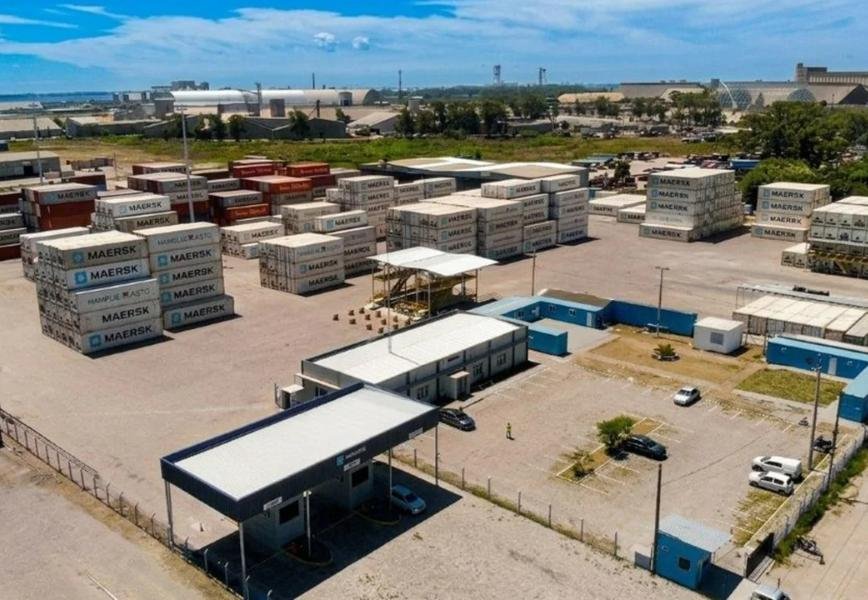
A.P. Moller – Maersk has announced investments in two inland facilities in Rio Grande, Rio Grande do Sul, and Paranaguá, Paraná, expanding its logistics network in southern Brazil. The company said the sites were selected for their position in high-volume export corridors and proximity to major production centers, supporting integrated end-to-end logistics solutions and Brazil’s role in South American trade flows.

According to Maersk, both facilities are located near their respective ports and have direct road access to regional distribution hubs. The company said this will enable faster container rotation, improved inland transport efficiency and reduced bottlenecks during seasonal peaks. Rio Grande also supports the cabotage network operated by Aliança Navegação e Logística.

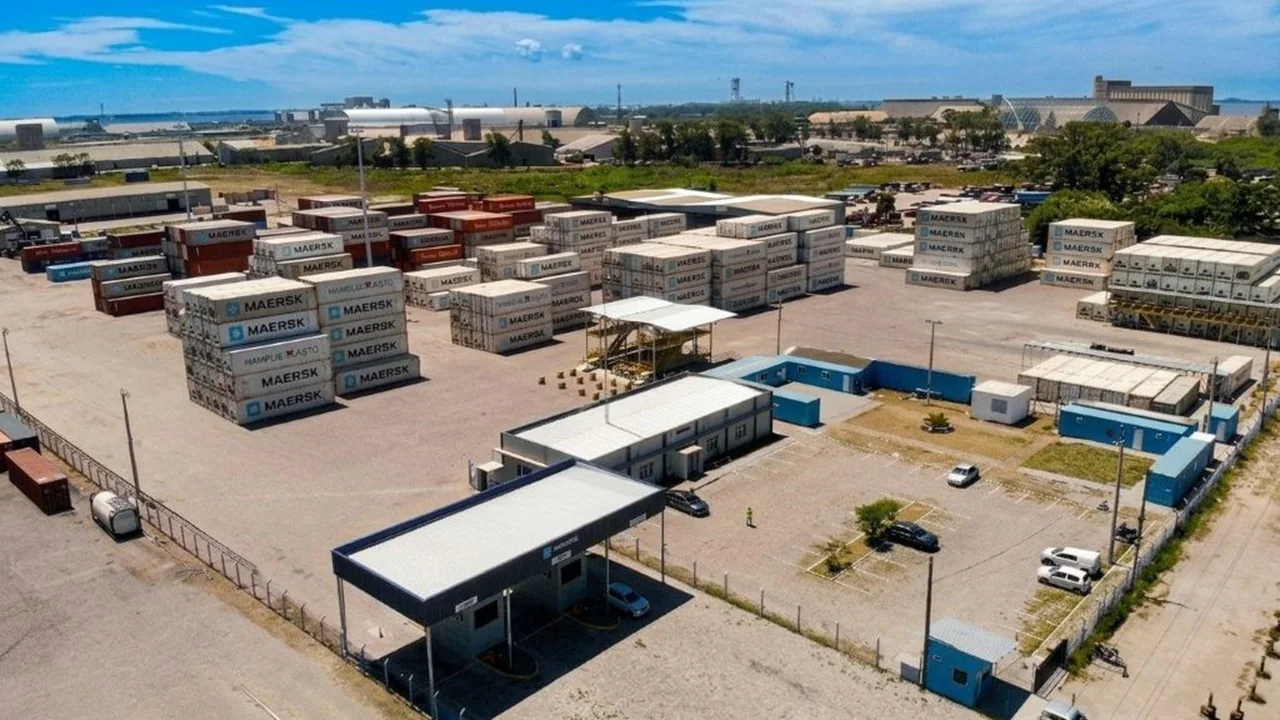
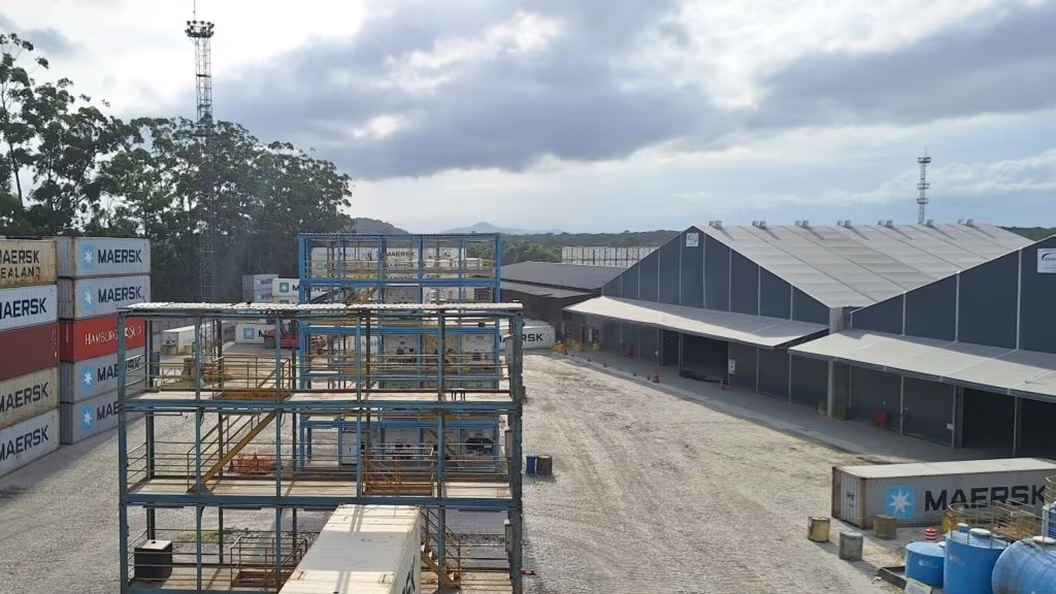
In Paranaguá, Maersk said it is adding 3,160 m² (approx. 34,000 sq ft) to bring the Cargo Services area to 6,000 m² (approx. 64,600 sq ft), aimed at increasing throughput and improving truck flow during periods of high demand for agricultural and refrigerated cargo. In Rio Grande, the depot is located 2.5 km (approx. 1.6 miles) from the port and covers about 70,000 m² (approx. 753,000 sq ft). Maersk said the Rio Grande site is designed as a multipurpose depot for high-volume operations, with dry and reefer container handling, empty and full container storage, cargo services, cross-docking and operational support activities.

The company said both locations include optimized layouts for container handling and truck circulation, dedicated reefer plug capacity, and infrastructure for safe and efficient operations. The facilities will also offer container inspection, cleaning, repairs and operational support services, while supporting integration with inland transport, customs-related activities and ocean services. “By expanding capacity near the ports of Rio Grande and Paranaguá, we strengthen inland reliability, support peak season demand, and create simpler end to end logistics solutions for the sectors driving Brazil’s trade growth,” said Ricardo Rocha, Vice President – Managing Director East Coast South America.
Get the daily refrigeration briefing

One email a day. Trusted by 3,000+ RACHP professionals.

Related news

Most read this month

All news →

Related insights

Article

Secop’s Solar Direct Drive (SDD) System Earns WHO PQS Approval – The Team Behind It

Partner's material In March 2026, Secop’s Solar Direct Drive Power Management Module was granted WHO PQS prequalification and officially listed in the WHO Catalogue of Prequalified Immunization Devices. The WHO IMD-PQS (Immunization Devices Performance, Quality and Safety programme) is the global benchmark for cold chain equipment used in immunisation. Being listed in its catalogue is

22 Jun 2026
Tech Guide

Case Study – Effect of Louvers or diffusers on air flow distribution and cooling time on a meat log during Chill cycle

By Kushal Aurangabadkar An experimental analysis was conducted on a cooler space measuring 3.66 m × 6.096 m (12.0 ft × 20.0 ft), equipped with an ammonia refrigeration coil, five 30 cm (12 in.) fans, and five diffusers. The study measured airflow patterns, cooling rates, and heat transfer efficiency in meat storage by testing two configurations:

Kushal Aurangabadkar · 21 Jan 2026
Tech Guide

Total Cost of Ownership (TCO) for Modular Refrigeration Systems in Life Sciences Distribution Centers

by Ramez Naguib, P.E. Introduction Life sciences distribution centers are under immense pressure to deliver consistent temperature control, comply with increasingly stringent regulations, and optimize operational efficiency. Traditional built-up refrigeration systems often prove cumbersome, costly, and slow to implement. In contrast, modular, factory-assembled refrigeration systems have emerged as a compelling alternative. Drawing on lessons from

14 Jan 2026