India’s escalating heat waves, with 2024 temperatures nearing 50°C in some regions, have underscored the urgency of robust Heat Action Plans (HAPs). Over 40,000 heatstroke cases were reported across 17 states, highlighting the need for both immediate and long-term heat mitigation strategies.
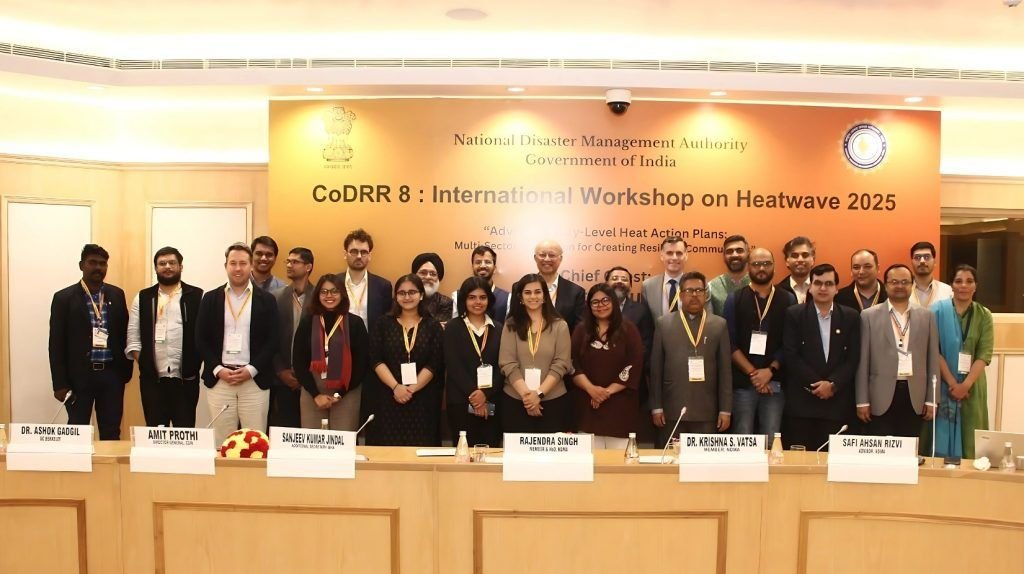
To address these challenges, the United Nations Environment Programme (UNEP) Cool Coalition partnered with India’s National Disaster Management Authority (NDMA) to co-host the International Workshop on Heat Waves 2025 on February 13-14 in New Delhi. The event, themed “Advancing City-Level Heat Action Plans: Multi-Sectoral Adaptation for Resilient Communities,” brought together national and international experts, policymakers, and practitioners to discuss strategies for strengthening heat resilience.
Key Discussions and Takeaways
The workshop built upon past national editions by integrating global perspectives on heat adaptation. Experts emphasized the importance of Urban Heat Island Effect (UHIE) mapping to guide mitigation strategies. UNEP and CEPT University introduced a National Methodology for UHIE Assessment, tested in Tamil Nadu, which analyzes land temperature, surface materials, and green cover to identify high-risk areas. NDMA and UNEP Cool Coalition plan further testing and expansion of this methodology.
Additionally, the Chief Heat Officer (CHO) model was presented as a governance approach to enhance city-level heat response. Jane Gilbert, Chief Heat Officer of Miami-Dade County, shared insights from her Climate & Heat Health Task Force, while Dr. Eleni Myrivili emphasized the need for CHOs to drive both immediate preparedness and long-term urban redesign. NDMA identified this as a key takeaway, advocating for CHO implementation in Indian cities.
Workshop Outcomes
The discussions highlighted several critical areas for advancing heat resilience:
- Scaling Up Heat Action Plans (HAPs): Strengthening city-level HAPs and incorporating urban redesign for long-term heat mitigation.
- Innovative Financing: Identifying financial mechanisms to support HAP implementation and sustainable cooling solutions.
- Enhanced Governance Coordination: Strengthening collaboration across ministries, state departments, and Urban Local Bodies (ULBs) for effective heat response.
- Passive Cooling Solutions: Expanding cooling interventions for vulnerable populations.
- Early Warning Systems: Improving forecasting and preparedness for extreme heat events.
India’s Cooling Goals and Future Collaboration
Under the India Cooling Action Plan (ICAP), India aims to reduce cooling demand by 25% and refrigerant demand by 25-30% by 2038, while ensuring accessibility and affordability. UNEP, through the Cool Coalition, continues to support India in embedding heat resilience and sustainable cooling into urban planning, food systems, and climate strategies.
Dr. Balakrishna Pisupati, UNEP India Country Head, emphasized a multidisciplinary approach to extreme heat, stating, “Technical solutions for many heat-related challenges exist, but they must be reinforced by strong policies at global, regional, national, and sub-national levels.”
The workshop marked a step forward in aligning global expertise with India’s heat resilience efforts, ensuring that cities are better prepared to withstand rising temperatures in the years ahead.