Daikin has released its 2026 Integrated Report and Sustainability Report, outlining its growth strategy alongside environmental priorities for its air-conditioning and refrigeration businesses. The two reports are positioned as complementary publications: the Integrated Report covers growth strategy from financial and non-financial perspectives, while the Sustainability Report provides more detailed non-financial disclosures.
The Sustainability Report highlights the dual challenge facing the cooling sector. Daikin says cooling is becoming increasingly important for health and daily life as temperatures rise, while growing cooling demand can also increase electricity consumption and greenhouse gas emissions. The report cites a projection that, under a 2°C warming scenario, the share of the global population exposed to extreme heat of at least 3,000 Cooling Degree Days could rise from 23% in 2010 to 41% in 2050.
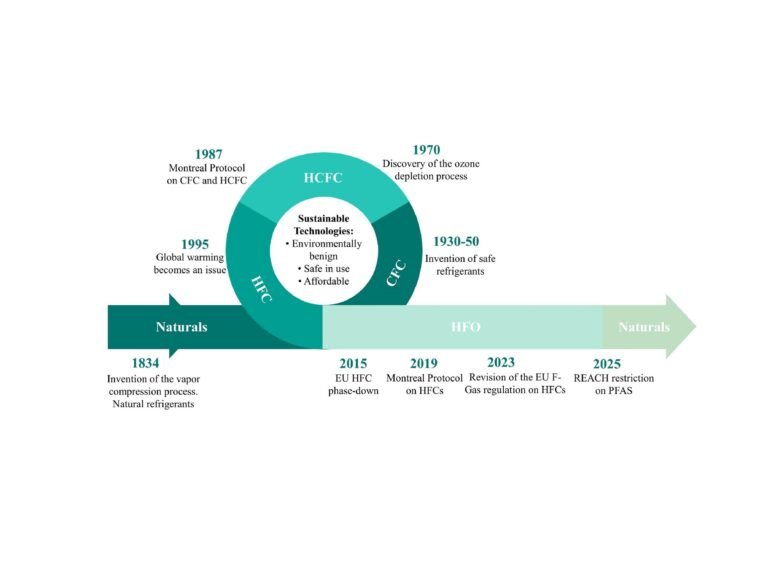
For the HVACR sector, the report identifies improving air-conditioning energy efficiency and reducing the environmental impact of refrigerants among key areas of action. It also covers refrigerant eco-cycles and circular-economy initiatives. Daikin notes that the Kigali Amendment requires the phased reduction of HFC production and consumption, while the transition from fossil-fuel combustion heating to high-efficiency heat pump heating is progressing.
The company is linking these environmental priorities with its new FUSION30 strategic management plan. Daikin plans to expand lifecycle-based solutions covering equipment design, installation, operation and maintenance, including the use of operational data for energy-saving proposals. It aims to increase solutions business from 28% of air-conditioning sales in the fiscal year ended March 2026 to 40% in the fiscal year ending March 2031.
Daikin operates in more than 170 countries and regions, with its air-conditioning activities covering residential and commercial air conditioning, heating and hot water, air-conditioning systems and refrigeration. The company says its approach is intended to address rising demand for cooling while reducing greenhouse gas emissions through energy efficiency, refrigerant measures and heat pump technologies.