Esta página solo está disponible en inglés. Ir a la portada en español

×

Questa pagina è disponibile solo in inglese. Home page in italiano

×

Diese Seite ist nur auf Englisch verfügbar. Zur deutschen Startseite

×

Cette page est disponible uniquement en anglais. Aller à la page d'accueil en français

×

Schmitz Cargobull Expands Delivery Centre for Refrigerated and Box Body Semi-Trailers in Vreden

Schmitz Cargobull Expands Delivery Centre for Refrigerated and Box Body Semi-Trailers in Vreden
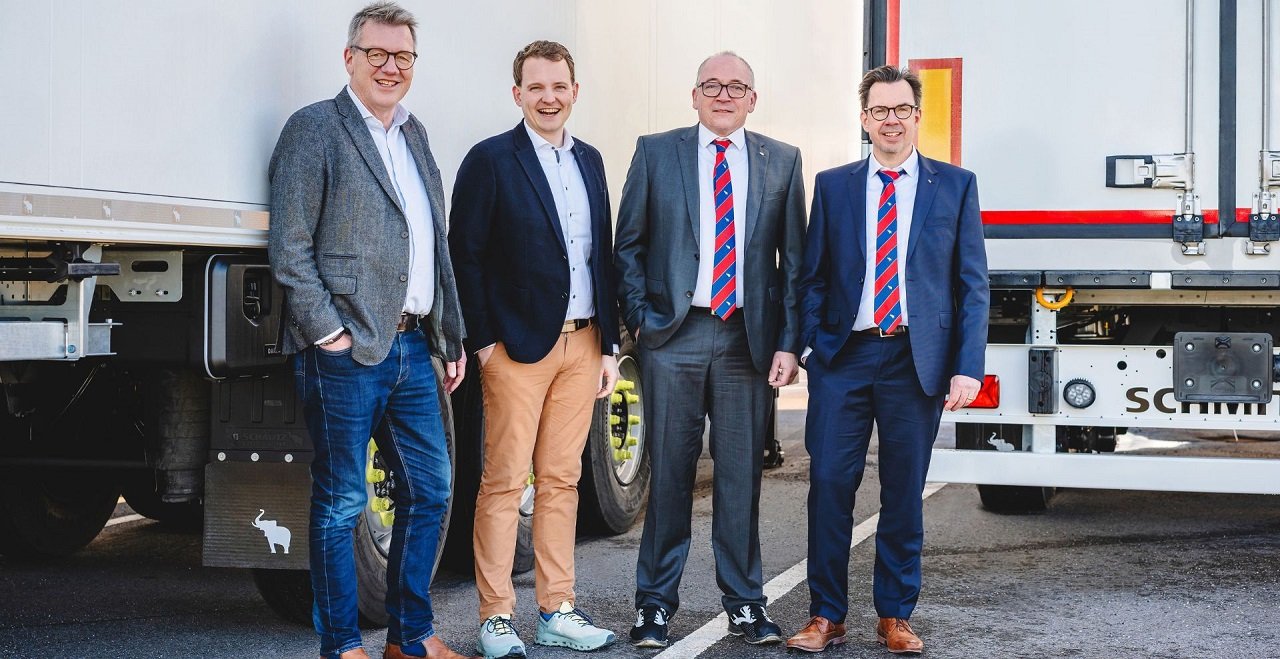
Schmitz Cargobull has received planning approval to expand its delivery area for refrigerated and box body semi-trailers at its Vreden, Germany site. The project aims to accelerate vehicle delivery while reducing environmental impact.

Construction is scheduled to begin in the first half of 2025 and will take about a year. The expansion will add approximately 11 hectares to the site, including 750 new vehicle parking spaces. This development will streamline logistics and reduce transportation needs, cutting emissions and easing local traffic congestion.

CO₂ Reduction and Sustainability Initiatives

The expansion will significantly lower the company’s reliance on external parking areas. The number of rented parking locations around the plant will be reduced from over 20 to 10, all within six kilometers of the facility.

“The large parking area on site is also important in terms of sustainability. At the moment, we have to park some vehicles a number of kilometers away from the plant until they are ready to be picked up by the customer, as there is not enough parking space at the delivery centre. Thanks to the 750 extra parking spaces, the number of transport kilometers required can be reduced by around 200,000 kilometers a year, which corresponds to a saving of around 80 per cent. This will significantly reduce strain on local traffic and will also cut CO₂ emissions from our in-house transport by around 80 per cent, which will save approximately 150 tonnes of CO₂ per year,” said Plant Director Christian Glebe.

The initiative also includes increasing the use of electrically powered yard vehicles to further minimize emissions and noise pollution.

Through this investment, Schmitz Cargobull reinforces its commitment to sustainability while optimizing operations at the Vreden site.
Get the daily refrigeration briefing

One email a day. Trusted by 3,000+ RACHP professionals.

More on Cold Chain

All on Cold Chain →

Insights

Secop's Solar Direct Drive (SDD) System Earns WHO PQS Approval – The Team Behind It
Article

Secop’s Solar Direct Drive (SDD) System Earns WHO PQS Approval – The Team Behind It

Partner's material In March 2026, Secop’s Solar Direct Drive Power Management Module was granted WHO PQS prequalification and officially listed in the WHO Catalogue of Prequalified Immunization Devices. The WHO IMD-PQS (Immunization Devices Performance, Quality and Safety programme) is the global benchmark for cold chain equipment used in immunisation. Being listed in its catalogue is

22 Jun 2026
Case Study - Effect of Louvers or diffusers on air flow distribution and cooling time on a meat log during Chill cycle
Tech Guide

Case Study – Effect of Louvers or diffusers on air flow distribution and cooling time on a meat log during Chill cycle

By Kushal Aurangabadkar An experimental analysis was conducted on a cooler space measuring 3.66 m × 6.096 m (12.0 ft × 20.0 ft), equipped with an ammonia refrigeration coil, five 30 cm (12 in.) fans, and five diffusers. The study measured airflow patterns, cooling rates, and heat transfer efficiency in meat storage by testing two configurations:

Kushal Aurangabadkar · 21 Jan 2026
Total Cost of Ownership (TCO) for Modular Refrigeration Systems in Life Sciences Distribution Centers
Tech Guide

Total Cost of Ownership (TCO) for Modular Refrigeration Systems in Life Sciences Distribution Centers

by Ramez Naguib, P.E. Introduction Life sciences distribution centers are under immense pressure to deliver consistent temperature control, comply with increasingly stringent regulations, and optimize operational efficiency. Traditional built-up refrigeration systems often prove cumbersome, costly, and slow to implement. In contrast, modular, factory-assembled refrigeration systems have emerged as a compelling alternative. Drawing on lessons from

14 Jan 2026
Everything on Cold Chain: 2,039 articles, 1 case study, 23 insights

Most read this month

All news →