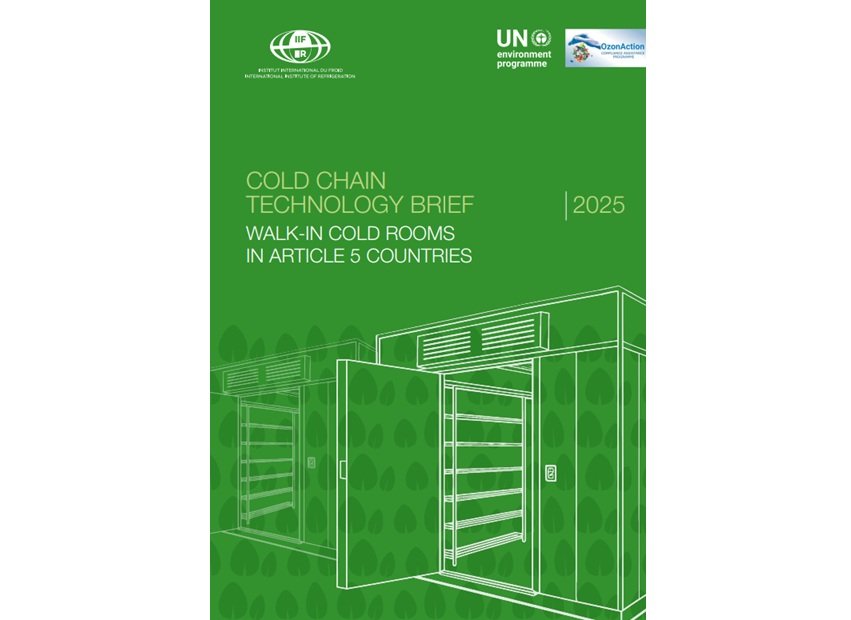
UNEP and the International Institute of Refrigeration have published a 2025 technology brief on walk-in cold rooms in Article 5 countries, covering available technologies, refrigerants, foam blowing agents and environmental impacts. The brief says these small refrigerated storage units are used mainly for chilled horticultural products and other perishable foods, and already support export chains for products such as flowers and herbs.
The report focuses on commercially available small WICRs, typically 5 to 80 cubic metres (about 177 to 2,825 cubic feet), with some units reaching up to twice that size. Most units in low- and middle-income economies store chilled foods between 0 °C and +18 °C (32 °F to 64 °F), while freezer stores are described as very rare.
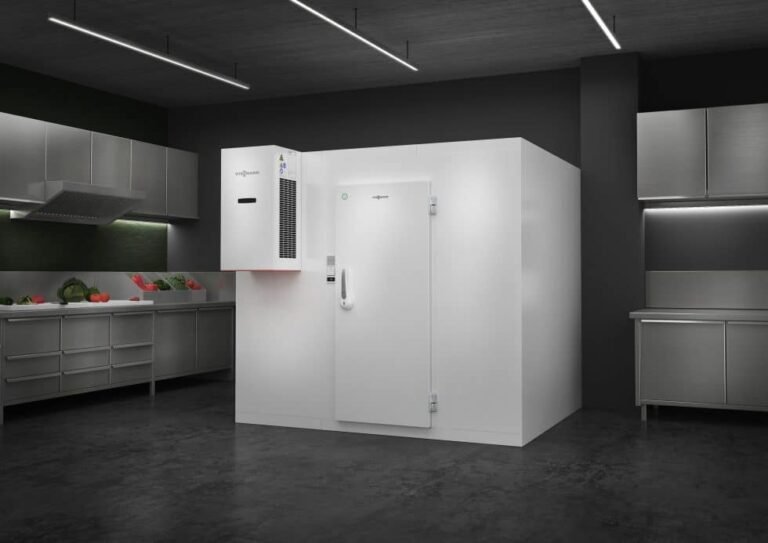
The brief identifies four main WICR types used in Article 5 countries: pre-assembled cold rooms, prefabricated kits, refrigerated ISO containers and custom-built or locally constructed rooms. Cooling systems are most often monobloc or split units using direct expansion refrigerant circuits. Thermal energy storage and passive assist measures such as shading and evaporative cooling are also described as options for managing power interruptions and reducing cooling demand.
The publication says WICR units have historically used R-404A, while other HFCs used include R-134a, R-410A, R-125, R-22 and R-32. It notes that virtually all WICR suppliers now provide equipment using low- to ultra-low-GWP alternatives such as R-290 or R-600a, but says hydrocarbon refrigerants require design restrictions, technical standards and proper training because they are highly flammable.
Affordability remains a central challenge. The report says a 33 cubic metre (about 1,165 cubic feet) WICR, equivalent to a 20-foot container, costs between USD 20,000 and USD 50,000, which is beyond the financial means of smallholder farmers in low- and middle-income economies. It says WICRs are more feasible for communities, larger agricultural enterprises, aggregators and export-oriented operations when they are part of a wider cold chain.
The brief recommends coordinated policies, awareness raising, skills development, support for early adopters, financing, business-plan coaching and equipment quality assurance. It also highlights the need for food safety regulations, national cooling action plans, safety skills for natural refrigerants and financial mechanisms to improve affordability.