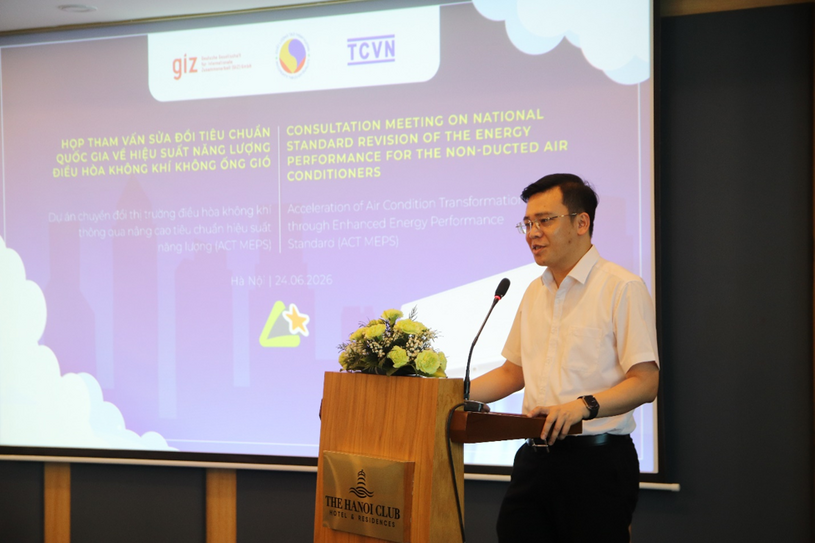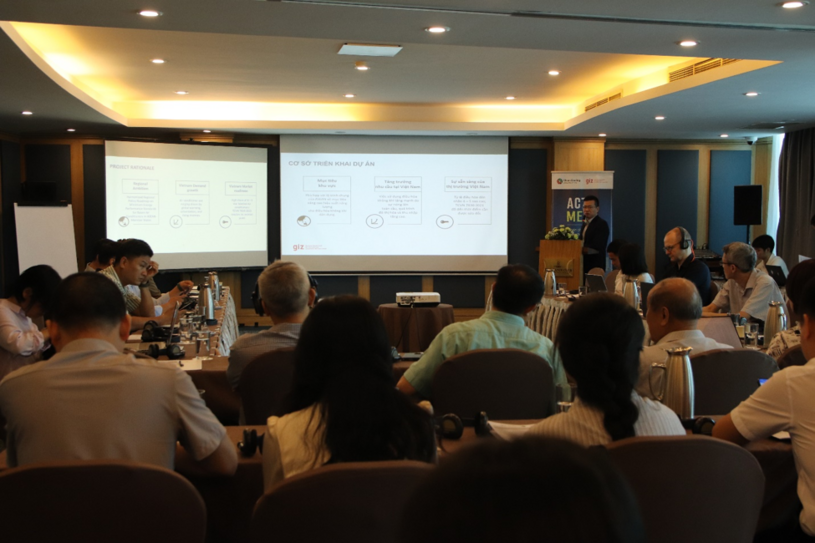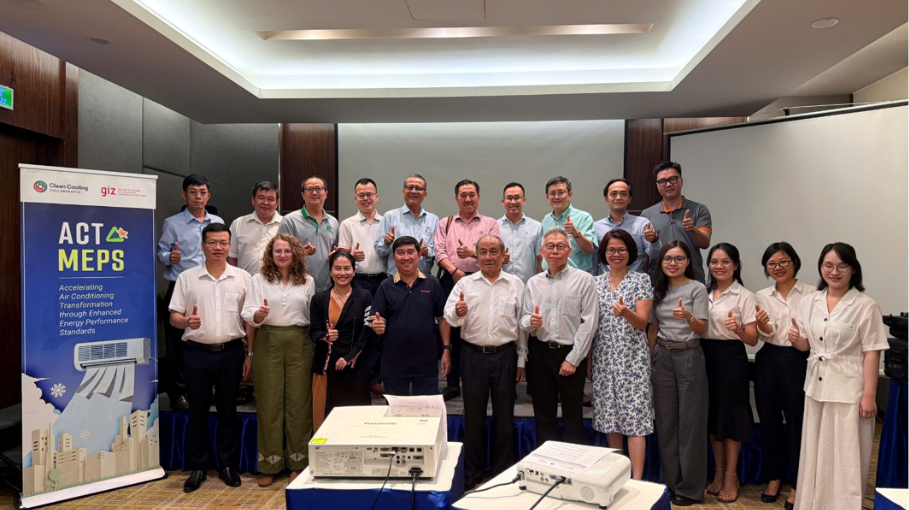
The Vietnam National Standards and Quality Institute (VSQI), in collaboration with GIZ Proklima, has held consultations on revising TCVN 7830, the national standard covering energy performance of non-ducted air conditioners. Meetings in Hanoi and Ho Chi Minh City in June brought together government agencies, researchers, universities, businesses, testing and certification organizations and other air conditioning sector stakeholders.
According to EVN data cited by GIZ representative Tran Tien Hoa, air conditioners have recently accounted for 30% to 60% of total household electricity consumption in Viet Nam. Hoa said Viet Nam has joined the Global Cooling Pledge and set a goal of improving the efficiency of cooling devices by around 50% by 2030 compared with 2022 levels. ASEAN countries are also working towards a Minimum Energy Performance (MEPS) level of 6.09 by 2030.
The consultations included presentations on GIZ’s Accelerating Air Conditioning Transformation through Enhanced Energy Performance Standard (ACT MEPS) project, air conditioner market research and the impacts of raising MEPS, as well as the development of the draft revision of TCVN 7830. International Institute for Energy Conservation Vice President for Asia-Pacific Sommai Phon-Amnuaisuk also presented experiences with MEPS for room air conditioners in countries across the region.
The ACT MEPS project, implemented by GIZ since 2013, supports the transformation of Viet Nam’s air conditioning market through enhanced Minimum Energy Performance Standards. Recommendations collected during the consultations will be used by the Technical Committee to further refine the draft TCVN 7830.
Dr. Trieu Viet Phuong, Director of VSQI, said reviewing and strengthening energy performance requirements for room air conditioners is important for economical and efficient energy use, energy security and Viet Nam’s commitments to reducing greenhouse gas emissions. GIZ representative Tran Tien Hoa expressed hope that the meeting’s input would contribute to finalizing and releasing the revised TCVN 7830 later in 2026.