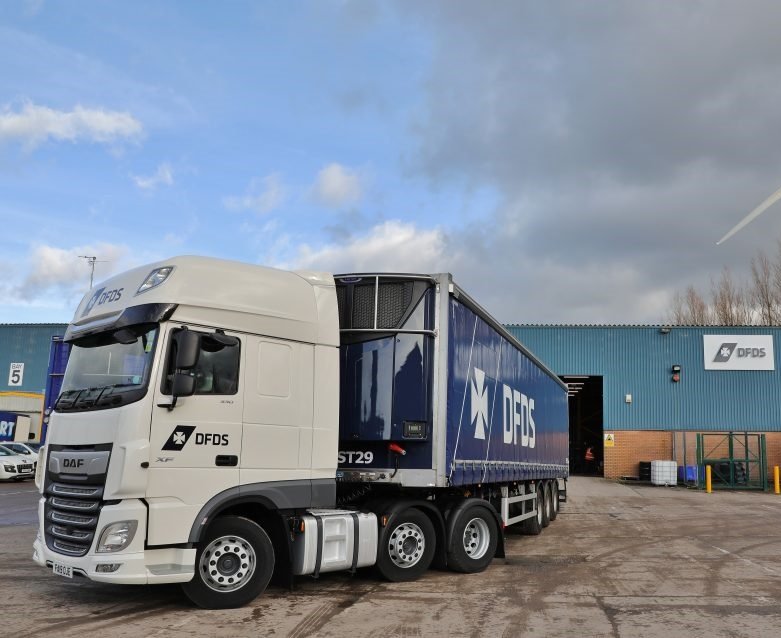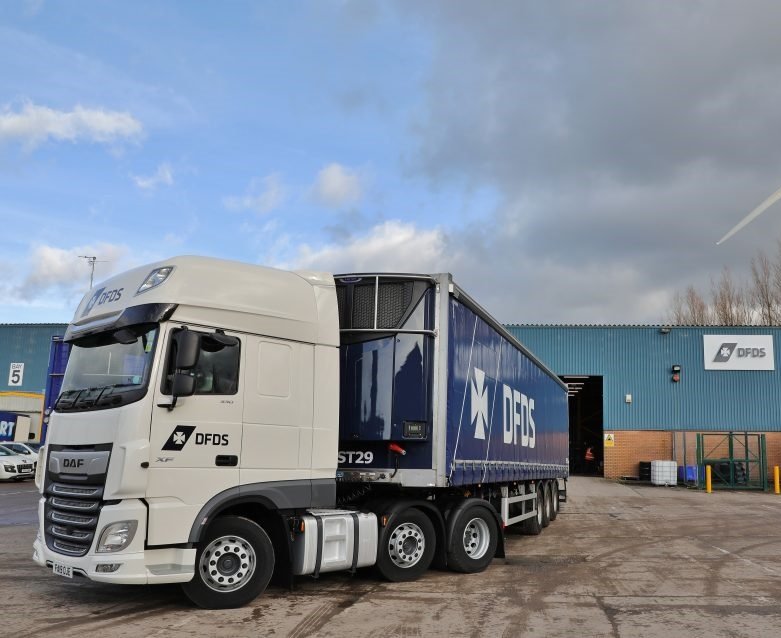
Cold Chain Federation member, International shipping and logistics company, DFDS, has taken delivery of three new trailers with another Cold Chain Federation member Carrier Transicold Vector HE 19 refrigeration units, as part of the company’s ongoing commitment to improving sustainability across its business.
Chosen for its fuel efficiency and improved refrigerant containment, the new Vector HE 19 units – mounted to 13.6-metre Gray & Adams trailers – are replacements for competitor systems. They become the latest Carrier-cooled assets to enter service in DFDS’s 122-unit refrigerated trailer fleet in the Shetland Isles, Scotland.
“Carrier Transicold is a market leader when it comes to sustainable solutions for refrigerated transport,” said Jack Hodgson, fleet manager, DFDS. “Purchasing these units supports our CSR commitment, which aims to dramatically reduce the company’s carbon footprint. A cleaner, more efficient trailer fleet will play a very important role in that process.”
The Vector HE 19 delivers up to 30% fuel savings – when compared to the previous generation Vector 1950 – thanks to a combination of Carrier Transicold’s all-electric E-Drive technology and an all new multi-speed engine design. These fuel-saving figures have been independently verified against the European Committee for Standardisation (CEN) and the Association Technic Energy Environment (ATEE) partial load fuel burn standards. The oil drain interval for the unit’s engine is doubled when compared to its predecessor.
In addition, the Vector HE 19 unit’s use of a fully hermetic scroll compressor and economiser helps deliver a 40% increase in refrigeration capacity during pull-down, while reducing the chance of refrigerant escape by 50%. The system is also 19% more efficient when plugged into the electrical grid on standby. Combined, these factors deliver reduced diesel, maintenance and electricity bills, while helping to shrink DFDS’s carbon footprint.
“These trailers operate very intensive routes and are only ever off the road when undergoing maintenance. The improved fuel savings and refrigerant containment will help with both our environmental credentials and our operating costs, so it was a win-win,” added Hodgson.
DFDS operates a total of 800 refrigerated trailers across its entire commercial vehicle fleet. The three new units are expected to remain in operation for 10 years, working seven days a week transporting fresh fish from the Shetland Islands to processing plants on the mainland.
In addition to Carrier Transicold’s latest trailer technology, DFDS is also improving the sustainability of its short-sea maritime operations with the delivery of 50 new Carrier Transicold NaturaLINE refrigerated shipping container systems, announced late last year.
The first and only technology of its kind, the NaturaLINE unit uses carbon dioxide refrigerant with a global warming potential (GWP) of 1. Its GWP ranks lowest among all current container system refrigerants, which have GWPs ranging from hundreds to thousands of times greater, highlighting Carrier’s continued efforts to cut emissions across the cold chain through innovation.