Carrier Transicold showcased a range of electric transport refrigeration and cooling products as part of the eCool series, which help lower emissions for customers across the cold chain.
The eCool family, which includes sustainable solutions for heavy-duty tractors and trailers, as well as medium- and light-duty trucks, was featured by Carrier Transicold during the 2022 Advanced Clean Transportation Expo at the Long Beach Convention Center.
“Our eCool portfolio encompasses solutions for a wide range of applications to fulfill our customers’ need for more sustainable solutions that reduce emissions and respond to changes in the regulatory environment,” said Dave Kiefer, Director of Product Management and Sustainability, Carrier Transicold.
“Fundamentally, all eCool products help to push emissions toward zero by using electricity to power the systems, but the technology for each product varies based on what is best for the specific application,” Kiefer continued. “Elimination of the diesel engine also reduces noise, which is especially appreciated when operating in urban and suburban areas.”
The eCool products showcased by Carrier Transicold at the ACT Expo included:
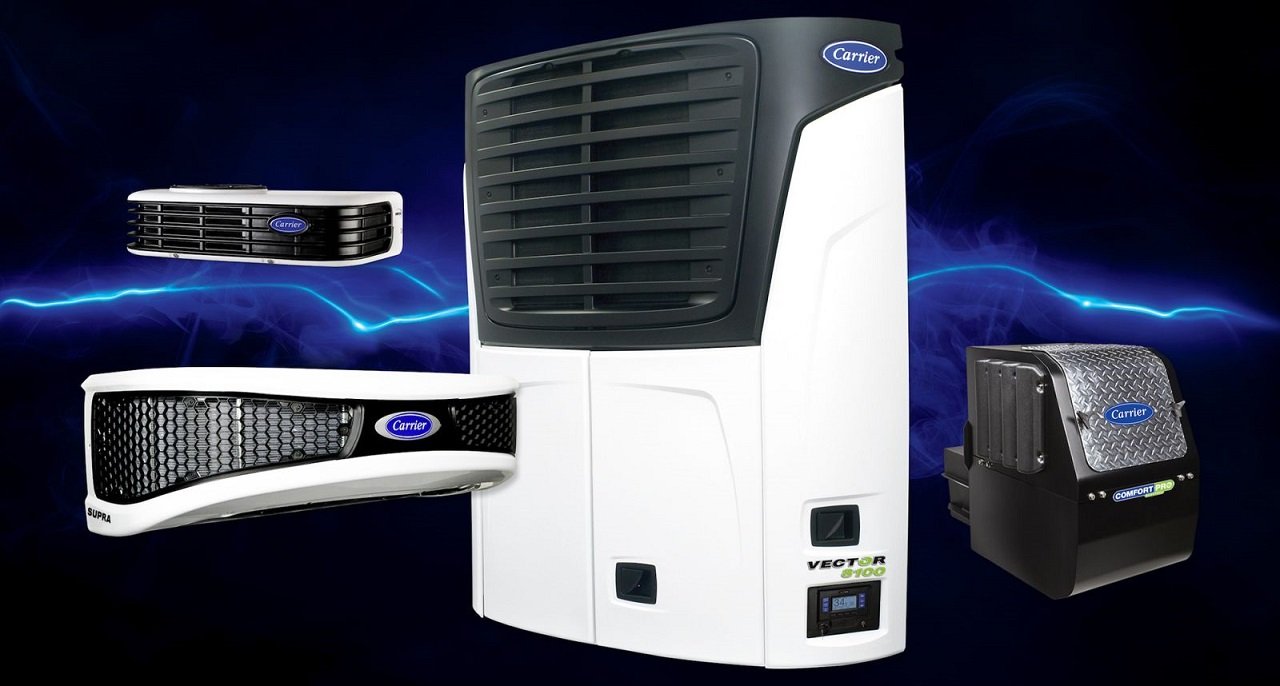
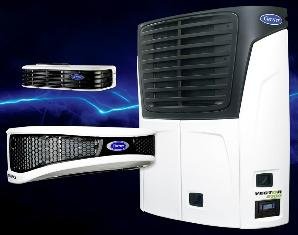
- Vector eCool refrigerated trailer system powered by ConMet eMobility – The new system sustainably creates its own power using leading-edge energy recovery and storage to operate an all-electric Vector trailer refrigeration unit. In the Americas, Carrier formed a strategic alliance with ConMet eMobility to offer the PreSet Plus eHub system, which uses innovative in-wheel motor technology to capture and store clean, regenerative energy for the refrigeration unit. Global foodservice distribution leader Sysco is piloting a Vector eCool system to explore ways this new technology can help the company achieve its 2030 climate reduction goals. The Sysco trailer was featured and operable, emissions-free in the Carrier Transicold booth at the ACT Expo.
- Supra eCool truck refrigeration unit – An electric complement to Carrier Transicold’s Supra diesel truck refrigeration units, which operates via its own battery module in non-electric truck applications or via the truck’s power supply in battery-electric vehicle applications. When it goes into service in 2023, it will help fleets operating in California that are subject to new regulations requiring adoption of zero-emission systems for truck refrigeration.
- Neos 200e for light-duty vehicles – This latest addition to the Neos platform adds compatibility with battery-electric vehicles, greater operating efficiency and more capacity than the model it succeeds.
- ComfortPro electric auxiliary power unit (APU) – The new lithium-ion battery-powered version of Carrier Transicold’s electric APU outperforms electric systems using conventional absorbent glass mat (AGM) batteries, providing up to 17 hours of continuous air conditioning. Exclusive features include a variable-speed compressor, cabin pre-cool lock and a high-power battery pack that is independent from the tractor’s lead-acid battery.
Carrier Transicold eCool products can also use refrigerants such as R-452A that have a significantly lower global warming potential than R-404A, the longtime standard refrigerant used in most transport refrigeration systems.
Additionally, Carrier Transicold’s telematics platform can be used with transport refrigeration units in the eCool family to provide remote temperature monitoring, unit location and movement details, as well as battery status and system performance.