Esta página solo está disponible en inglés. Ir a la portada en español

×

Questa pagina è disponibile solo in inglese. Home page in italiano

×

Diese Seite ist nur auf Englisch verfügbar. Zur deutschen Startseite

×

Cette page est disponible uniquement en anglais. Aller à la page d'accueil en français

×

Envirotainer significantly expands global CryoSure network with new Singapore station

Envirotainer significantly expands global CryoSure network with new Singapore station

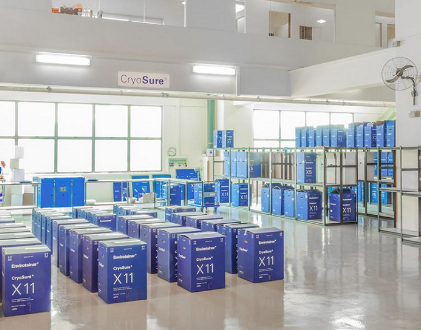
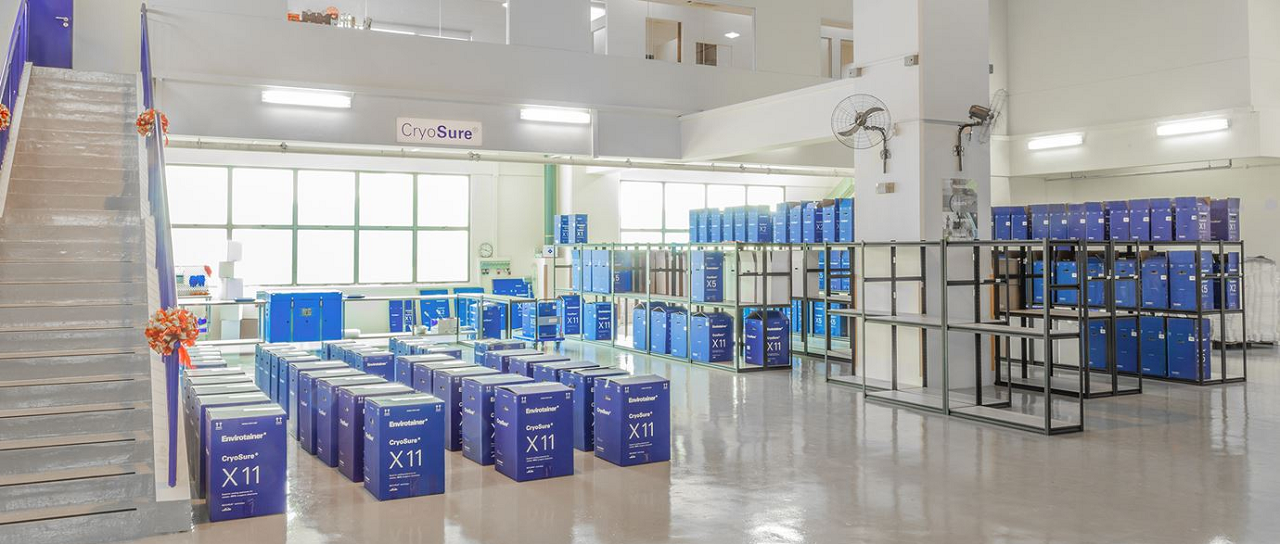
Envirotainer, the global market leader in secure cold chain solutions for shipment of pharmaceuticals, has opened a new CryoSure station in Singapore. This significantly expands global availability of the ultra-cold solution for the transportation of medicines at -70°C.

The station sits near one of the largest airports in the world for international cargo traffic and a major hub for Asia and Pacific (APAC). This puts -70°C cryogenic shipping within reach of the fastest growing region in the pharmaceutical logistics market.

The new site complements Envirotainer’s existing presence in Singapore, ensures high global service levels and allows express orders throughout APAC.

CryoSure is suitable for many ultra-cold chain uses such as cell and gene therapies, one of the fastest growing markets in the life sciences sector. Designed with extreme demands in mind, the solution comprises a range of dewars with unmatched performance and superior duration of up to three weeks without the need for refilling dry ice. They’re heat resistant with unparalleled ease-of-use, which further mitigates risk. It’s the most reliable choice for cryogenic -70°C shipments.

With this new addition to Envirotainer’s broad global network, customers will benefit from more efficient logistics. It not only improves the offering for customers in terms of speed and availability, but also sustainability.

CryoSure is the most sustainable solution of its type on the market. The reusable dewars are noticeably less bulky than others and have two to three times better weight to volume efficiency compared to existing dry-ice boxes and liquid nitrogen (LN2) solutions. This translates into both significantly reduced transportation costs, as well as significantly lower carbon emissions.

Moving products at below -70°C is very challenging. Long journeys, combined with the risk of delays, human error and challenges with the supply and handling of dry ice can put shipments at risk. There is no room for failure when life-saving products need delivery.

With CryoSure now available on a global scale, it will be possible to ensure vital treatments can be where and when needed quickly in most of Europe, North America and Asia. Expansion of the network will continue.
Get the daily refrigeration briefing

One email a day. Trusted by 3,000+ RACHP professionals.

More on Cold Chain

All on Cold Chain →

Insights

Secop's Solar Direct Drive (SDD) System Earns WHO PQS Approval – The Team Behind It
Article

Secop’s Solar Direct Drive (SDD) System Earns WHO PQS Approval – The Team Behind It

Partner's material In March 2026, Secop’s Solar Direct Drive Power Management Module was granted WHO PQS prequalification and officially listed in the WHO Catalogue of Prequalified Immunization Devices. The WHO IMD-PQS (Immunization Devices Performance, Quality and Safety programme) is the global benchmark for cold chain equipment used in immunisation. Being listed in its catalogue is

22 Jun 2026
Case Study - Effect of Louvers or diffusers on air flow distribution and cooling time on a meat log during Chill cycle
Tech Guide

Case Study – Effect of Louvers or diffusers on air flow distribution and cooling time on a meat log during Chill cycle

By Kushal Aurangabadkar An experimental analysis was conducted on a cooler space measuring 3.66 m × 6.096 m (12.0 ft × 20.0 ft), equipped with an ammonia refrigeration coil, five 30 cm (12 in.) fans, and five diffusers. The study measured airflow patterns, cooling rates, and heat transfer efficiency in meat storage by testing two configurations:

Kushal Aurangabadkar · 21 Jan 2026
Total Cost of Ownership (TCO) for Modular Refrigeration Systems in Life Sciences Distribution Centers
Tech Guide

Total Cost of Ownership (TCO) for Modular Refrigeration Systems in Life Sciences Distribution Centers

by Ramez Naguib, P.E. Introduction Life sciences distribution centers are under immense pressure to deliver consistent temperature control, comply with increasingly stringent regulations, and optimize operational efficiency. Traditional built-up refrigeration systems often prove cumbersome, costly, and slow to implement. In contrast, modular, factory-assembled refrigeration systems have emerged as a compelling alternative. Drawing on lessons from

14 Jan 2026
Everything on Cold Chain: 2,043 articles, 2 case studies, 23 insights

Most read this month

All news →