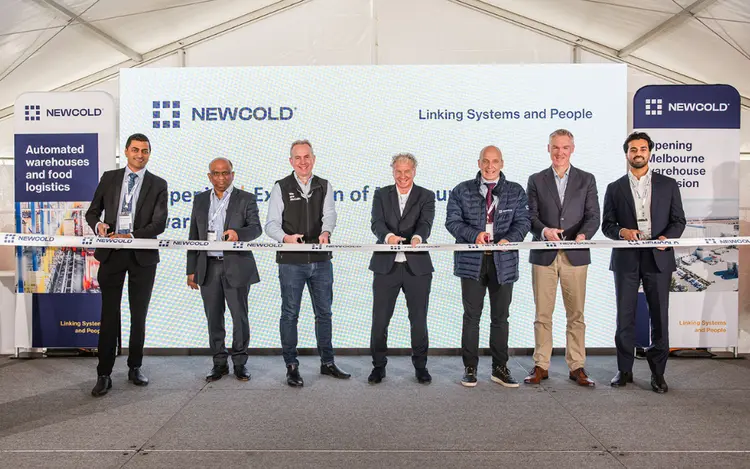
A.P. Moller-Maersk (Maersk) celebrated the opening of its state-of-the-art, integrated cold chain facility at the Ruakura Superhub, solidifying Hamilton as a key touch point within the Golden Triangle for freighting and logistics in New Zealand. With approximately NZD 140-150 million invested in the Ruakura facility, it makes it Maersk’s biggest infrastructure investment in the country.
The new facility effectively moves the ocean inland by offering customers end-to-end supply chain management including import, export, and cross-docking services. It enables the exchanging of goods between transport modes, such as rail and truck, creating a highly flexible and sufficient supply chain within the Waikato and wider New Zealand. Hamilton sits at the heart of the Golden Triangle, between Auckland and Tauranga, which sees 65% of New Zealand’s total freight flow through the strategic corridor. Maersk’s new cold chain facility will help to enhance the region’s thriving economic and freight hub.
The facility will leverage landside logistic capabilities allowing for larger quantities of imported and exported goods to flow through New Zealand and the wider Asia-Pacific region.
The facility will be well utilized by New Zealand’s largest dairy company, Fonterra, supporting their North Island production. Other customers Maersk are excited to see at the facility include BluePrint Global/NZ Grass-Fed Butter, Mega Foods, and Service Foods.
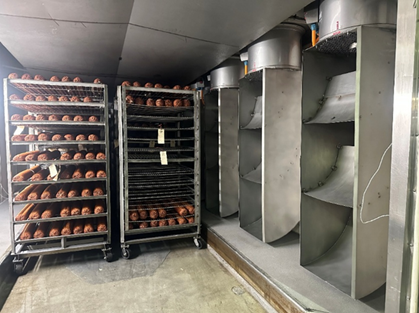
The multi-modal 18,000 square metre facility harnesses the dual-carriage State Highway 1 and direct rail connectivity to the Port of Tauranga and the Port of Auckland and has the capability to load 40ft containers holding 29 tonnes of product onto train carriages. The cold chain facility allows customers to retain the quality of their products during transit by housing nearly 30,000 pallets of products in both cold rooms and blast freezers. These blast freezers can freeze produce down to international food standards in less than 24 hours, locking in the quality and ensuring a fresher product when it reaches its destination. The multitude of rooms allows for various products to be stored at different temperatures satisfying diverse customer needs.
Maersk has partnered with local iwi (tribe) Waikato-Tainui as owners of the land on which the Ruakura Superhub sits. Through the partnership, Maersk has made a significant social investment into the region through job creation and providing Waikato-Tainui with logistics and supply-chain training systems to upskill those in the community wishing to take up a career in logistics. Historically, Waikato-Tainui ancestors would trade up and down the nearby Waikato River and the partnership with Maersk acknowledges this ancient tradition.