Esta página solo está disponible en inglés. Ir a la portada en español

×

Questa pagina è disponibile solo in inglese. Home page in italiano

×

Diese Seite ist nur auf Englisch verfügbar. Zur deutschen Startseite

×

Cette page est disponible uniquement en anglais. Aller à la page d'accueil en français

×

CIBSE publishes new guidance on embodied carbon in UK office HVAC systems

CIBSE publishes new guidance on embodied carbon in UK office HVAC systems

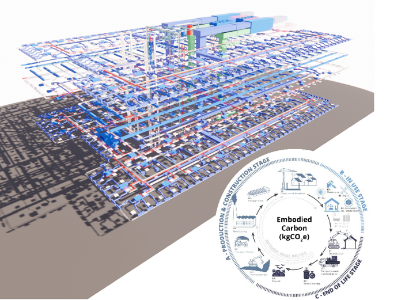
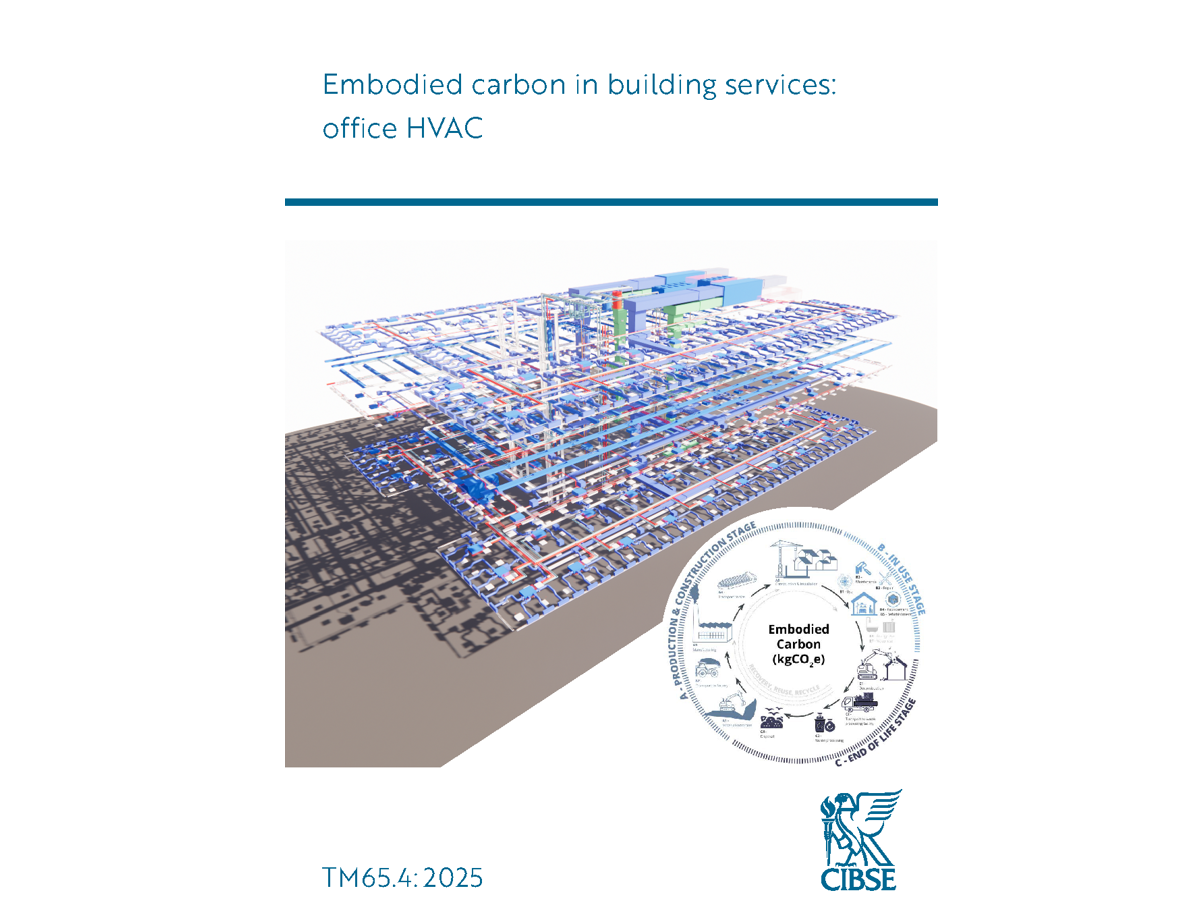
CIBSE has released TM65.4: Embodied carbon in building services – Office HVAC, a new guidance document that assesses the embodied carbon impact of heating, ventilation, and cooling (HVAC) systems in typical UK office buildings.

The study was developed by Introba and sponsored by both CIBSE and Introba. It applies the CIBSE TM65 methodology to calculate embodied carbon at both product and system levels, using data shared by manufacturers. The aim is to support engineers, designers, and sustainability professionals in selecting HVAC strategies aligned with net zero design objectives.

TM65.4 evaluates HVAC systems in a standard new-build five-storey office building in the UK, comparing two operational timeframes: a 60-year building service life and a 12-year tenancy period. This dual approach highlights how embodied carbon outcomes shift over time and informs decision-making across different phases of a building’s life cycle.

The publication offers a framework to understand how HVAC choices impact embodied carbon and provides early-stage benchmarks in cases where Environmental Product Declarations (EPDs) are unavailable. It aligns with the broader CIBSE TM65 series and aims to support consistent, evidence-based decisions in low-carbon office design.

TM65.4 is described as a starting point for evaluating embodied carbon in office HVAC systems, with the authors noting that its results should not replace project-specific assessments as designs progress.
Get the daily refrigeration briefing

One email a day. Trusted by 3,000+ RACHP professionals.

Related news

Most read this month

All news →

Related insights

Market Research

EPA Delays Low-GWP Refrigerant Deadlines, Splitting the US Cooling Industry

The deadline that supermarkets faced to install new refrigeration systems running on low-GWP refrigerants was January 1, 2027. It is now January 1, 2032. On May 21, 2026, alongside President Trump in the Oval Office, EPA Administrator Lee Zeldin announced final revisions to the 2023 Technology Transitions Rule and a proposed technical fix to the

25 May 2026
Market Research

2025 in Refrigeration — What Changed, What Mattered, What’s Next

Refindustry has released its 2025 year-in-review, compiled from the most-read and most impactful updates published on https://refindustry.com/. The review captures how the industry moved from “refrigerant choice” discussions to real-world transition execution—where compliance pathways, safety engineering, component readiness, service capacity, and digital monitoring determine outcomes on projects and in day-to-day operations. What shaped 2025 in

21 Jan 2026
Market Research

Ammonia Refrigeration Evolves Amid Growing Competition

By: Ilana Koegelenberg   Ammonia (NH3/ R717) refrigeration continues to dominate industrial applications across the United States and European Union, but the sector is undergoing significant transformation as operators balance traditional advantages with evolving safety requirements, workforce challenges, and competition from alternative refrigerants. While ammonia maintains its stronghold in large-scale facilities, new technologies and regulatory

Ilana Koegelenberg · 25 Jul 2025