Esta página solo está disponible en inglés. Ir a la portada en español

×

Questa pagina è disponibile solo in inglese. Home page in italiano

×

Diese Seite ist nur auf Englisch verfügbar. Zur deutschen Startseite

×

Cette page est disponible uniquement en anglais. Aller à la page d'accueil en français

×

SEforALL publishes AgCAP tool for cold storage planning in Sub-Saharan Africa

Geospatial analysis helps planners pre-screen cooling projects using data on production, markets, electrification and food security.

SEforALL publishes AgCAP tool for cold storage planning in Sub-Saharan Africa

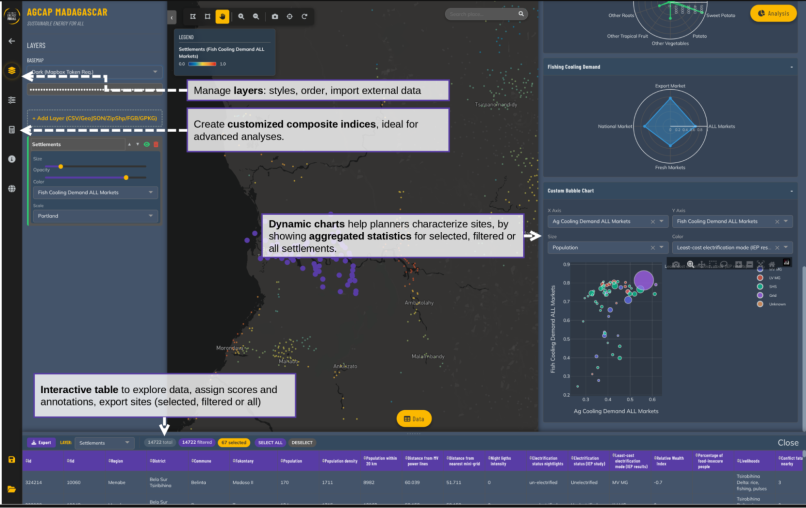
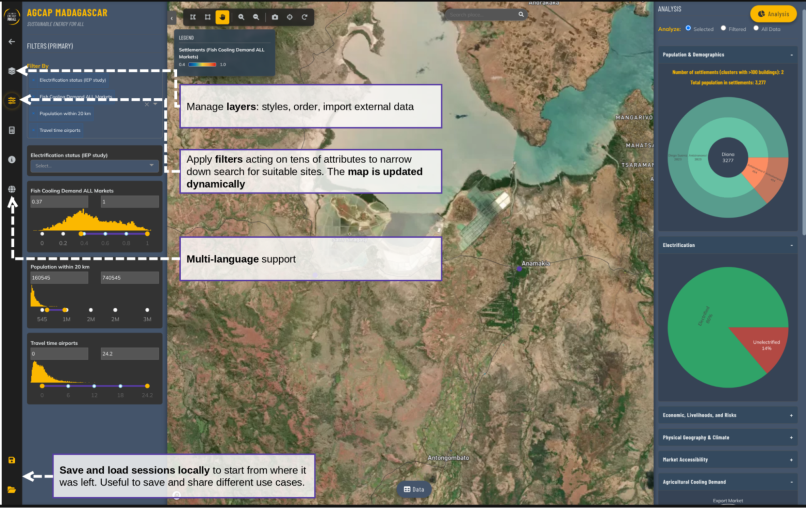
Sustainable Energy for All (SEforALL) has published the methodology for its open-source Agricultural Cold Chain Analysis and Prioritization (AgCAP) tool, designed to identify communities most likely to benefit from cold storage interventions. The tool aims to support integration of agricultural cooling into national electrification and agricultural development planning.

AgCAP uses geospatial, multi-criteria analysis at settlement level, combining openly available datasets on agricultural production, climate, market connectivity, electrification status, food security and socio-economic conditions. Its composite indicators identify cooling potential across export, national and fresh-market value chains for crops and fisheries.

According to SEforALL, up to approximately 40% of perishable harvested products in Sub-Saharan Africa are lost to spoilage before reaching markets. AgCAP is intended to help government planners incorporate cooling into Integrated Energy Plans, rural electrification plans and value-chain development strategies, while development organizations and private-sector companies can use it to pre-screen potential project sites.

SEforALL stresses that AgCAP provides first-level prioritization rather than final investment decisions. Its indices indicate cooling potential rather than quantitative demand, and site-level technical, market and financial assessments are still required to establish the viability and specific cold storage needs of individual projects.

The tool is openly available on GitHub, including model components for preparation, analysis and a local interface through Jupyter notebooks. A browser-based AgCAP Insights application is also available for non-technical users in selected countries. Development of AgCAP and preparation of its methodology document were supported by the Swiss Agency for Development and Cooperation.
Source

Get the daily refrigeration briefing

One email a day. Trusted by 3,000+ RACHP professionals.

More on Cold Chain

All on Cold Chain →

Insights

Secop's Solar Direct Drive (SDD) System Earns WHO PQS Approval – The Team Behind It
Article

Secop’s Solar Direct Drive (SDD) System Earns WHO PQS Approval – The Team Behind It

Partner's material In March 2026, Secop’s Solar Direct Drive Power Management Module was granted WHO PQS prequalification and officially listed in the WHO Catalogue of Prequalified Immunization Devices. The WHO IMD-PQS (Immunization Devices Performance, Quality and Safety programme) is the global benchmark for cold chain equipment used in immunisation. Being listed in its catalogue is

22 Jun 2026
Case Study - Effect of Louvers or diffusers on air flow distribution and cooling time on a meat log during Chill cycle
Tech Guide

Case Study – Effect of Louvers or diffusers on air flow distribution and cooling time on a meat log during Chill cycle

By Kushal Aurangabadkar An experimental analysis was conducted on a cooler space measuring 3.66 m × 6.096 m (12.0 ft × 20.0 ft), equipped with an ammonia refrigeration coil, five 30 cm (12 in.) fans, and five diffusers. The study measured airflow patterns, cooling rates, and heat transfer efficiency in meat storage by testing two configurations:

Kushal Aurangabadkar · 21 Jan 2026
Total Cost of Ownership (TCO) for Modular Refrigeration Systems in Life Sciences Distribution Centers
Tech Guide

Total Cost of Ownership (TCO) for Modular Refrigeration Systems in Life Sciences Distribution Centers

by Ramez Naguib, P.E. Introduction Life sciences distribution centers are under immense pressure to deliver consistent temperature control, comply with increasingly stringent regulations, and optimize operational efficiency. Traditional built-up refrigeration systems often prove cumbersome, costly, and slow to implement. In contrast, modular, factory-assembled refrigeration systems have emerged as a compelling alternative. Drawing on lessons from

14 Jan 2026
Everything on Cold Chain: 2,036 articles, 1 case study, 23 insights

Most read this month

All news →