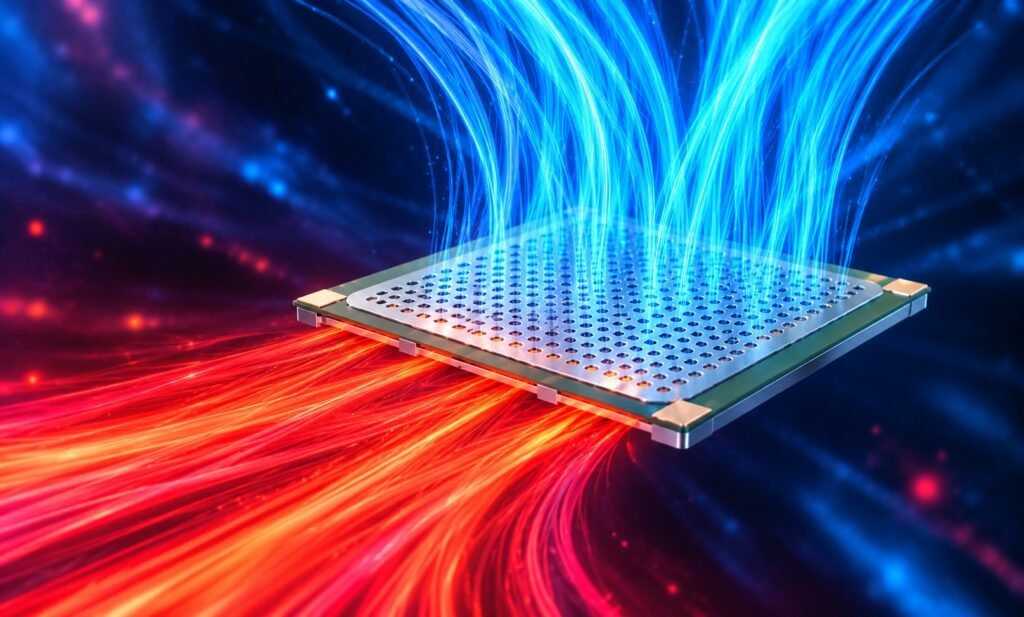
xMEMS Labs has started mass production of its XMC-2400 and XMC-4800 µCooling chips, designed for active thermal management in Edge AI devices and data center infrastructure. The solid-state cooling devices use semiconductor technology to generate targeted airflow without conventional rotating fans. The first commercial products featuring XMC-2400 are expected in early 2027.
The XMC-2400 targets compact devices, including AI and XR glasses and personal SSDs. It measures 7.42 × 9.48 × 1.13 mm (0.292 × 0.373 × 0.044 inches) and delivers up to 28 cm³/s (0.059 CFM) of airflow at up to 1,300 Pa (0.19 psi) of back pressure, consuming approximately 150 mW.
The XMC-4800 is designed for applications requiring higher airflow, including AI smartphones, enterprise SSDs and lower-power data center subsystems. Measuring 9.93 × 14.35 × 1.13 mm (0.391 × 0.565 × 0.044 inches), it provides up to 48 cm³/s (0.102 CFM) of airflow at up to 1,100 Pa (0.16 psi) of back pressure, with approximately 240 mW power consumption.
Both chips use xMEMS’ piezoMEMS semiconductor platform and an all-silicon architecture without rotating blades or bearings. The technology generates controlled airflow through narrow micro-channels, allowing cooling to be positioned near processors, memory and storage components. According to xMEMS, customer testing has demonstrated chip- and system-level temperature reductions of 10–25°C (18–45°F temperature difference) in glasses, smartphones and SSD devices.
“AI glasses and AI smartphones need active heat removal in an extremely small form factor where conventional fans simply cannot fit, while zero noise, vibration and high reliability remain critical design requirements,” said Mike Housholder, Vice President and General Manager of the Thermal Management Business Unit at xMEMS Labs, Inc.
The company’s cooling portfolio also includes the recently introduced XMC-1200, designed for AR/XR light engines, processors and other smart glasses components. xMEMS plans to demonstrate its µCooling technology for Edge AI devices and data center infrastructure at CES 2027.