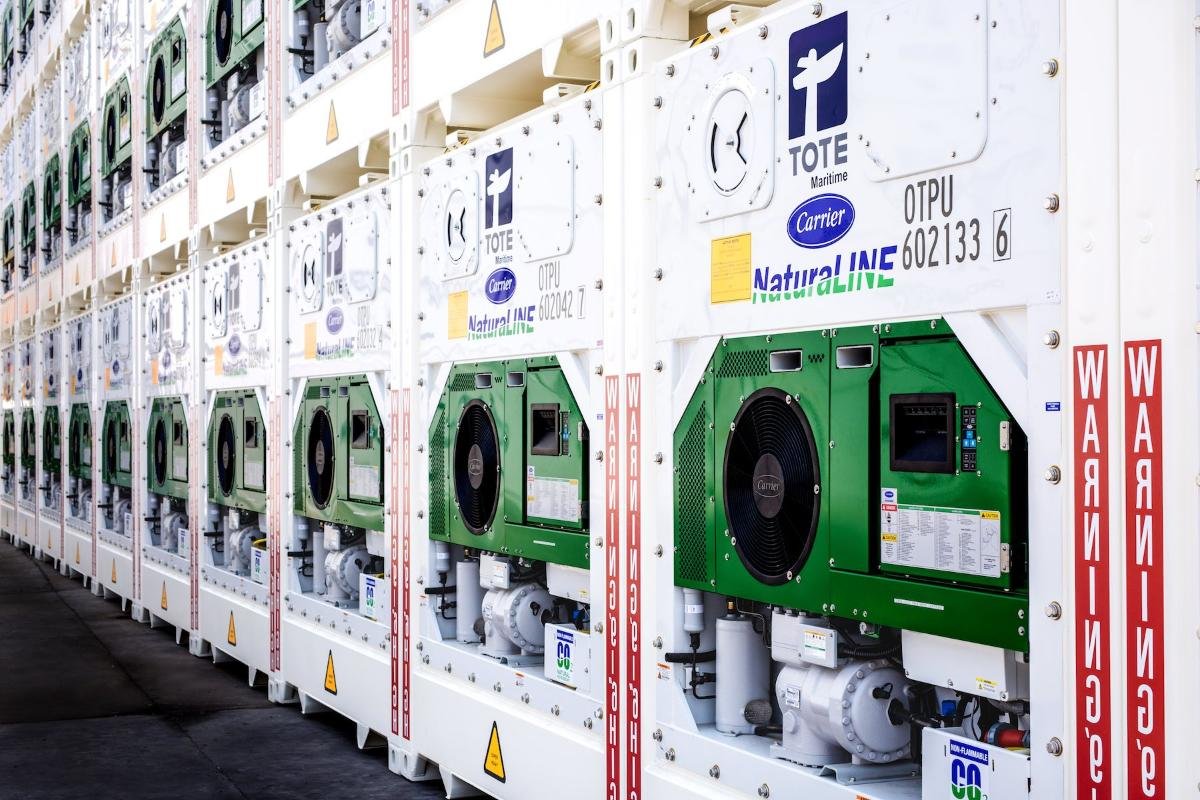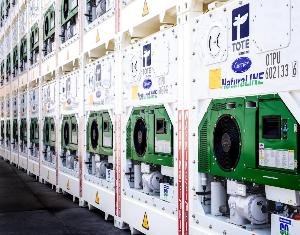
Further extending its commitment to environmental sustainability, TOTE Maritime Puerto Rico (TMPR) is enhancing its fleet with 220 containers chilled by the industry’s only natural refrigerant-based system, the NaturaLINE unit from Carrier Transicold. TMPR is the first shipping line to place a sizable quantity of NaturaLINE units into service on U.S. domestic trade routes. NaturaLINE units use carbon dioxide (CO2), a refrigerant with the lowest global warming potential (GWP) among all refrigerants currently used in container systems.
TMPR’s new refrigerated containers – a mix of 40-foot and 45-foot high-cube models – are being acquired via lease from SeaCube Containers LLC. NaturaLINE units use CO2 refrigerant, also known as R-744, which has an ultra-low GWP of 1, in comparison to GWPs that range from 600 to nearly 4,000 for refrigerants used in other container systems. R-744 is also non-ozone depleting, widely available, relatively inexpensive and classified as A1 for low-toxicity and no flame propagation.
“With its natural refrigerant, NaturaLINE units help fleets guard against regulations, environmental taxes and phase outs that other refrigerants could be subject to during the operational life span of units purchased today,” said David Appel, president, Carrier Transicold & Refrigeration Systems.
R-744’s outstanding thermal characteristics enable the energy-efficient NaturaLINE unit to achieve minus 40 degrees Celsius, along with significantly quieter operation, tighter temperature control and with no operating restrictions. Previously, reaching such a low temperature required a container system using a refrigerant with a GWP nearly 4,000 times higher than R-744.
“TMPR tested NaturaLINE units in our fleet and found that in all temperature ranges, its capabilities surpassed our expectations,” said Jim Wagstaff, vice president operations, TOTE Maritime Puerto Rico.
The NaturaLINE unit’s deep-frozen capacity was an important factor for TMPR when considering moving cargoes, such as ice cream, through the tropics because of the high level of performance required to ensure optimal conditions. According to Wagstaff, the NaturaLINE unit’s use of environmentally sustainable refrigerant supports its pledge to be the most environmentally responsible organization in the maritime industry.
“TOTE’s commitment to Puerto Rico is about more than reliable deliveries and exceptional customer service,” said Chris Willman, vice president sales & marketing, TOTE Maritime Puerto Rico. “It’s about leading the industry with best-in-class, environmentally sustainable products, such as NaturaLINE refrigeration units and our emissions-reducing Marlin-class vessels, the first containerships efficiently powered by liquefied natural gas (LNG), providing service to the island since 2015.”
SeaCube Containers, one of the world’s largest purchasers and lessors of refrigerated containers, has been a proponent of the technologically advanced and innovative NaturaLINE unit as a way to help its clients reduce their carbon footprints.
“With this order, we are pleased to be able to help TOTE Maritime Puerto Rico in achieving its environmental goals,” said Robert Sappio, CEO, SeaCube.
“Through this commitment to NaturaLINE technology, TOTE Maritime Puerto Rico and SeaCube Containers are helping to advance the container shipping industry toward a more sustainable future,” Appel said.