Esta página solo está disponible en inglés. Ir a la portada en español

×

Questa pagina è disponibile solo in inglese. Home page in italiano

×

Diese Seite ist nur auf Englisch verfügbar. Zur deutschen Startseite

×

Cette page est disponible uniquement en anglais. Aller à la page d'accueil en français

×

Lineage Logistics Breaks Ground on Strategically Located New Zealand Cold Storage Facility

Lineage Logistics Breaks Ground on Strategically Located New Zealand Cold Storage Facility

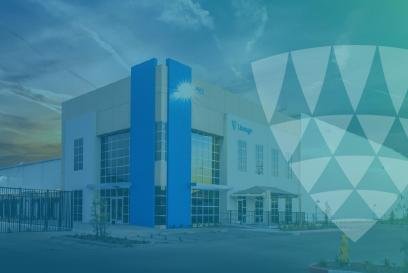
Lineage Logistics announced it is breaking ground on a next-generation cold storage facility at Tauranga in the Bay of Plenty region of New Zealand’s North Island.

Strategically located near the Port of Tauranga, New Zealand’s largest export port, Lineage will create 18 new direct jobs at the 6,675 square metre facility, which is set to provide food and beverage customers with industry-leading cold storage and logistics solutions.

“Given the primary industry sector is key to New Zealand’s economy and the country’s export cold chains are so long, we are pleased to be able to offer NZ’s exporters innovative solutions and access to our integrated world-wide network,” Lineage’s Senior Vice President for Asia-Pacific, Mr Jeff Hogarth, said.

Lineage is building on land it purchased in the Tauriko industrial estate, with stage one comprising capacity for 10,000 pallets and three blast freezing rooms. Once fully developed, the facility will feature capacity for 30,000 pallets.

Stage one is scheduled for completion in August 2022 and, with additional expansions, will complement Lineage’s locations in Australia, Sri Lanka, Vietnam and China.

“Our new facility is extremely well-situated given its proximity to the Port of Tauranga and we see significant growing demand from exporters, importers and local manufacturers who rely on temperature-controlled storage in the region,” Mr Hogarth said.

“Our project will further support the growth of the Bay of Plenty region and we are excited by the early support we have received from our existing and potential new customers.”

Consistent with the Company’s commitment to sustainable practices, the facility will feature advanced energy management and rainwater harvesting for non-potable needs. The state-of-the-art blast chambers allow for significant energy savings and reduced freezing times.
Get the daily refrigeration briefing

One email a day. Trusted by 3,000+ RACHP professionals.

More on Cold Chain

All on Cold Chain →

Insights

Secop's Solar Direct Drive (SDD) System Earns WHO PQS Approval – The Team Behind It
Article

Secop’s Solar Direct Drive (SDD) System Earns WHO PQS Approval – The Team Behind It

Partner's material In March 2026, Secop’s Solar Direct Drive Power Management Module was granted WHO PQS prequalification and officially listed in the WHO Catalogue of Prequalified Immunization Devices. The WHO IMD-PQS (Immunization Devices Performance, Quality and Safety programme) is the global benchmark for cold chain equipment used in immunisation. Being listed in its catalogue is

22 Jun 2026
Case Study - Effect of Louvers or diffusers on air flow distribution and cooling time on a meat log during Chill cycle
Tech Guide

Case Study – Effect of Louvers or diffusers on air flow distribution and cooling time on a meat log during Chill cycle

By Kushal Aurangabadkar An experimental analysis was conducted on a cooler space measuring 3.66 m × 6.096 m (12.0 ft × 20.0 ft), equipped with an ammonia refrigeration coil, five 30 cm (12 in.) fans, and five diffusers. The study measured airflow patterns, cooling rates, and heat transfer efficiency in meat storage by testing two configurations:

Kushal Aurangabadkar · 21 Jan 2026
Total Cost of Ownership (TCO) for Modular Refrigeration Systems in Life Sciences Distribution Centers
Tech Guide

Total Cost of Ownership (TCO) for Modular Refrigeration Systems in Life Sciences Distribution Centers

by Ramez Naguib, P.E. Introduction Life sciences distribution centers are under immense pressure to deliver consistent temperature control, comply with increasingly stringent regulations, and optimize operational efficiency. Traditional built-up refrigeration systems often prove cumbersome, costly, and slow to implement. In contrast, modular, factory-assembled refrigeration systems have emerged as a compelling alternative. Drawing on lessons from

14 Jan 2026
Everything on Cold Chain: 2,039 articles, 1 case study, 23 insights

Most read this month

All news →