Esta página solo está disponible en inglés. Ir a la portada en español

×

Questa pagina è disponibile solo in inglese. Home page in italiano

×

Diese Seite ist nur auf Englisch verfügbar. Zur deutschen Startseite

×

Cette page est disponible uniquement en anglais. Aller à la page d'accueil en français

×

Carrier Transicold launches certified electric refrigeration training in UK

Carrier Transicold launches certified electric refrigeration training in UK

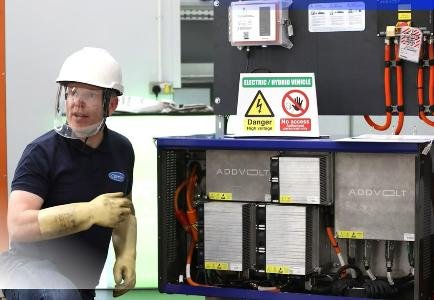
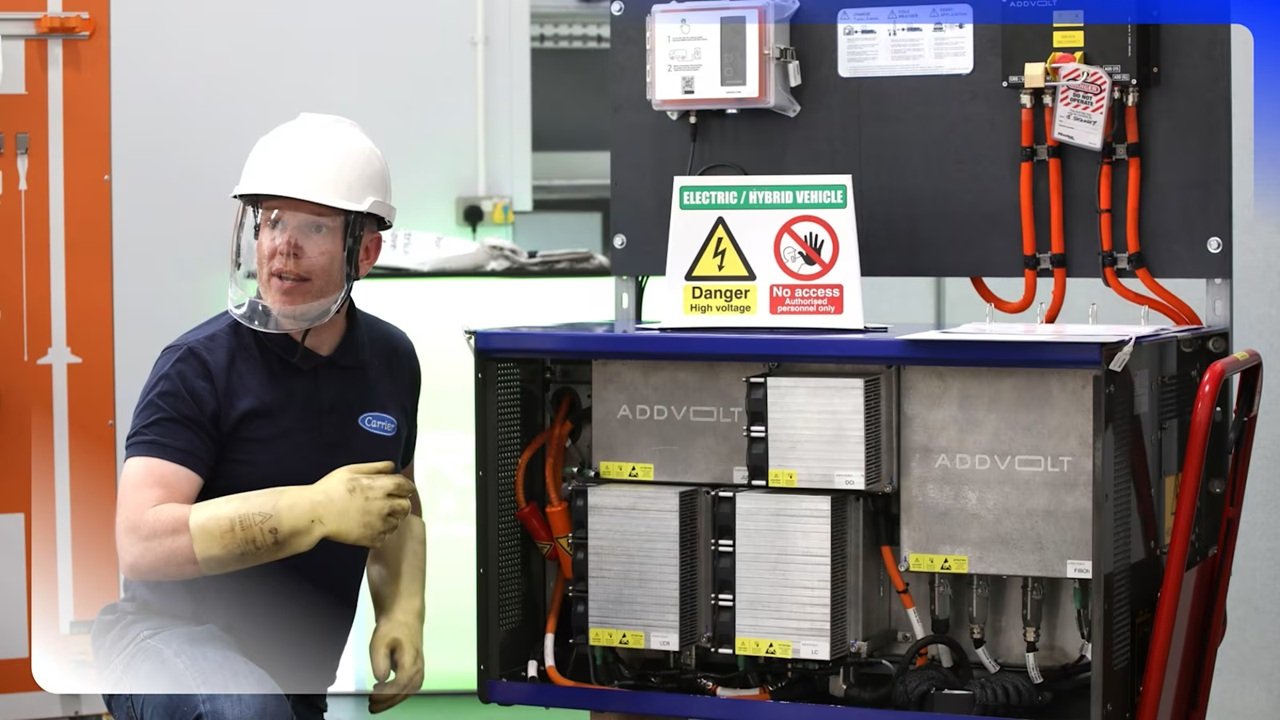
Carrier Transicold has launched the UK’s first accredited training programme for engineers working on fully electric refrigeration systems used in temperature-controlled transport. The initiative aims to enhance safety, technical expertise, and customer confidence across the company’s national Service Partner network. 

Developed in partnership with the Institute of the Motor Industry (IMI) and training provider RWC Training, the three-day programme certifies engineers to IMI Level 3 standards. It includes one full day dedicated to Carrier Transicold’s high-voltage electric refrigeration systems and is delivered at RWC’s facility in Milton Keynes.

Carrier Transicold and RWC adapted the IMI-certified electric vehicle curriculum to address the specific requirements of electric refrigeration systems. The training covers key safety protocols, work procedures, and risk management strategies necessary for handling high-voltage equipment.

“Our goal was to develop a truly distinct training programme – one that’s recognised by a major industry body and positions Carrier Transicold at the forefront of the evolving electric refrigeration sector,” said Mark Daniels, Service Director at Carrier Transicold UK.

The launch follows Carrier Transicold’s acquisition of Addvolt, aimed at expanding its electric refrigeration portfolio for trucks and trailers with advanced battery and high-voltage systems.

“The industry is continuing to move away from internal combustion and toward alternative power sources, particularly electricity,” said James Haydon, Training Manager at RWC. “However, the dangers when working with high voltages are very real, so this training programme will ensure Carrier Transicold’s engineers can approach this work from a place of knowledge and safety.”

The programme is now in operation, with Carrier Transicold aiming to certify 50% of its 200+ service partner engineers by the end of 2025 and full participation by mid-2026.
Get the daily refrigeration briefing

One email a day. Trusted by 3,000+ RACHP professionals.

More on Cold Chain

All on Cold Chain →

Insights

Secop's Solar Direct Drive (SDD) System Earns WHO PQS Approval – The Team Behind It
Article

Secop’s Solar Direct Drive (SDD) System Earns WHO PQS Approval – The Team Behind It

Partner's material In March 2026, Secop’s Solar Direct Drive Power Management Module was granted WHO PQS prequalification and officially listed in the WHO Catalogue of Prequalified Immunization Devices. The WHO IMD-PQS (Immunization Devices Performance, Quality and Safety programme) is the global benchmark for cold chain equipment used in immunisation. Being listed in its catalogue is

22 Jun 2026
Case Study - Effect of Louvers or diffusers on air flow distribution and cooling time on a meat log during Chill cycle
Tech Guide

Case Study – Effect of Louvers or diffusers on air flow distribution and cooling time on a meat log during Chill cycle

By Kushal Aurangabadkar An experimental analysis was conducted on a cooler space measuring 3.66 m × 6.096 m (12.0 ft × 20.0 ft), equipped with an ammonia refrigeration coil, five 30 cm (12 in.) fans, and five diffusers. The study measured airflow patterns, cooling rates, and heat transfer efficiency in meat storage by testing two configurations:

Kushal Aurangabadkar · 21 Jan 2026
Total Cost of Ownership (TCO) for Modular Refrigeration Systems in Life Sciences Distribution Centers
Tech Guide

Total Cost of Ownership (TCO) for Modular Refrigeration Systems in Life Sciences Distribution Centers

by Ramez Naguib, P.E. Introduction Life sciences distribution centers are under immense pressure to deliver consistent temperature control, comply with increasingly stringent regulations, and optimize operational efficiency. Traditional built-up refrigeration systems often prove cumbersome, costly, and slow to implement. In contrast, modular, factory-assembled refrigeration systems have emerged as a compelling alternative. Drawing on lessons from

14 Jan 2026
Everything on Cold Chain: 2,046 articles, 2 case studies, 23 insights

Most read this month

All news →