Esta página solo está disponible en inglés. Ir a la portada en español

×

Questa pagina è disponibile solo in inglese. Home page in italiano

×

Diese Seite ist nur auf Englisch verfügbar. Zur deutschen Startseite

×

Cette page est disponible uniquement en anglais. Aller à la page d'accueil en français

×

BioLife Solutions Presented SciSafe’s Ultra Low Controlled Temperature Trailers

BioLife Solutions Presented SciSafe’s Ultra Low Controlled Temperature Trailers

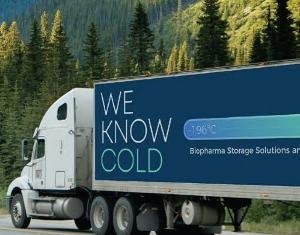
BioLife Solutions, Inc., a supplier of class-defining bioproduction tools and services for the cell and gene therapies (“CGT”) and broader biopharma markets, announced that its SciSafe biostorage services platform will now offer a fleet of refrigerated and ultra-low temperature (“ULT”) truck trailers to manage local cold chain movements for customers’ biologic materials. 

This fleet provides an ideal transportation solution for any biologic product movement requiring ULT storage between -20°C and -196°C without the added need for dry ice as it moves from pharmaceutical manufacturer to contract development and manufacturing company (“CDMO”) sites and can be deployed worldwide. Running on generator power with two cooling systems, the fleet can also carry up to ten plugged in, powered, and running upright ULT freezers at a time, expanding supported temperatures to as low as -86°C with equipment to track location and trailer temperatures, in real time. The controlled temperature trailers can also transport liquid nitrogen storage freezers containing biologic materials stored at -150°C and colder.

From day-to-day sample management to deploying clinical trial medicines that need ULT freezers to clinical sites, life sciences organizations, and particularly large pharmaceutical companies, face significant challenges when moving high value assets that have stringent storage temperature requirements. This new domestic transport service enables operational flexibility and reduced risk through the same provider SciSafe customers already trust with their sample management. Furthermore, the ability to ship older freezers to SciSafe for management and replace them in-facility with newer models supports campus sustainability and helps to lower energy costs.

“Our ability to move client biomaterials safely at ultra-low temperatures is highly valued by pharmaceutical and cell and gene therapy companies,” said Mike Rice, Chairman and CEO of BioLife Solutions. “This service also highly complements our internal use of our portfolio of cold chain products, including the evo DV10 Smart Shipper, Stirling Ultracold freezers, and cryogenic liquid nitrogen storage freezers. These controlled temperature trailers expand the volume as well as the type of materials that can be moved and, in turn, increase the value we can offer our customers.”

SciSafe recently moved 16 ULT freezers for long-term storage management for a top ten pharmaceutical company. The units arrived safely at the desired temperature and will now permanently live in the SciSafe biorepository.

Get the daily refrigeration briefing

One email a day. Trusted by 3,000+ RACHP professionals.

More on Cold Chain

All on Cold Chain →

Insights

Secop's Solar Direct Drive (SDD) System Earns WHO PQS Approval – The Team Behind It
Article

Secop’s Solar Direct Drive (SDD) System Earns WHO PQS Approval – The Team Behind It

Partner's material In March 2026, Secop’s Solar Direct Drive Power Management Module was granted WHO PQS prequalification and officially listed in the WHO Catalogue of Prequalified Immunization Devices. The WHO IMD-PQS (Immunization Devices Performance, Quality and Safety programme) is the global benchmark for cold chain equipment used in immunisation. Being listed in its catalogue is

22 Jun 2026
Case Study - Effect of Louvers or diffusers on air flow distribution and cooling time on a meat log during Chill cycle
Tech Guide

Case Study – Effect of Louvers or diffusers on air flow distribution and cooling time on a meat log during Chill cycle

By Kushal Aurangabadkar An experimental analysis was conducted on a cooler space measuring 3.66 m × 6.096 m (12.0 ft × 20.0 ft), equipped with an ammonia refrigeration coil, five 30 cm (12 in.) fans, and five diffusers. The study measured airflow patterns, cooling rates, and heat transfer efficiency in meat storage by testing two configurations:

Kushal Aurangabadkar · 21 Jan 2026
Total Cost of Ownership (TCO) for Modular Refrigeration Systems in Life Sciences Distribution Centers
Tech Guide

Total Cost of Ownership (TCO) for Modular Refrigeration Systems in Life Sciences Distribution Centers

by Ramez Naguib, P.E. Introduction Life sciences distribution centers are under immense pressure to deliver consistent temperature control, comply with increasingly stringent regulations, and optimize operational efficiency. Traditional built-up refrigeration systems often prove cumbersome, costly, and slow to implement. In contrast, modular, factory-assembled refrigeration systems have emerged as a compelling alternative. Drawing on lessons from

14 Jan 2026
Everything on Cold Chain: 2,039 articles, 1 case study, 23 insights

Most read this month

All news →