Growing demand for reliable cold chains to safely deliver much needed food and medicines to a rapidly increasing global population is a neglected focus in the green transition. Ahead of the Adaption & Agriculture Day at COP27 on November 12, Danish engineering company, Danfoss, calls for more investments in cold chain technology to contribute to food security by cutting food loss and waste and to reduce emissions.
With the world’s population expected to grow by nearly 2 billion people by 2050 , investments in sustainable cold chain technology are urgently needed to ensure that we are able to feed the growing number of people on the planet. If food waste was a country, it would be the third largest emitter behind the US and China, contributing to up to 10% of the world’s greenhouse gases .
However, with a growing need for food production and cold chain development comes the risk of greater emissions from energy demand. A risk that can be mitigated if you ask Kristian Strand, President of Commercial Compressors at Danfoss:
“The crucial role of the cold chain is a global blind spot in climate change mitigation. A growing population will require more food, but we simply aren’t ready to handle that globally today.””
A significant 13% of all food produced globally is lost due to a lack of cold chains, the continuous series of refrigerated transport and storage that keeps food at the correct temperature. Unfortunately, cold chains are often underdeveloped and overlooked. This is particularly significant in developing countries where access to refrigeration is much lower than in developed countries. Yet, it is estimated that this lost food could feed 950 million people a year .
With technology readily available to cut the energy demand of cooling technology and build sustainable cold chain infrastructures, now the focus must be on action. Investments in energy efficient cold chains will contribute to food security while reducing emissions and energy bills.
Great potential in cold chains
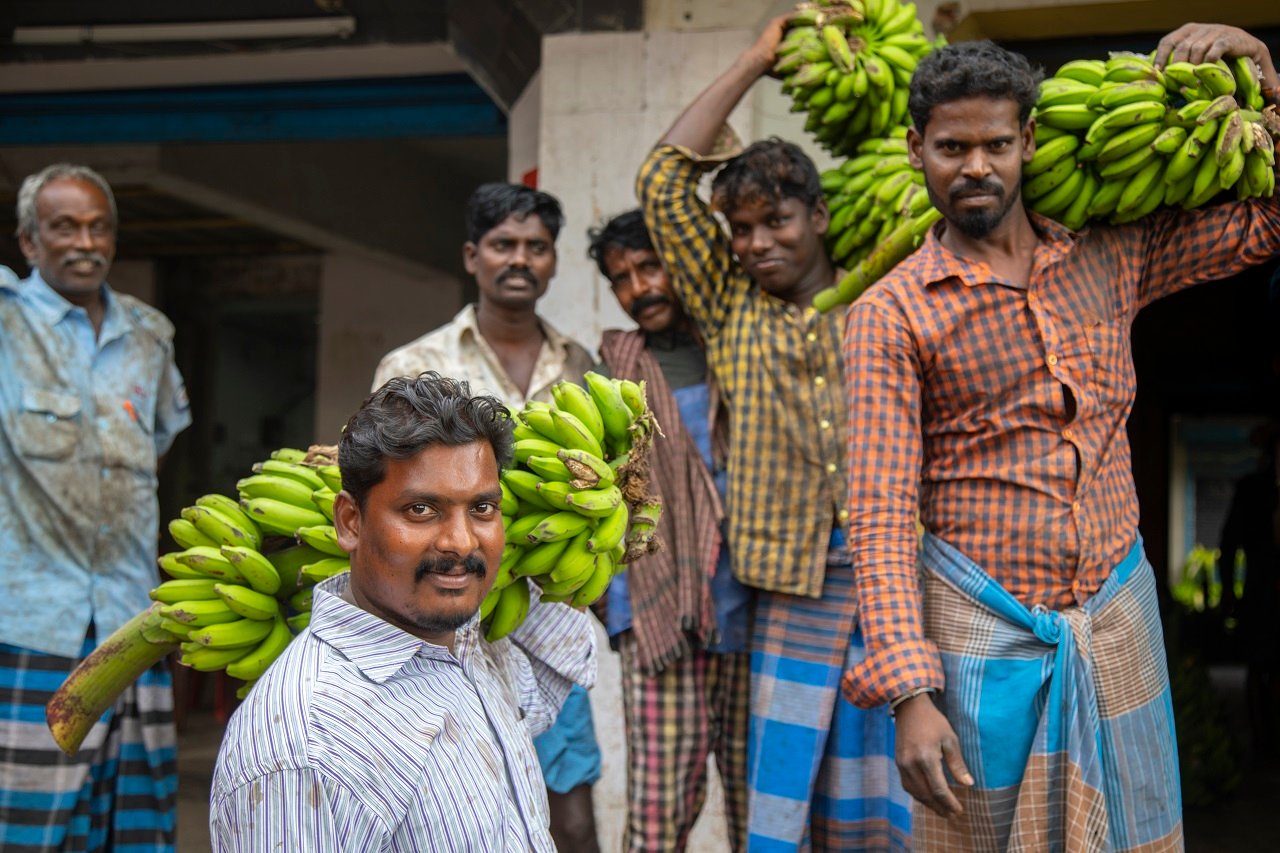
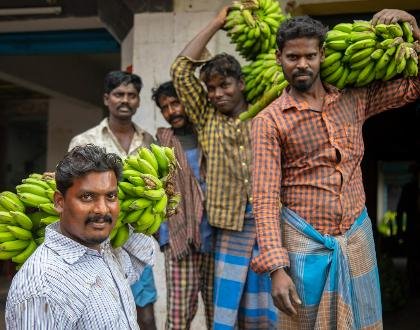
Take for example the simple banana. Every third banana on the earth is produced in India. A cold chain makes it possible to keep bananas at the right temperature until they reach consumers. By working with banana farmers in India on a sustainable cold chain, Danfoss has been able to help them reduce banana wastage by nearly 20%. And better yet, the income for local farmers tripled as they were able to export produce to Europe for the first time!
Additionally, there is a role for digital monitoring technologies to support with temperature controls and alarms, ensuring the exact optimal amount of cooling is being applied to prevent loss and waste and provide early detection of errors. Digital monitoring can also aid in the tracking of food shipments, ensuring the journey along the cold chain is going smoothly.
“To modernize the cold chain and take food transport to its next evolution we must increase investments for researching cold chain developments around the world. We also must provide financial incentives to ensure that the best available, energy efficient technology is used, and accelerate digital monitoring of cold chain logistics to make decision-making more effective,” says Kristian Strand. “That’s good for the environment and for the businesses involved.”