Thermo King, a leader in transport temperature control solutions and a brand of Trane Technologies, has launched the E-COOLPAC battery solutions. This new technology is the result of a collaboration between Thermo King and Swiss energy systems manufacturer AKSA (AKSA Würenlos AG), who tested and produced the batteries.
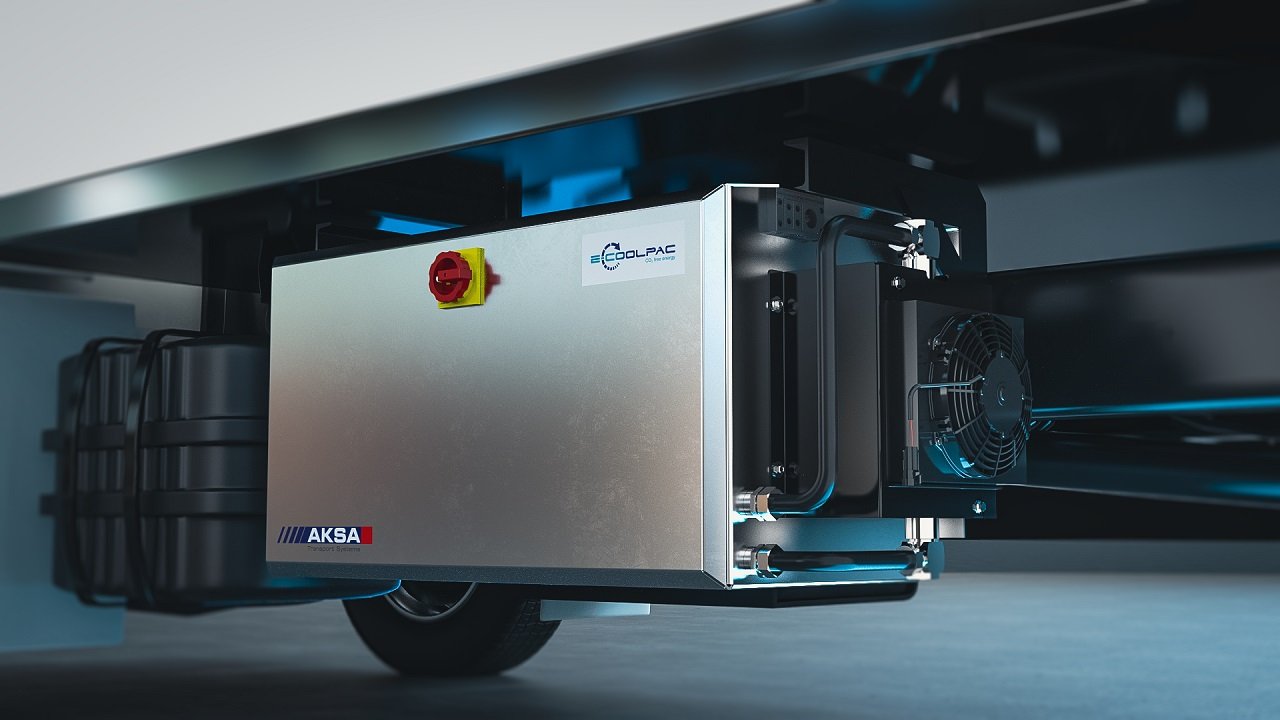
The E-COOLPAC is a zero direct emission battery power technology designed to electrify refrigerated trucks, trailers, and marine containers. The system offers battery modules and extension packs with power ranges from 15kWh to 105kWh. These batteries can be fitted or retrofitted to hybrid, LNG, electric, or diesel-powered vehicles.
E-COOLPAC battery packs are compatible with a variety of truck and trailer refrigeration units, including Thermo King’s self-powered, vehicle-powered, and select Frigoblock solutions. They also work with Thermo King’s marine refrigeration units, like CFF and Magnum Plus, as well as other brands of ISO1496-2 reefer units.
“In partnership with AKSA, we have merged decades of industry insights to create efficient, reliable, and flexible solutions to electrify transport refrigeration,” said Eneko Fernandez, Truck Product Leader at Thermo King. “Our aim was to provide a robust product tested against stringent standards. With E-COOLPAC, customers can upgrade their fleets to comply with ultra-low and zero emission zones, diesel-ban areas, and low noise (PIEK) areas. The modular design also future-proofs their investment, allowing battery range extension as needed.”
E-COOLPAC’s compact design includes power electronics, controls, and battery modules within a single pack, regardless of the model’s power capacity (15 kWh, 20 kWh, 25 kWh, or 35 kWh). Battery extension modules can easily increase power to 70 kWh or 105 kWh using plug-and-play units. These extension modules include battery cells and a battery management system (BMS), leveraging the base unit’s existing controls and power electronics.
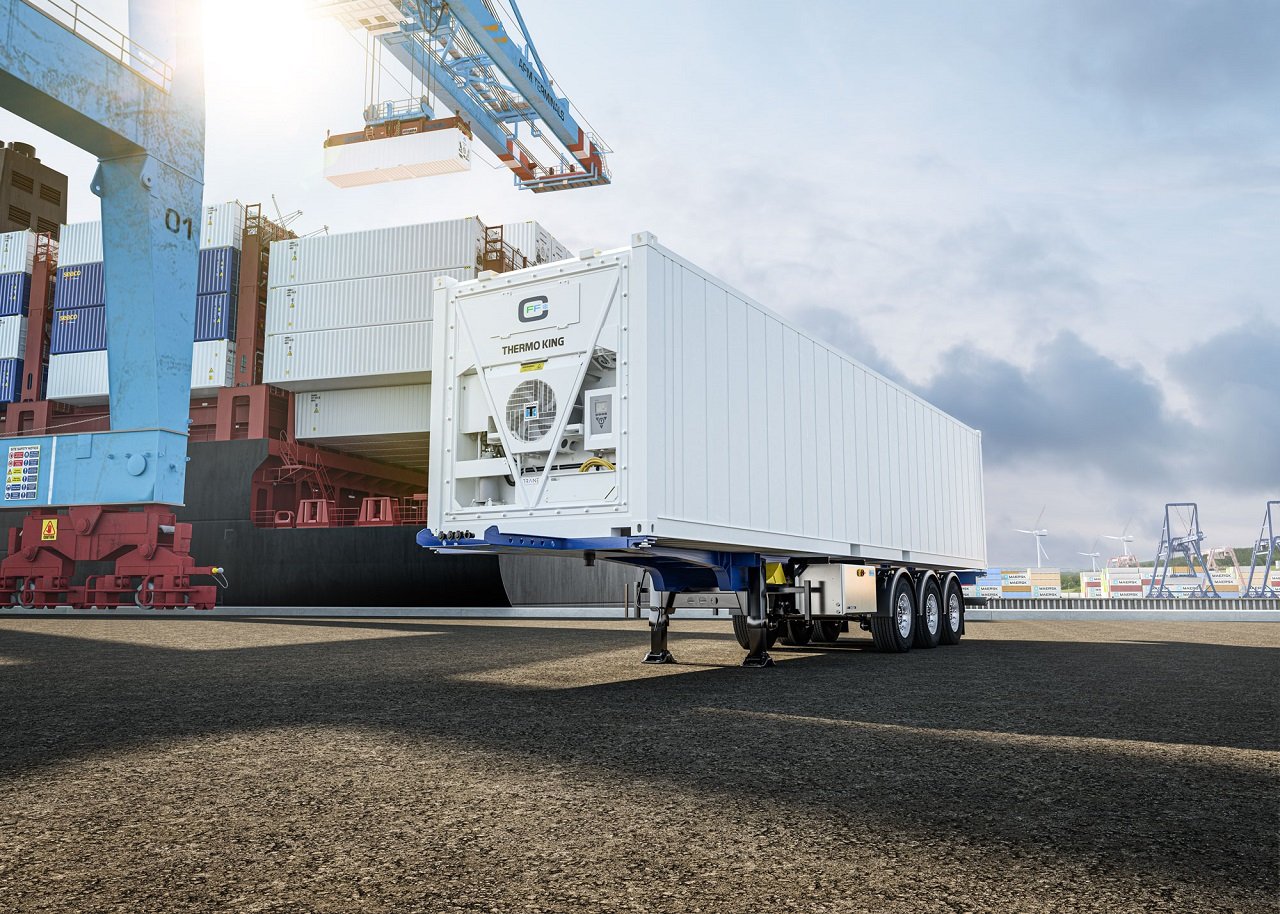
“Transporters of refrigerated marine containers can use E-COOLPAC as an alternative to diesel gensets, reducing emissions and adhering to regulations,” said Peter Hansen, Senior Product Manager for Thermo King Global Marine, Rail and Bus. “E-COOLPAC provides a power source for reefers when not connected to grid- or vessel-power and fits on both an EU flexi chassis and an EU skeleton chassis.”
E-COOLPAC’s telematic system enables customers to monitor and optimize operations by viewing real-time and historical data on vehicle location, battery status, and more. Drivers can manage the unit via an intuitive control panel, checking battery status, adjusting charging current, switching operating frequency, and receiving alarms.
The battery packs are chargeable through standard commercial/light industrial power grids or type 2 / type 3 electric vehicle (EV) charging stations.