Geopolitical crises and the resulting acceleration of the energy transition and digital transformation come along with huge challenges for companies and trades in Germany. Since earlier this year, Viessmann Climate Solutions has been engaging against the shortage of skilled workers and structural change with major skilling efforts: A readjustment of jobs and skill requirements is helping to ensure the company’s future. At the same time, role-based upskilling and reskilling offers for the jobs most affected by these changes will also allow employees to maintain their employability in this evolving corporate environment.
Companies in the heating industry are facing a rapid shift in skill requirements for employees in the course of the energy transition: the switch from technologies that are based on fossil fuels to climate-neutral technologies and products, and holistic energy systems. According to a recent study in Germany by the Research Unit on Securing Skilled Labour (Kompetenzzentrum Fachkräftesicherung – KOFA) at the German Economic Institute, there is a shortage of around 14,000 skilled workers in the field of “sanitation, heating and air-conditioning technicians”. There is an additional shortage of around 10,000 skilled workers in the field of electrical technicians, which is also of central importance to the energy transition.
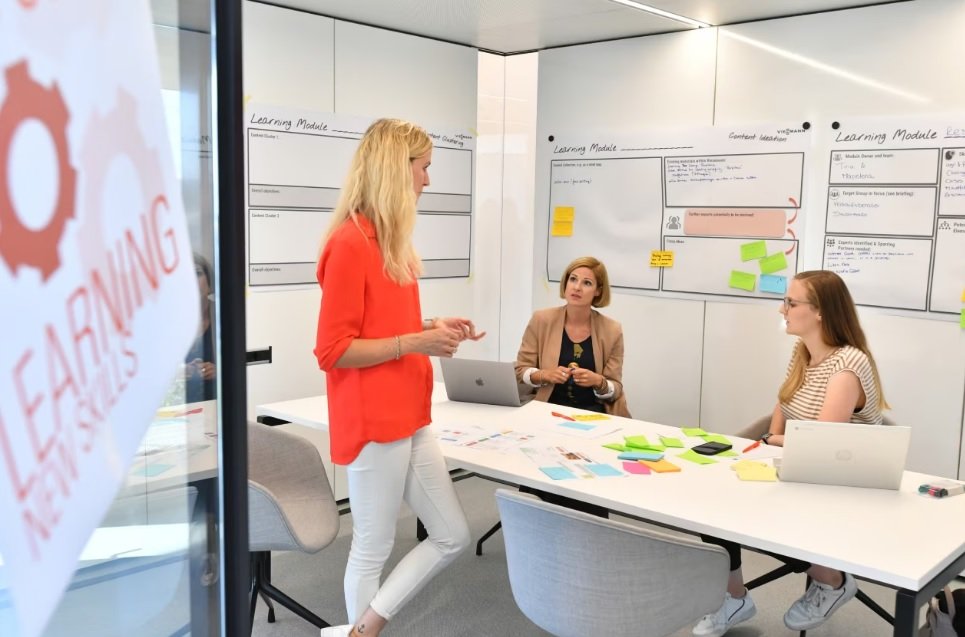
Viessmann employees see themselves as enablers of the energy transition. That is why focus has been given to the systematic readjustment and development of skills for over a year now. In addition to general upskilling offers – for instance, to build up data expertise – employees are provided with targeted learning offers for jobs for which the requirements are changing dramatically.
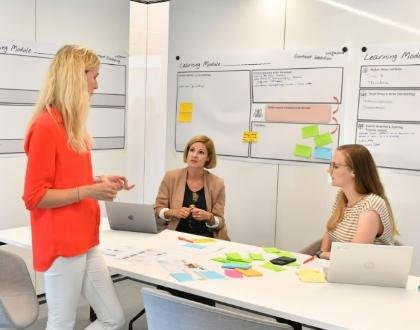
Each “Learning Journey” takes place over a total period of 6 to 9 months with 10 to 12 days of learning time net, and consists of around 15 to 20 Learning Modules, which complement each other to help employees develop their technological, product-related and methodological future skills for the particular job. In the true spirit of “co-creation”, all of the Learning Modules were developed with the involvement of more than 200 experts from within Viessmann Climate Solutions.
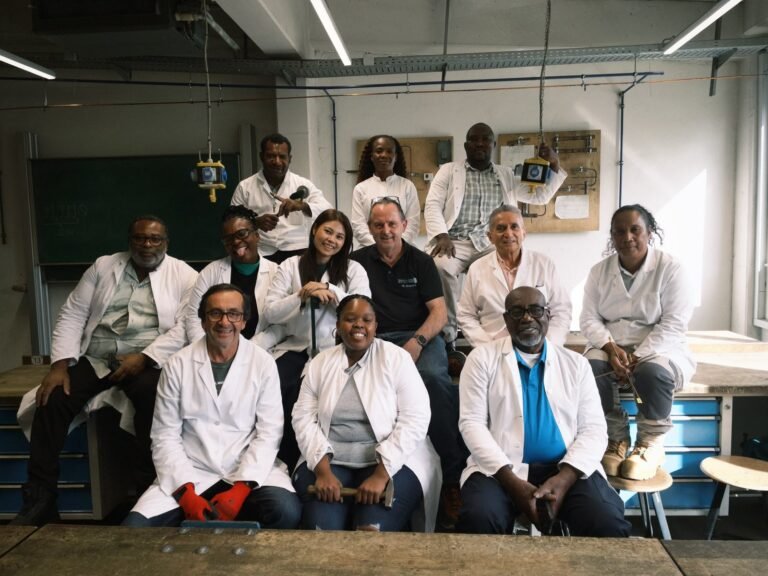
More than 1,000 employees of Viessmann Climate Solutions in 10 countries across Europe will have already taken their first steps in systematically acquiring the “future skills” required for their respective jobs by the end of 2023, with plans for 2024 already well underway! This genuine development not only makes Climate Solutions’ business economically resilient in the face of the market-specific challenges of the future, thus setting it up for long-term success – it also fosters a shared, global company and learning culture. At the same time, the training being offered to Viessmann’s specialist partners and installers is being expanded, both in the virtual realm and through the provision of on-site training – based on the same high-quality training standards that are applied to the learning offers offered to the company’s own employees – because only by doing this the energy transition can be mastered together.
In addition to this, Viessmann Climate Solutions’ initial vocational training, which is currently being undertaken by a total of around 270 apprentices and dual students throughout Germany, already represents an important cornerstone in securing a supply of skilled workers. Over the next two years, the training offered in this context will also be expanded, particularly at the Allendorf (Eder) and Berlin sites, with a strong focus on the areas of production and service.
Viessmann Climate Solutions’ qualification effort has recently also received European funding, which the German Federal Ministry of Labor and Social Affairs (BMAS) awards using European Social Fund (ESF) grants under the “Shaping the changing world of work through social partnership: continuing education and training and promoting gender equality” funding guideline.
Thomas Heim, Chief Executive Officer, Executive Board Member, Viessmann Climate Solutions, has the following to say about the qualification push:
“Over the course of 106 years, Viessmann has developed into a ‘global player’, always successfully overcoming a wide range of transformative challenges spanning generations, by working hand in hand with the different generations of employees. Especially now, in the midst of the energy transition, we are therefore investing in our family members through targeted up- and reskilling along the value chain of our core business. In doing so, we as an employer are safeguarding employment for over 11,000 people around the world in an industry that is considered one of the most important levers for climate protection. If highly qualified employees remain capable of meeting these changes and the challenges of the energy transition head-on together with us as a company, then that’s a win-win for everyone involved!”
Frauke von Polier, Chief People Officer, Viessmann Group & Viessmann Climate Solutions, says:
“Against the backdrop of the dramatically accelerating energy transition and the shortage of skilled workers that we have been experiencing for a number of years now, for Viessmann to invest in its own workforce and establish innovative skill-based approaches in recruiting, personnel development and, most importantly, with a view to readjust the skills of entire departments, is simply the logical thing to do. Our ‘Learning Journeys’ are therefore an integral part of our strategy and are intentionally designed not to simply target the current skill profiles of individual employees, but to ensure that all those working in a particular job are equally tackled. Through this innovative approach, we not only promote skill building for the individual, but also a culture of increased exchange of knowledge within our organization. Investing in our employees’ skills is therefore more than just a business decision. It is a commitment to our employees, the region, and our responsibility to society, and it demonstrates how the energy transition can bring economic resilience and long-term success through our company culture and the abilities of our employees.”
Matthias Godzik, Chairman of the Group Works Council, adds:
“The energy transition presents our colleagues with multifaceted challenges that require new, future-oriented skills. As the Works Council, we consider investment in training and thus the development of our colleagues’ professional skills to be essential. With our targeted up- and reskilling offers, which were developed through close cooperation between the company’s management, the HR department and the Works Council, as well as with the involvement of the various departments, we help our colleagues to systematically develop their skills – an essential step in tackling the energy transition. In doing so, we are not only safeguarding the employability of more than 11,000 colleagues around the world, but also contributing to safeguard our site in Allendorf and enabling colleagues to be more securely positioned for the future in their respective jobs and to tackle the energy transition and associated transformation together.”