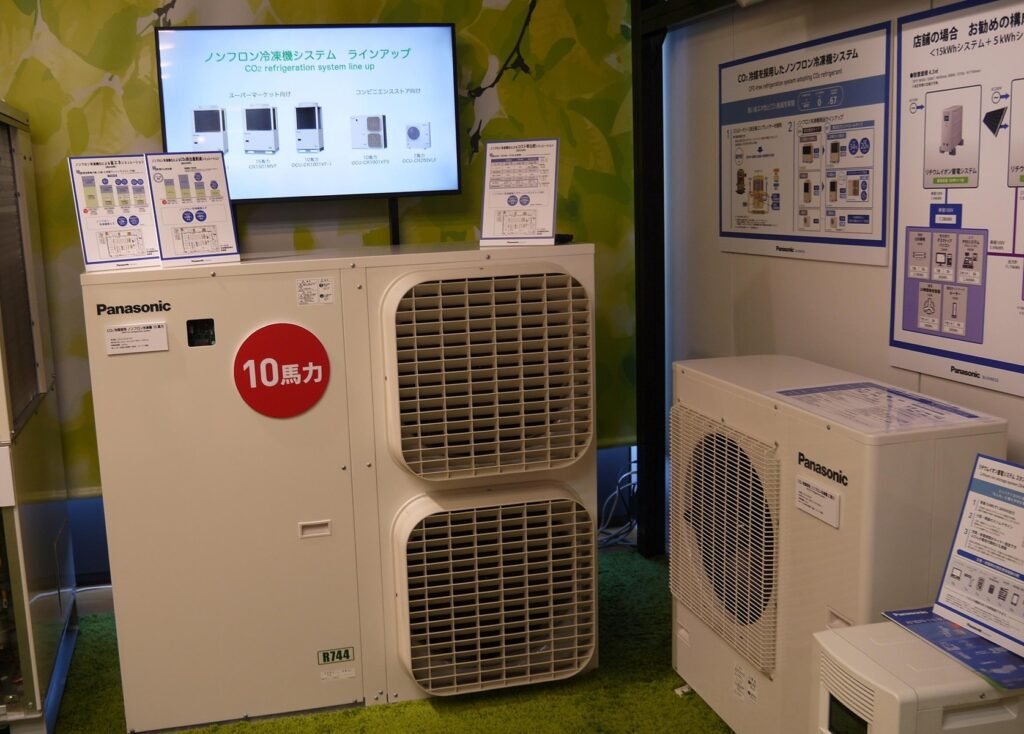
Panasonic announced 15 years of CO2 refrigeration manufacturing as the European Union prepares to reduce the amount of virgin HFC refrigerant permitted on the market from 42.9 million tonnes CO2-equivalent in 2026 to 21.7 million tonnes in 2027. The reduction forms part of Regulation (EU) 2024/573 and will increase pressure on operators of high-GWP refrigeration systems to adopt alternatives.
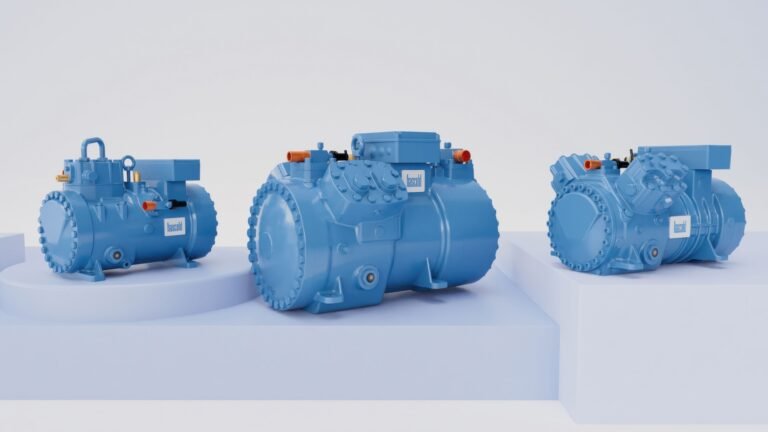
The manufacturer began producing CO2 refrigeration condensing units in Japan in 2009, building on compressor development that started in 2001. Its wider cold-chain operations date to 1960, when it produced its first ice cream stocker, followed by its first condensing units in 1962.
Panasonic entered the European CO2 refrigeration market in 2017 with a 2HP medium- and low-temperature condensing unit. Its current small-capacity refrigeration portfolio is supplied from Japan and Panasonic Cold Chain Poland in Wroclaw, supporting applications including retail, food production and cold storage.
Tests conducted in Japan found that Panasonic CO2 systems reduced freezer energy consumption by 25.4% and refrigeration energy consumption by 16.2% compared with R404A inverter units. Total CO2 emissions, combining refrigerant leakage and energy use, were 67% lower. R404A has been prohibited in new EU equipment since 2020, while R744 has a GWP of 1.
A 20HP R744 installation at Dunstaple Farm near Holsworthy, Devon, supplies refrigeration for Farmer Tom’s Ice Cream production. The regulatory context was reinforced on 17 July 2026 by the European Commission’s Electrification Action Plan, which set an indicative target for electricity to account for 46% of final energy consumption by 2040 and committed to a dedicated EU Cooling and Heating Action Plan. “We started because we could see where the industry needed to go, long before regulation caught up,” said Enrique Vilamitjana, Managing Director of Panasonic Heating & Air Conditioning Europe.