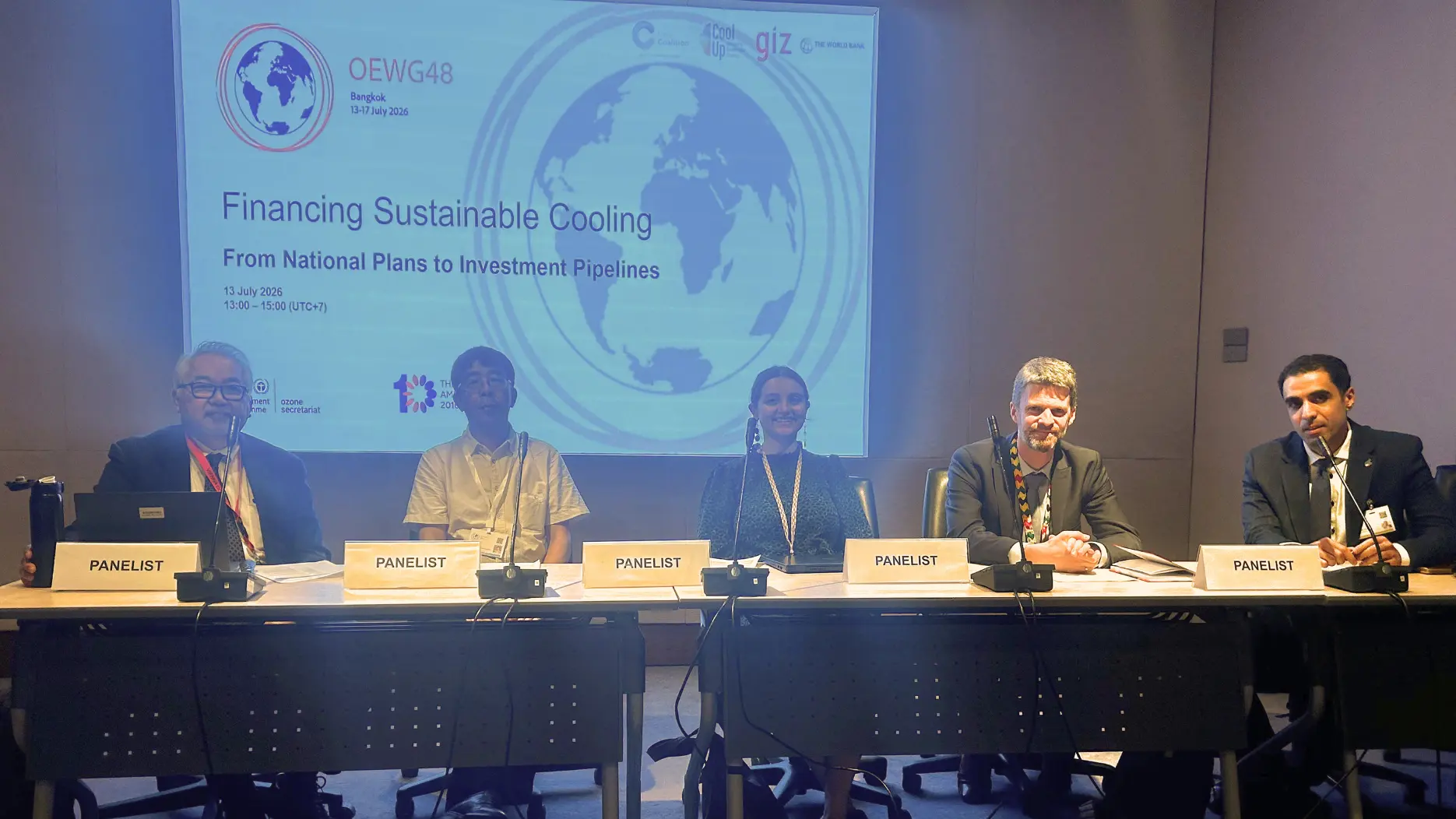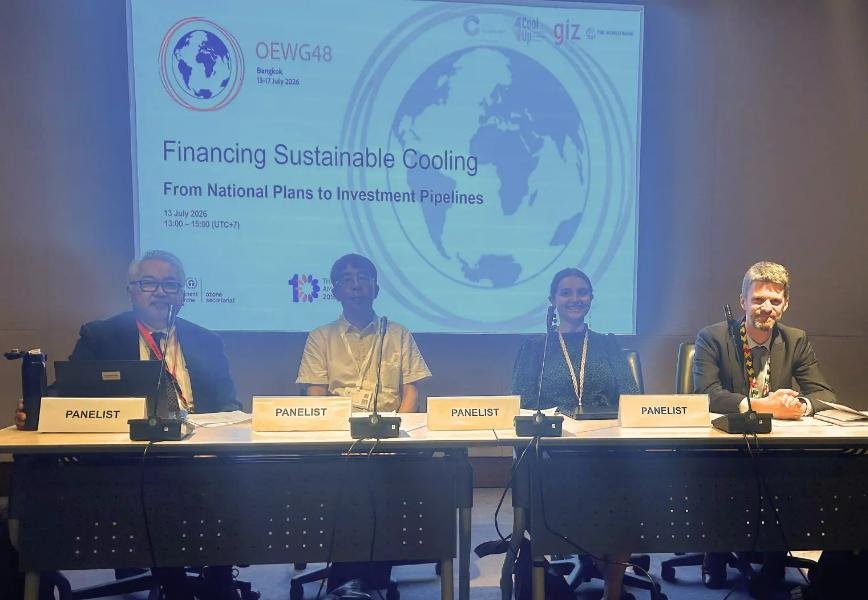
The UNEP Cool Coalition, Cool Up, GIZ Proklima and the World Bank convened a technical session at OEWG48 on financing the HFC phase-down and sustainable cooling. Participants examined how National Cooling Action Plans and Kigali Implementation Plans can be converted into costed projects, investment pipelines and functioning markets.
The World Bank Group and UNEP’s Cooler Finance report valued the active cooling market in developing economies at USD 272 billion in 2023 and projected it could reach about USD 600 billion annually by 2050. However, cooling investments are often embedded in buildings, cold chains, industrial systems and transport, making them difficult for financial institutions to identify, track and finance.
Amr Seleem, Country Engagement and Climate Policy Lead at the UNEP Cool Coalition, said only 25 of the 75 national signatories to the Global Cooling Pledge have published a National Cooling Action Plan. “The financing gap is not only about capital. Countries need the data, institutions, standards and project preparation required to turn cooling commitments into transactions,” he said.
World Bank Group Senior Environmental Engineer Thanavat Junchaya said financing structures should reflect the borrower, technology and market. Options discussed included vendor finance, on-bill finance, Cooling-as-a-Service, revolving funds, guarantees, blended finance and conventional lending. India’s National Cooling Action Plan, which identifies a USD 1.6 trillion investment opportunity to 2040, was presented as an example of a plan designed to attract capital.
The session also highlighted China’s climate-zone-specific Minimum Energy Performance Standards, cooling finance support for banks in Egypt, Jordan, Lebanon and Türkiye, and demonstration projects using natural refrigerants in African markets. Jordan was identified as the first country in the region to publish a sustainable cooling taxonomy.
Niroopa Kowlesser, Cooling Policy Specialist at the UNEP Cool Coalition, said the EPIC Facility has received more than 50 support requests from Global Cooling Pledge countries. “Cooling is infrastructure, just like water and energy. It must be planned, financed and delivered with the same seriousness,” she said.